Quick answer: For medical writing, Yseop is best for regulatory and CSR drafting at scale, TrialAssure for end-to-end trial and disclosure writing, and Abridge for ambient clinical notes. Every tool produces a draft, not a finished document; a qualified human owns accuracy, safety language, and compliance.
9 Best AI Tools for Medical Writing in 2026
Medical writing splits into three very different jobs, and no single tool wins all of them. For regulatory and clinical study report (CSR) drafting, Yseop and TrialAssure lead. For clinical documentation at the point of care, Abridge and DAX Copilot are the proven ambient scribes. For manuscripts and literature work, Paperpal plus Consensus and Scite cover writing and evidence. General assistants like ChatGPT and Claude help everywhere, with mandatory human review.
A blunt warning before any tool list. AI in medical writing is an accelerator, never an authority. Every output, whether a CSR section, a patient note, or a manuscript paragraph, needs sign off from a qualified medical writer, clinician, or regulatory specialist. Models fabricate citations, misstate dosages, and drop safety caveats. Protected health information (PHI) handling is a legal minefield, so confirm a signed Business Associate Agreement (BAA) and HIPAA or GDPR posture before any patient data touches a tool. The pages below group tools by the job they actually do well, and each one names a real limitation.
If you are earlier in the field, our guides to AI tools for medical students and AI for academic writing give useful background before you commit to a paid plan.
Yseop: best for regulatory and CSR drafting at scale
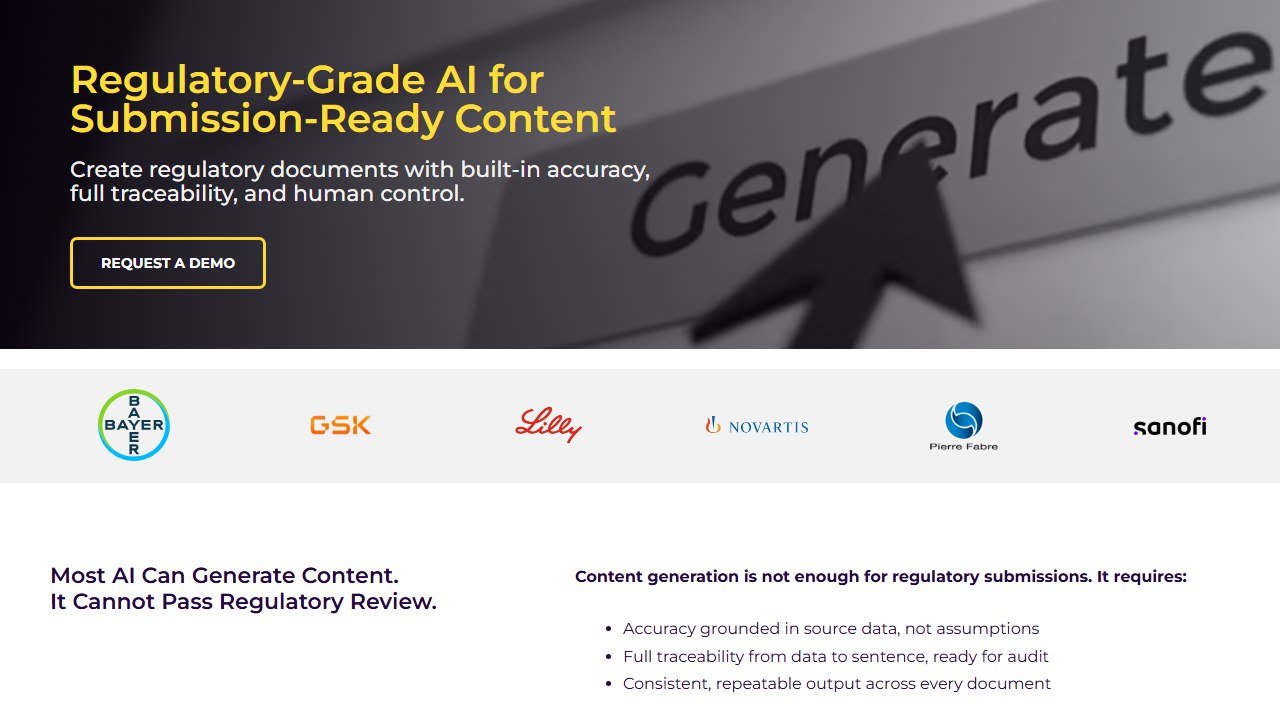
Yseop Copilot is built for pharma medical writers, not the general public. It automates structured authoring of clinical study reports, patient narratives, and submission documents, pulling directly from structured clinical data so numbers in the prose match the source tables. Large sponsors and CROs use it to compress timelines on repetitive, template heavy regulatory output.
Verdict: The strongest purpose built option for regulatory and CSR work where traceability to source data matters.
Who it is for: Pharma sponsors, CROs, and regulatory medical writing teams producing CSRs, narratives, and CTD modules.
Pricing reality: Enterprise only. Pricing is quoted per deployment after a sales conversation, and there is no self serve tier, so expect a procurement cycle rather than a credit card signup.
One honest limitation: It is overkill and inaccessible for individual writers or small clinics. The value only appears at submission volume, and onboarding requires structured data plumbing that smaller teams will not have.
TrialAssure: best for end-to-end trial and disclosure writing
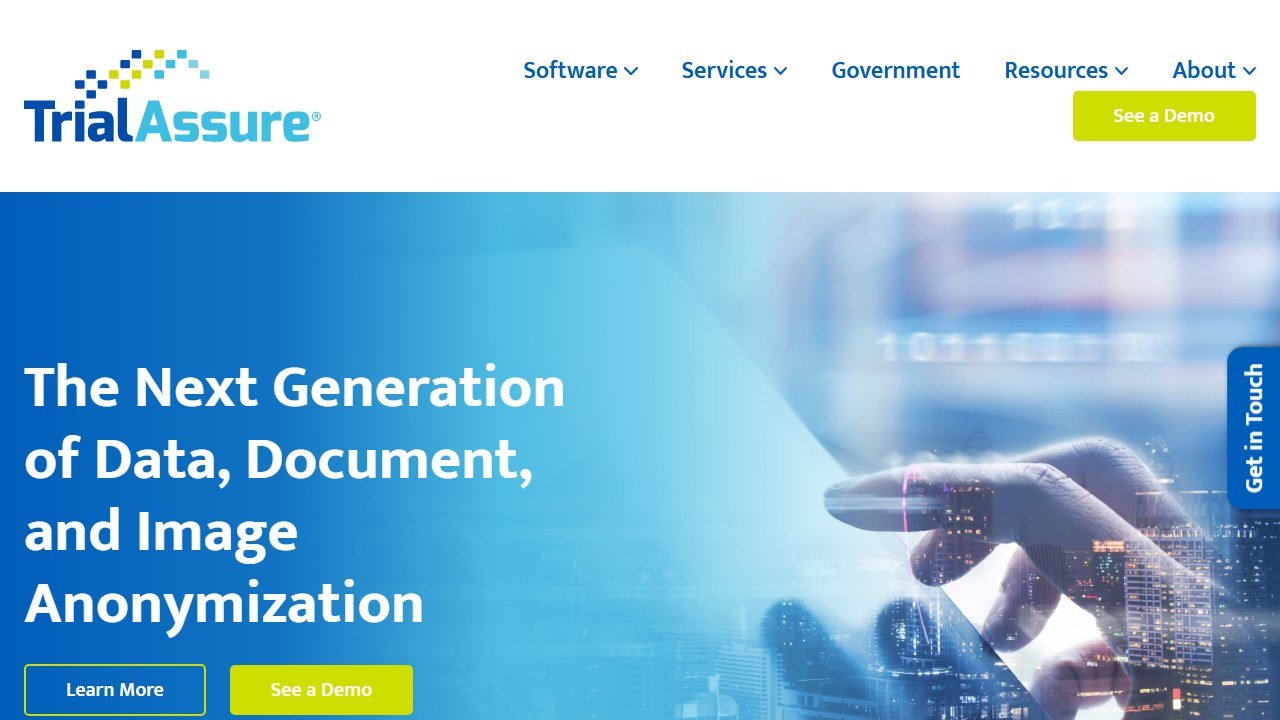
TrialAssure LINK AI focuses on the clinical trial document lifecycle, including plain language summaries, lay summaries required under EU regulation, and disclosure documents. It pairs AI drafting with the compliance scaffolding that trial transparency rules demand, which is a niche that general writing tools simply ignore.
Verdict: A focused choice for trial transparency, lay summaries, and disclosure obligations that regulators now require.
Who it is for: Clinical operations and disclosure teams managing trial registries and lay summary mandates.
Pricing reality: Enterprise and quote based, sold as part of a broader trial transparency platform rather than a standalone writing app.
One honest limitation: Narrow by design. If you are not handling trial disclosure or lay summaries, most of the platform is irrelevant to your workflow.
Abridge: best ambient AI scribe for clinical notes

Abridge listens to the patient encounter and drafts a structured clinical note in real time, mapping spoken conversation into the relevant note sections. It has the strongest published evidence base of the ambient scribes. A 2025 JAMA Network Open study tied ambient scribes to roughly 54 fewer minutes of after hours documentation, and a separate evaluation of 57 clinicians saw documentation time per encounter fall from 6.2 to 5.3 minutes.
Verdict: The most evidence backed ambient scribe for reducing clinician documentation burden.
Who it is for: Practicing clinicians and health systems wanting faster, less burdensome point of care notes.
Pricing reality: Sold per clinician per month through health system contracts, typically in the low hundreds of dollars per provider monthly, with enterprise discounts. Not a consumer purchase.
One honest limitation: Real world deployments still report meaningful correction time. The note is a draft, and the clinician remains responsible for accuracy and for every clinical claim it contains.
DAX Copilot: best ambient scribe inside the Microsoft and Nuance ecosystem
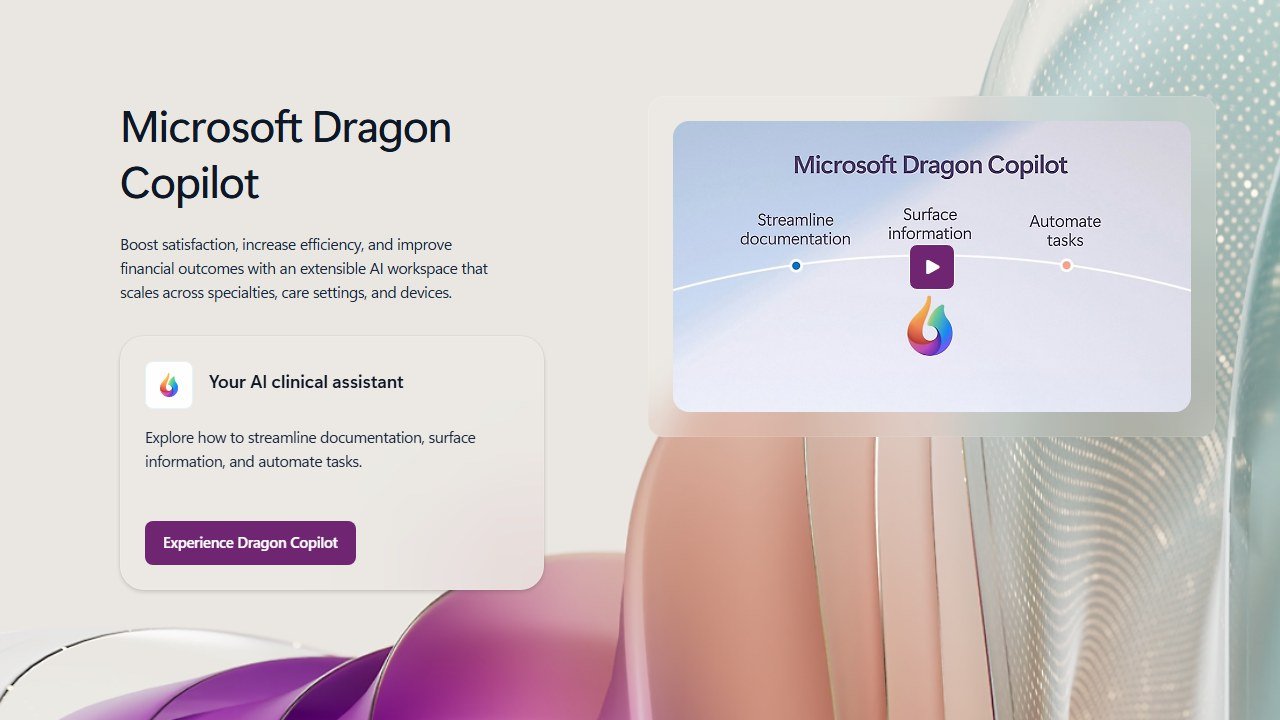
DAX Copilot (Microsoft and Nuance) converts the visit conversation into a structured note and slots into EHR workflows that many large systems already run. A 2026 surgical study rated its generated notes at an average 46.91 out of 50 for accuracy and consistency, and a UCLA Health randomized trial reported a meaningful drop in physician task load alongside a small burnout improvement.
Verdict: A strong ambient scribe for organizations already standardized on Microsoft and Nuance infrastructure.
Who it is for: Hospitals and large groups with existing Nuance or Microsoft EHR integrations.
Pricing reality: Enterprise licensing per provider, negotiated through Microsoft or Nuance channels. Pricing tracks Abridge in the per provider per month range.
One honest limitation: The same UCLA trial found the reduction in time spent in the note itself was small and not statistically significant. Time savings show up in burden and after hours work, not always in raw note time, so set expectations accordingly.
Paperpal: best for manuscript editing and journal readiness
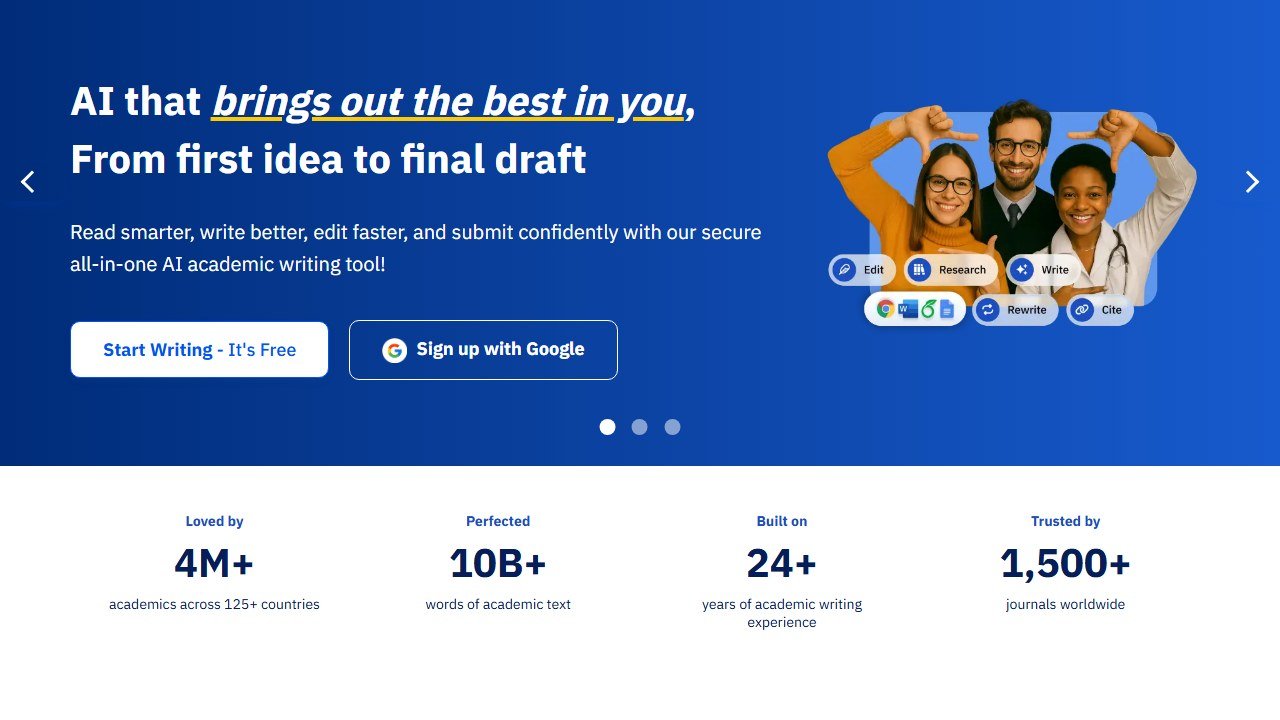
Paperpal is the most trusted editing layer for academic and medical manuscripts. It offers a dedicated Medical Mode, grammar and tone checks tuned for scientific writing, academic paraphrasing, multi PDF chat, and plagiarism detection. It helps move a draft toward the language standards major journals expect without rewriting your science for you.
Verdict: The best polish and language tool for getting a medical manuscript submission ready.
Who it is for: Researchers, clinicians, and students preparing manuscripts, especially non native English authors.
Pricing reality: Free tier with limited word counts, and a Prime plan around 20 to 30 US dollars per month for full editing and the manuscript tools.
One honest limitation: It improves language, not evidence. Paperpal will not verify that your claims are correct or that your citations support them, so factual review stays on you.
Scholarcy: best for fast literature summarizing and reference triage

Scholarcy turns dense papers into structured summary flashcards, extracting key findings, methods, and references so you can triage a reading pile quickly. For a literature review or background section, it speeds up the read and organize phase that usually eats the most time before any writing begins.
Verdict: A practical time saver for reading and organizing literature ahead of a review or manuscript.
Who it is for: Researchers and students processing large volumes of papers for reviews and background sections.
Pricing reality: Free browser extension with limits, and a subscription around 10 US dollars per month (or discounted annually) for the full library and export features.
One honest limitation: Summaries can flatten nuance and occasionally misrepresent a study’s caveats. Always read the original before citing anything Scholarcy surfaced.
Consensus: best for evidence backed answers to clinical questions
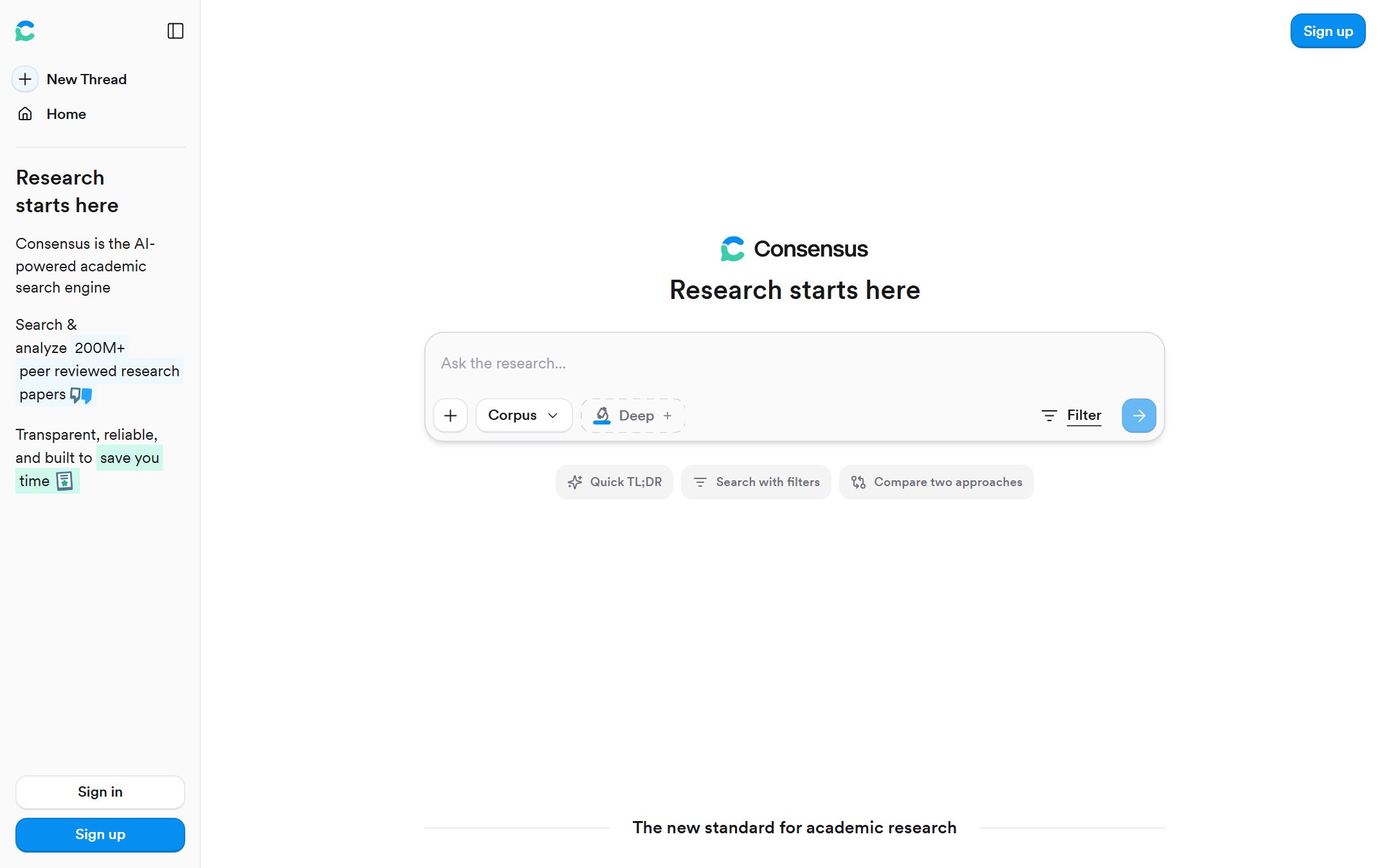
Consensus searches the academic literature and returns findings tied to real papers, and its Consensus Meter shows whether the body of studies supports, opposes, or is inconclusive on a claim. For writing that needs to reflect where the evidence actually sits, it beats asking a general chatbot that may invent a confident answer.
Verdict: The best way to ground a written claim in what the published evidence actually says.
Who it is for: Writers and clinicians who need defensible, evidence weighted statements rather than plausible prose.
Pricing reality: Free tier with limited searches, and a Premium plan around 9 to 12 US dollars per month for unlimited use and the full meter.
One honest limitation: It summarizes abstracts and findings, not full methodology. A high consensus reading does not excuse you from appraising study quality yourself.
Scite: best for checking how a citation is actually used
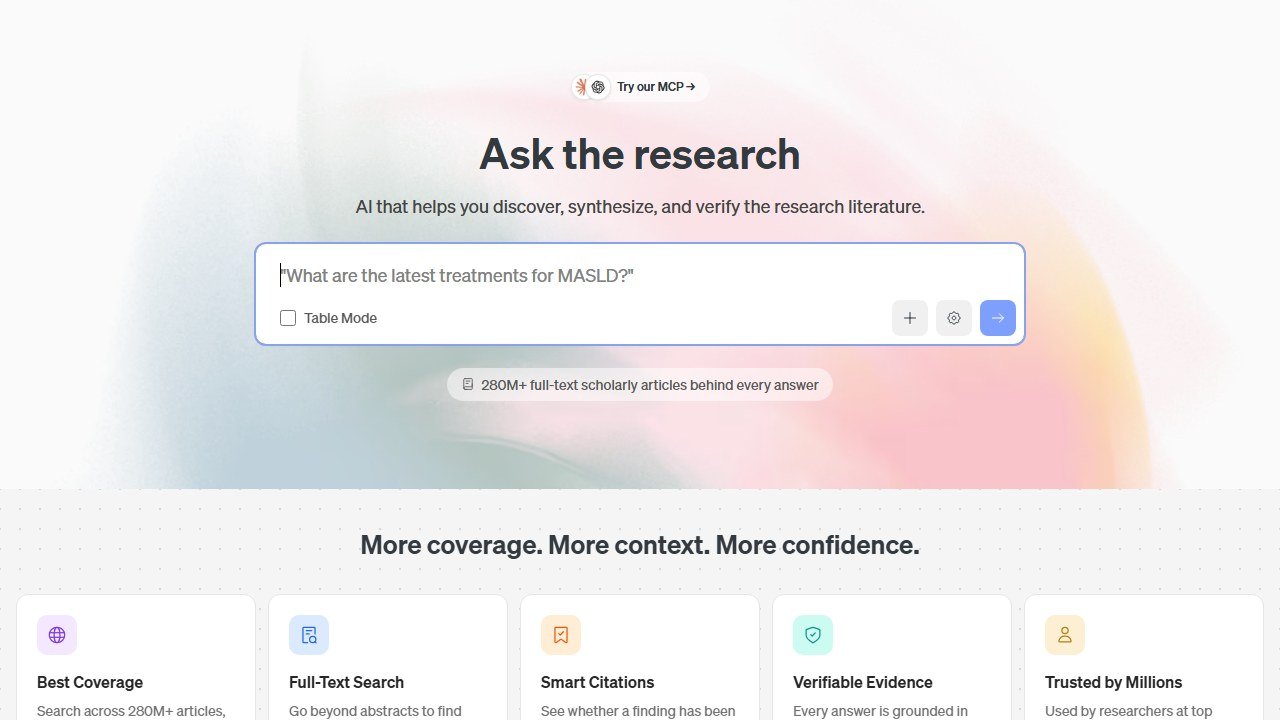
Scite goes beyond counting citations. Its Smart Citations system, built on over 1.2 billion citation statements across more than 200 million sources, tells you whether a later paper supports, contradicts, or merely mentions the work you want to cite. That stops you from citing a finding that the field has since challenged.
Verdict: The strongest tool for verifying that a reference is still well supported before you rely on it.
Who it is for: Researchers and medical writers who need citation level due diligence on their references.
Pricing reality: Subscription around 20 US dollars per month, with institutional and discounted academic options.
One honest limitation: Coverage and the supporting or contradicting classification depend on indexed full text, so newer or paywalled work may show thin context. Treat it as a strong signal, not a verdict.
ChatGPT and Claude: best general assistants for drafting and rewriting
General models like ChatGPT and Claude are the flexible workhorses behind a lot of medical writing. They draft outlines, rewrite clunky paragraphs, simplify jargon for patient materials, and reformat content fast. They are genuinely useful across regulatory, clinical, and manuscript work, which is why they belong on this list despite not being medical specific.
Verdict: The most versatile drafting and rewriting layer, best paired with the specialist tools above.
Who it is for: Almost any medical writer who needs fast drafting, simplification, and reformatting help.
Pricing reality: Free tiers exist, with Plus and Pro plans around 20 US dollars per month per user, and enterprise tiers that add data controls.
One honest limitation: They confidently fabricate citations, dosages, and statistics, and the standard consumer tiers are not a safe place for PHI. Use enterprise plans with a signed BAA for any patient data, and verify every clinical fact against a primary source. For comparison, our AI for technical writing guide covers how these same models behave in adjacent documentation work.
Visit ChatGPT and Claude
Regulated writing: where a fluent wrong sentence costs real money
Legal, medical and technical writing share a property that marketing copy does not: a confident, well-written, incorrect sentence causes harm. That changes how ai tools for medical writing and every alternative should be used.
The failure mode is fluency, not error rate
These models are optimised to produce text that reads as correct. In most writing that is exactly what you want. In regulated writing it removes the signal you would normally use to catch a mistake, because badly-understood material no longer sounds badly understood. A drafter reviewing machine output is checking prose that gives no external sign of which parts are invented, which is a fundamentally harder review task than editing a junior colleague’s draft.
What is safe to delegate
Structure, first drafts of sections you will rewrite, summarising a document you have already read, converting notes into prose, adjusting register for an audience, and consistency checks across a long document. These are all jobs where the model is working from material you supplied and you are able to verify the output against something concrete.
What is not
Anything stating a rule, a dose, a limit, a citation, a standard or a deadline. Not because the model is usually wrong about those, but because when it is wrong it is wrong invisibly, and in these fields the consequence is not an awkward sentence. Every such statement needs a named person with the relevant qualification to verify it against the source, and that verification needs to be recorded rather than remembered.
Confidentiality is the other half of it
Client matters, patient records and unreleased technical specifications should not be pasted into a general consumer subscription. Check where the data goes, whether it trains a model, what the retention period is, and whether your professional obligations or your employer’s contracts permit it at all. Several vendors here publish business tiers with different data terms from their consumer plans, and the consumer plan is what most people sign up to first.
A workflow that holds up
Draft with the tool, verify with the source, and record who verified what. Keep the verification step attached to the document rather than to a person’s memory, because the question will be asked long after the drafting is forgotten. This costs perhaps ten minutes per document and it is the difference between a defensible process and an incident.
How to tell whether the subscription is actually earning its money
Almost nobody evaluates a writing tool after buying it, which is how a category with this much churn keeps its revenue. Here is a way to do it that takes about an hour.
Take a baseline before you start, or you never can
Before the trial begins, record three things for a fortnight: how long a typical piece takes from brief to submitted, how many revision rounds it goes through, and how many pieces you completed. It takes minutes a day and it is unrecoverable afterwards. Without it you are comparing a measured present against a remembered past, and memory reliably flatters whichever tool you have just paid for.
Measure the round trips, not the drafting
These tools are good at producing a first draft and neutral at everything after it. If your bottleneck is drafting, the gain will be large and obvious. If it is approvals, research, or knowing what to say, the gain will be close to zero however fast the drafting gets. Counting revision rounds before and after separates the two more reliably than counting hours.
Watch quality in the same measurement
Faster output at lower quality is not a gain, and it is the most common outcome. Pick one quality measure you already collect, whether that is editor rejections, reader time on page, reply rate or a supervisor’s rating, and read it alongside the speed number. If speed rose and quality fell, you bought volume, and volume is usually not what the budget was for.
Decide the cancel test in advance
Write down, before the trial, what result would make you cancel. People are extraordinarily reluctant to abandon a tool they have learnt, and a threshold set in advance is the only defence against paying for a habit. Diarise the review for the month before renewal rather than the week after it, when cancelling costs you a year.
Count the whole bill
Per-seat tools spread quietly. Check how many seats you are paying for against how many people used the tool last month, because the gap is usually larger than anyone expects and it is the easiest money in the whole exercise to recover.
How to choose, and the line you cannot cross
Match the tool to the job. Regulatory and CSR teams should look at Yseop and TrialAssure. Clinicians drowning in notes should trial Abridge or DAX Copilot, ideally side by side, since published results vary by setting. Manuscript authors should pair Paperpal for language with Consensus and Scite for evidence, and lean on Scholarcy to speed the reading. ChatGPT and Claude fill the gaps for drafting and rewriting across all three.
The non negotiable line is review. Every tool here produces a draft, not a finished medical document. A qualified human owns accuracy, owns the safety language, and owns compliance. Confirm the data handling posture and any BAA before patient information enters a tool, keep a citation check step in your process, and never let speed talk you out of the expert review layer. Used that way, these tools save real hours. Used as an authority, they create liability.

Written by
FazFaz is the founder of AIToolsBakery. Some tools here are tested hands on. Others are assessed from vendor documentation and pricing verified on the live page, and every review says which one it is. Sponsors can buy a position in a guide. They cannot buy the score, the criticism, or silence about a better option.
How we test and how we make money →Frequently Asked Questions