Every “best nonprofit CRM” list on page one right now is vendor-owned, and most of them wave the word “AI-powered” around without ever naming a feature. That is useless when you are trying to figure out whether a platform actually ships something or is just decorating its pricing page. If you are also weighing general CRMs such as HubSpot or Dynamics 365, our best CRM for nonprofits guide reads the terms of each nonprofit discount.
So we did the tedious part. For nine nonprofit CRMs, we identified the actual AI feature by name (Penny, Momentum, Agentforce, Blackbaud Copilot, Keela Intelligence, Zeffy AI Assistant), checked whether it is shipped and generally available or still in preview or beta, and flagged the one privacy question almost nobody asks: what does the vendor do with your donor data, and can you opt out?
Disclosure: Zilwaris, the consultancy run by AI Tools Bakery’s founder, does paid advisory work for Gratefully, which did not pay for any placement on this page and is assessed on the same criteria as everything else on this site.
One scope note before we start. This roundup covers CRM platforms only, the systems where your donor records live. Donor-intelligence overlays that sit on top of your CRM, like Gratefully and Dataro, are a different category with different buying criteria, and we rank those separately in our best AI donor intelligence tools guide. If you already have a CRM you like and just want smarter donor insights, start there instead.
The AI feature matrix: what actually shipped, by name
This is the table we wished existed. “AI-powered” is not a feature. A named product that you can find in the vendor’s release notes is. Here is where each CRM’s AI actually stands as of July 2026.
| CRM | Named AI feature(s) | Status | What it actually does |
|---|---|---|---|
| Bloomerang | Penny, engagement scoring, lapse prediction | Shipped, GA | AI assistant plus ML that flags donors likely to lapse within 90 days |
| Virtuous | Momentum, Virtuous Insights | Shipped, GA | Agentic AI prioritizes donors and drafts personalized emails; ML forecasts giving and suggests ask amounts |
| Neon CRM | AI profile summaries, suggested content | Shipped, GA | Summarizes donor profiles, drafts content; per-account admin opt-out of all AI services |
| Keela | Keela Intelligence, Smart Ask | Shipped, GA | Predicts donor behavior, generates personalized ask amounts |
| Salesforce Nonprofit Cloud | Agentforce for Nonprofits, Einstein scoring, Gift Proposals | Shipped, GA | Agentic AI, lapse and major-gift scoring, AI gift proposals grounded in donor data |
| Blackbaud Raiser’s Edge NXT | Blackbaud Copilot; Prospect Insights, Strategy Assistant | Copilot: technical PREVIEW. Others: shipped | Copilot is preview-only; Prospect Insights and AI acknowledgment letters ship today at premium tiers |
| DonorPerfect | SmartActions (automation, not gen AI) | Shipped; gen AI unverified | Trigger-based workflow automation with unlimited rules; no verified generative AI |
| Zeffy | Zeffy AI Assistant | Shipped, GA | Answers plain-English questions about your donor data, on a 100% free platform |
| Little Green Light | None | No native AI | Budget CRM, honest about it: no named AI feature we could verify |
The pattern worth noticing: the mid-market challengers (Bloomerang, Virtuous, Keela) have shipped more usable AI than the enterprise incumbents. Blackbaud’s headline AI is still a preview, while Bloomerang’s has been in production long enough to have a name your development director will recognize.
A note on price, because it is the question this roundup does not answer. These vendors do not price on the same unit, so they cannot honestly share a price column. Salesforce charges per user, Keela per contact band, Neon on your fundraising revenue, and Virtuous, Bonterra and Blackbaud publish nothing at all. We worked through all six with their own published figures in nonprofit CRM pricing compared.
How we ranked these
We weighted three things: whether the AI is shipped and generally available (previews and betas got labeled, not credited), whether the AI does something a fundraiser would actually pay for (lapse prediction and ask optimization beat “write my email” widgets), and whether the vendor is transparent about data handling. Pricing depth lives in each CRM’s dedicated review and pricing page, which we link throughout, because this page is about the AI layer.
1. Bloomerang: Penny plus the best lapse prediction in the mid-market
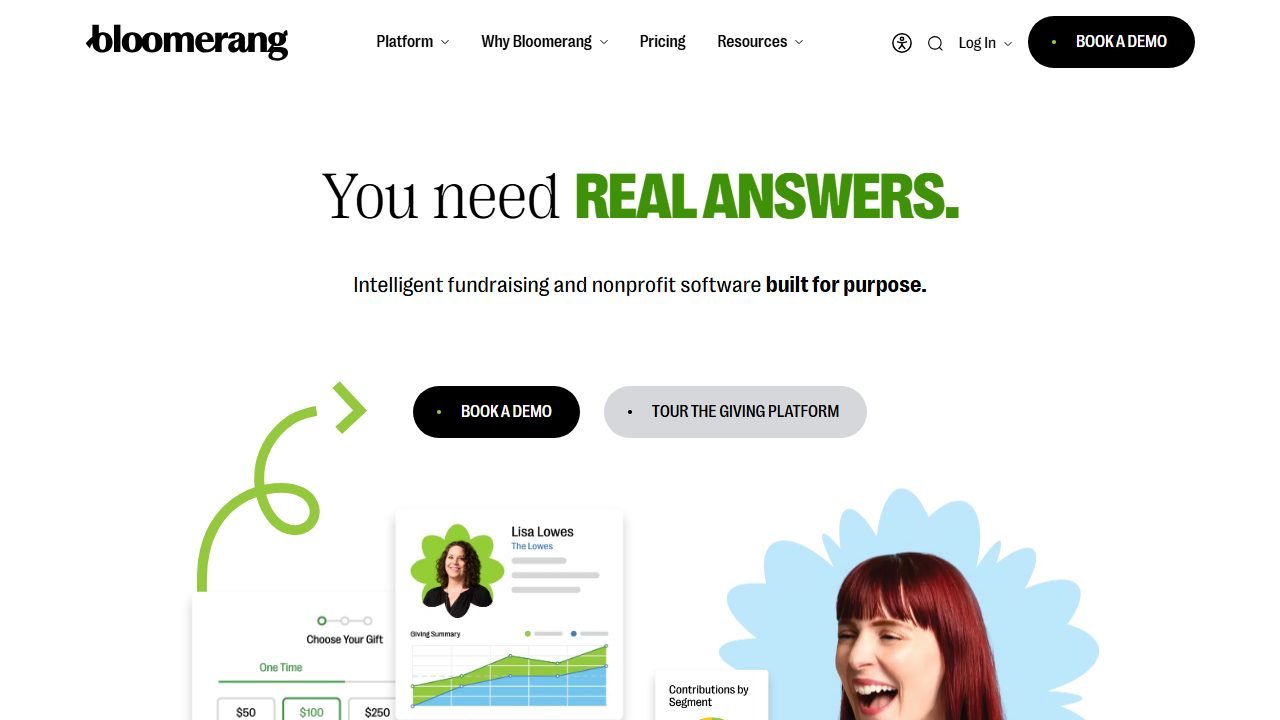
Bloomerang is a donor-retention-first CRM, and its AI leans into exactly that. Penny, its AI assistant, is generally available, and it sits alongside two ML features that matter more in practice: engagement scores on every donor record, and a model that flags donors likely to lapse in the next 90 days.
In practice, the lapse flag is the feature that changes behavior. A weekly list of “these 30 donors are drifting” is something a two-person development team can actually act on, unlike a dashboard of vanity charts. The engagement score updates as donors open emails, give, and attend events, so segments built on it stay current without manual re-tagging.
Pricing: Bloomerang does not publish a simple flat rate that we can quote here, and tiers scale with database size. We break down the full fee math in our Bloomerang pricing guide, and the feature-by-feature verdict lives in our Bloomerang review.
Who it is for: small to mid-size nonprofits where retention is the strategy, which is most of them.
One honest limitation: Penny is an assistant, not an agent. It answers and drafts, but it does not queue up prioritized donor actions the way Virtuous Momentum does. If you want AI that hands you a work list, look at Virtuous.
2. Virtuous: Momentum is the closest thing to an AI fundraiser on staff
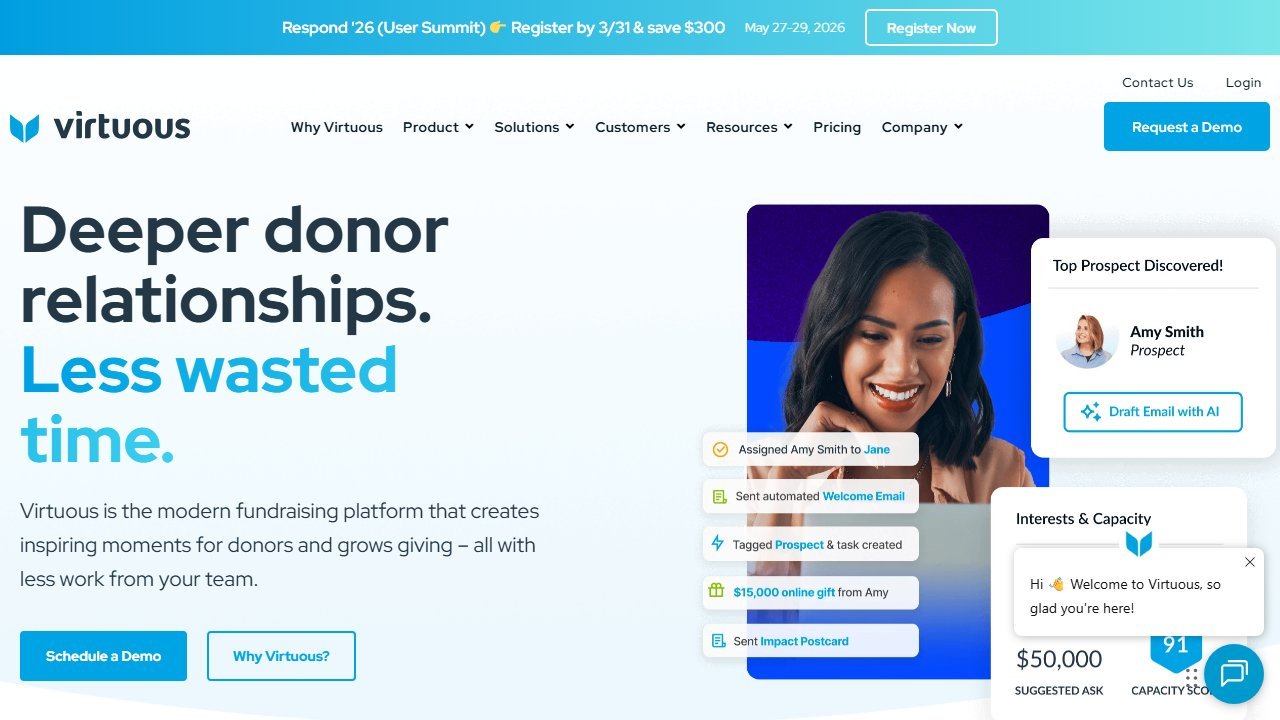
Virtuous ships Momentum, an agentic AI that prioritizes which donors need attention and drafts personalized emails inside the CRM, plus Virtuous Insights, the ML layer that forecasts giving and suggests ask amounts. Both are shipped, named, generally available features.
The agentic part is the differentiator. Where most CRM AI waits for you to ask a question, Momentum shows up with “here are the donors to contact this week and here are the drafts.” That inversion is what separates AI that gets used from AI that gets demoed once. The signals feeding it (giving velocity, engagement, wealth indicators) are the same ones a major-gifts officer tracks by hand.
Pricing: quote-based, scaling with records and modules. No official public rate card we can cite, so budget for a sales call. Our Virtuous review covers what to push on in that conversation.
Who it is for: mid-size and growing shops with at least one dedicated fundraiser who will act on AI-generated priorities daily.
One honest limitation: Virtuous is a bigger platform than a five-person org needs, and the AI value assumes you have enough donor volume for the models to find patterns. Under roughly a thousand active donors, simpler tools do the job.
3. Neon CRM: solid AI, and the only per-account AI opt-out we found
Neon CRM ships AI donor profile summaries and suggested content, both generally available. Useful, if not category-leading. But Neon earns its ranking for something nobody else on this list publishes: an admin setting that opts your entire account’s data out of AI services.
That deserves a moment, because it is a buying criterion almost no roundup mentions. Your CRM holds giving histories, wealth notes, and personal details for every donor you have. When a vendor adds AI, your data is in scope for that AI unless someone says otherwise. Neon lets your admin say otherwise, account-wide, in a setting rather than a negotiation. If your board or your donors are sensitive about AI data handling (healthcare, faith-based, and advocacy orgs, we are looking at you), that single toggle can be worth more than a flashier feature list.
Pricing: tiered by database size; see our Neon CRM review for the current structure and where the add-on costs hide.
Who it is for: orgs that want mainstream AI convenience with a documented off-switch, and anyone whose privacy policy promises donors their data stays put.
One honest limitation: Neon’s AI is assistive rather than predictive. There is no native lapse model or ask-amount engine comparable to Bloomerang or Keela, so pair it with discipline or an overlay tool if predictions matter to you.
4. Keela: Donor Score and Smart Ask, now part of the Velora suite
Keela built its reputation as the small-shop CRM with genuinely predictive AI, and that core holds. Keela Intelligence predicts donor behavior, and Smart Ask generates a personalized ask amount per donor, both shipped and generally available.
Context you need before buying: Keela was acquired by Aplos in June 2024, and as of August 2025 it sits inside the Velora suite alongside Aplos accounting and Raisely fundraising pages. In our experience, post-acquisition roadmaps wobble, and Keela’s AI features have so far survived the transition intact, but you should ask the sales team directly where Keela Intelligence sits in Velora’s plans before signing a multi-year agreement.
Pricing: contact-based tiers, no flat figure we can verify for print. Our Keela review tracks the current structure.
Who it is for: small nonprofits that want real predictive AI (not just a chatbot) at a small-org price point.
One honest limitation: the acquisition question is the limitation. Buying Keela in 2026 means buying into Velora’s direction, and that direction is newer than the product you are evaluating.
5. Salesforce Nonprofit Cloud: Agentforce for orgs with an admin
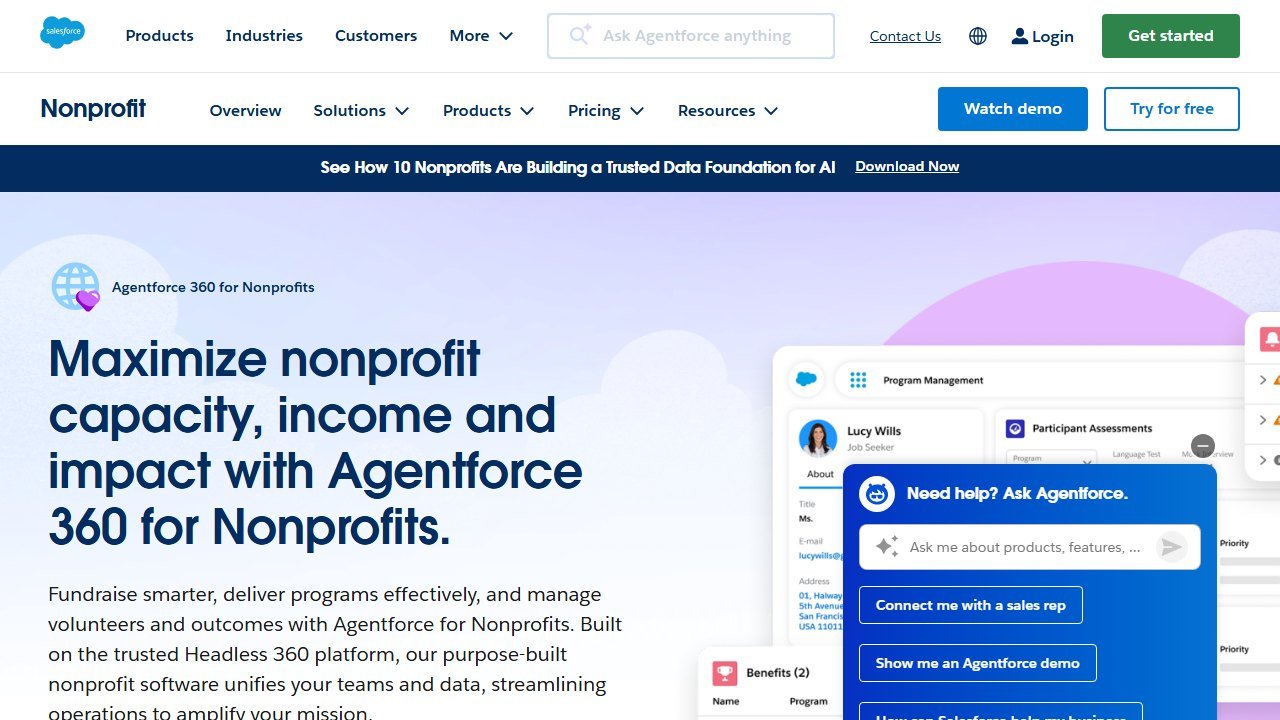
Salesforce Nonprofit Cloud brings the deepest AI stack on this list: Agentforce for Nonprofits (agentic AI), Einstein scoring for lapse risk and major-gift likelihood, and Fundraising Gift Proposals that generate proposal drafts grounded in the donor’s actual data. All shipped, all named, all real.
The catch is the same one Salesforce always carries: none of it configures itself. Agentforce is powerful in the way a professional kitchen is powerful, which is to say useless without a chef. Orgs we have seen succeed on Nonprofit Cloud have a dedicated Salesforce admin or a consulting partner on retainer.
Pricing: per-user licensing plus implementation costs that routinely exceed the license line. Quote-based beyond published per-seat rates, and implementation quotes vary wildly, so get three.
Who it is for: large nonprofits, federated organizations, and anyone already living in the Salesforce ecosystem.
One honest limitation: total cost of ownership. The AI is arguably the best here, but a mid-size org can spend more on implementation than a Bloomerang or Keela subscription costs for five years.
6. Blackbaud Raiser’s Edge NXT: strong shipped AI, but Copilot is still a preview
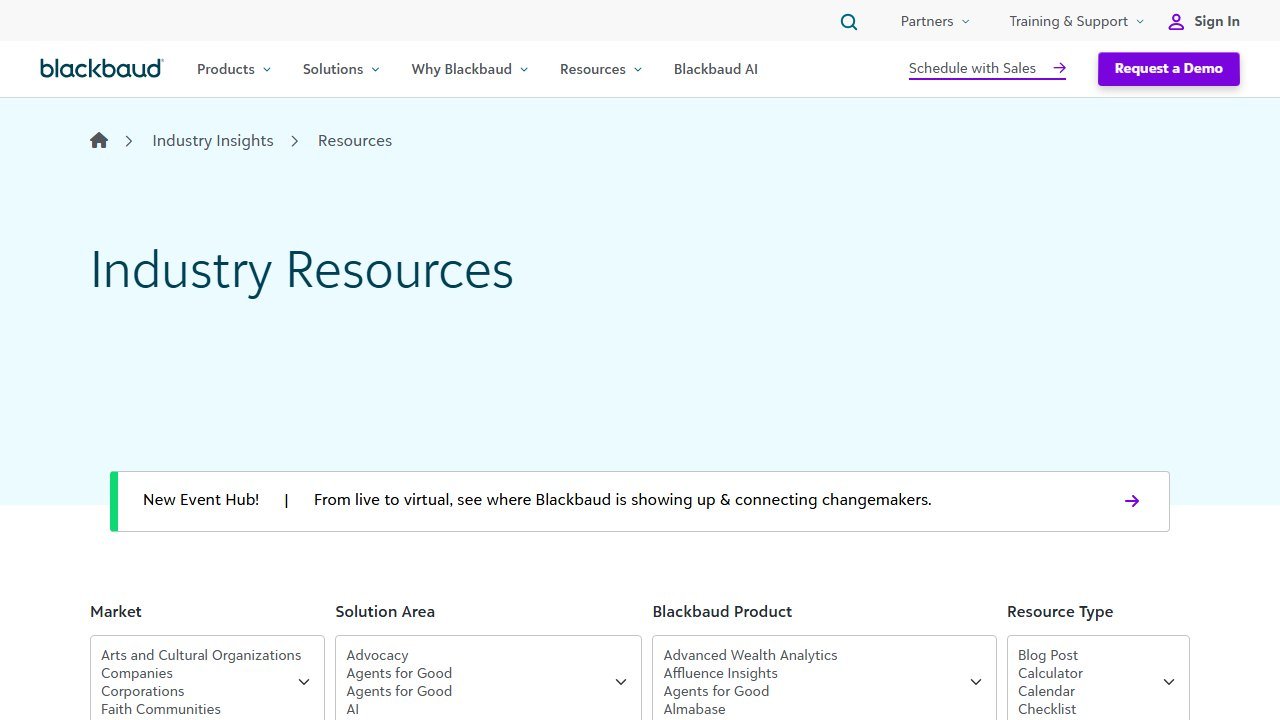
Blackbaud Raiser’s Edge NXT is the enterprise incumbent, and its AI story needs careful separation. Blackbaud Copilot, the headline conversational AI, is in technical preview as of 2025. It is not generally available, and you should not weight it in a 2026 buying decision. What does ship today, at premium tiers: Prospect Insights, Strategy Assistant, and AI-assisted acknowledgment letters.
The shipped features are good. Prospect Insights surfaces wealth and giving indicators inline on records, and the AI acknowledgment letters save real time in high-volume gift processing. But we have watched too many demos where the preview feature gets center stage. Ask your rep to demo only what your tier includes today.
Pricing: quote-based, tier-dependent, with the AI features concentrated in premium packages. Budget accordingly and get the AI entitlements in writing.
Who it is for: established major-gift programs and institutions already committed to the Blackbaud ecosystem.
One honest limitation: the best AI is either in preview (Copilot) or paywalled into premium tiers, so the sticker price and the AI-included price are different numbers.
7. DonorPerfect: excellent automation, unverified generative AI
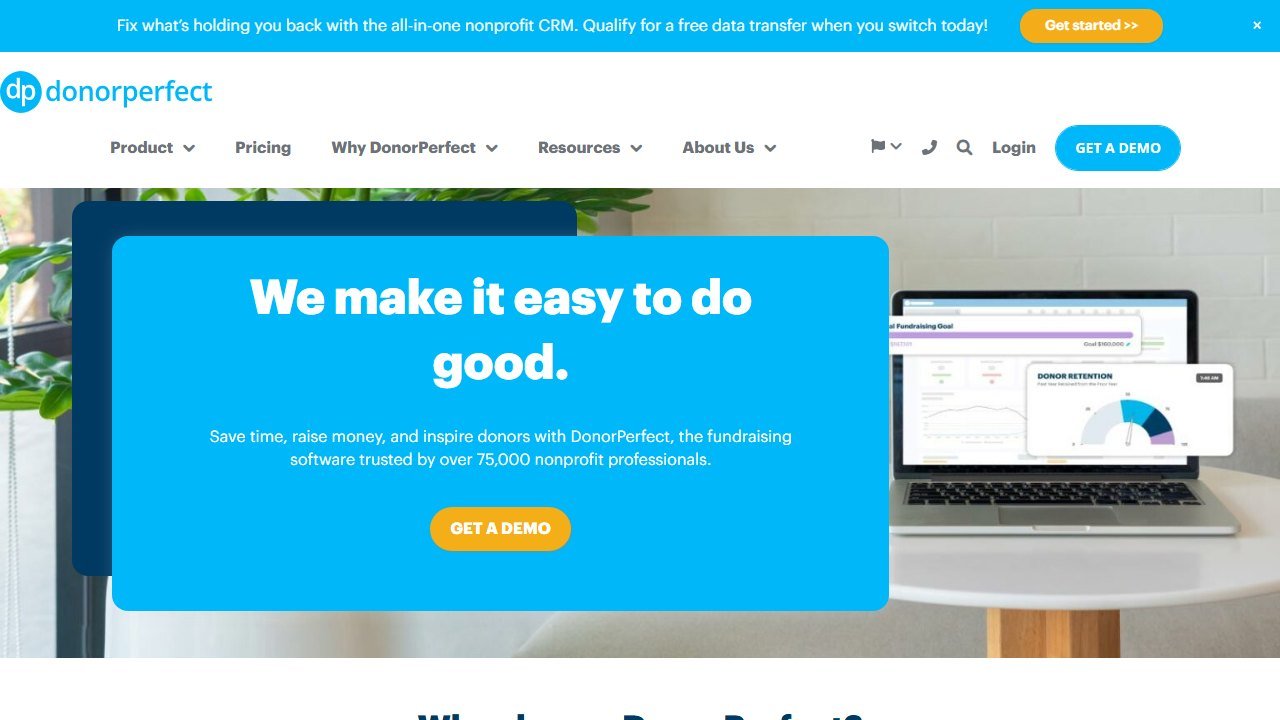
DonorPerfect ships SmartActions, trigger-based workflow automation with unlimited rules, and it is genuinely useful: gift over $500 triggers a task for the ED, lapsed monthly donor triggers a win-back email, and so on. That is real, shipped, and reliable.
What we could not verify is a dedicated generative AI feature. As of July 2026, we found no named, documented gen-AI product from DonorPerfect equivalent to Penny or Momentum, so we are saying that plainly rather than repeating marketing language. If DonorPerfect ships one, we will update this page.
Pricing: tiered by record count; the full breakdown is in our DonorPerfect pricing guide, and the feature verdict is in our DonorPerfect review.
Who it is for: orgs that value dependable automation and a long track record over cutting-edge AI.
One honest limitation: if named, verified AI is your buying criterion, DonorPerfect currently does not clear the bar this roundup is built on.
8. Zeffy: the free CRM that still ships named AI
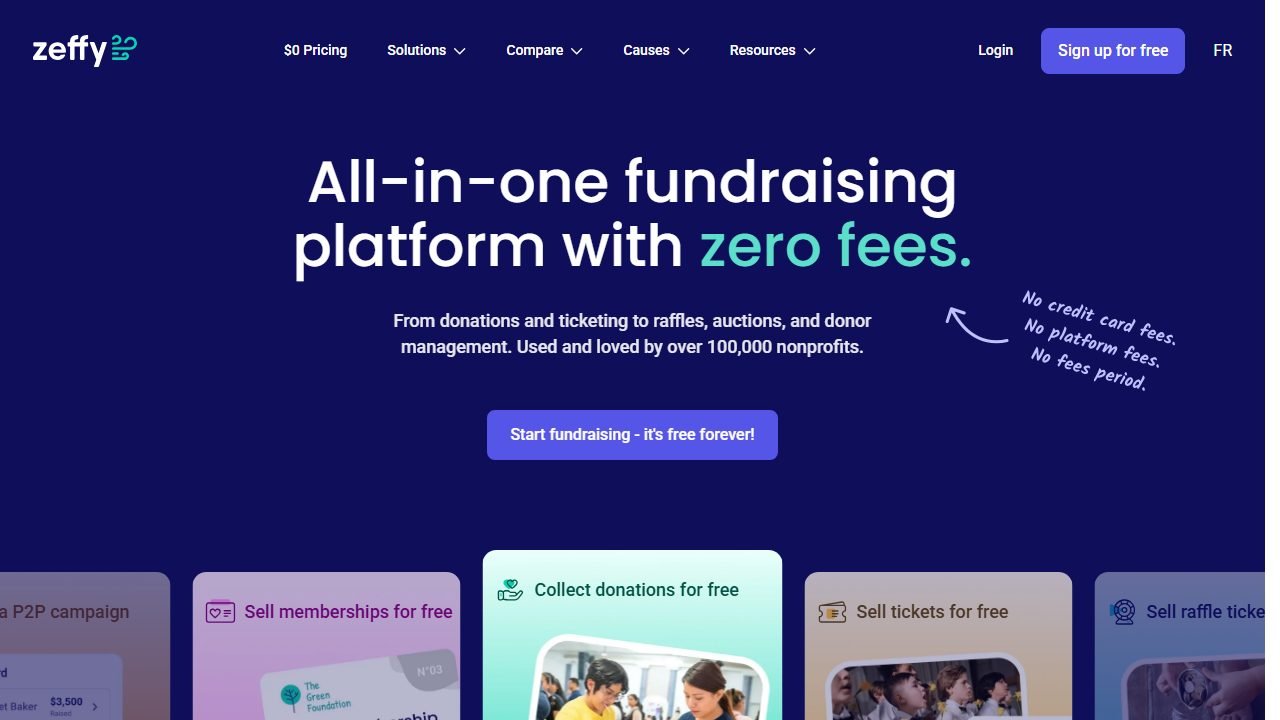
Zeffy is 100% free, funded by optional donor tips rather than platform fees, and it includes the Zeffy AI Assistant, which answers plain-English questions about your donor data (“who gave last year but not this year?”). For a free product to ship a named, generally available AI feature while Little Green Light ships none is a small marvel.
The tip-funded model means your donors see an optional tip prompt at checkout. Most orgs we have talked to find the trade acceptable for a $0 software line, but know what your donors will see.
Pricing: free. All features, no tiers, no per-record charges. The only cost is the donor-facing tip prompt.
Who it is for: small nonprofits and startups where the software budget is zero and the donor database is modest.
One honest limitation: Zeffy’s AI answers questions; it does not predict. No lapse models, no ask optimization, no scoring. It is a free CRM with a helpful assistant, not a predictive platform.
9. Little Green Light: the honest no-AI budget pick
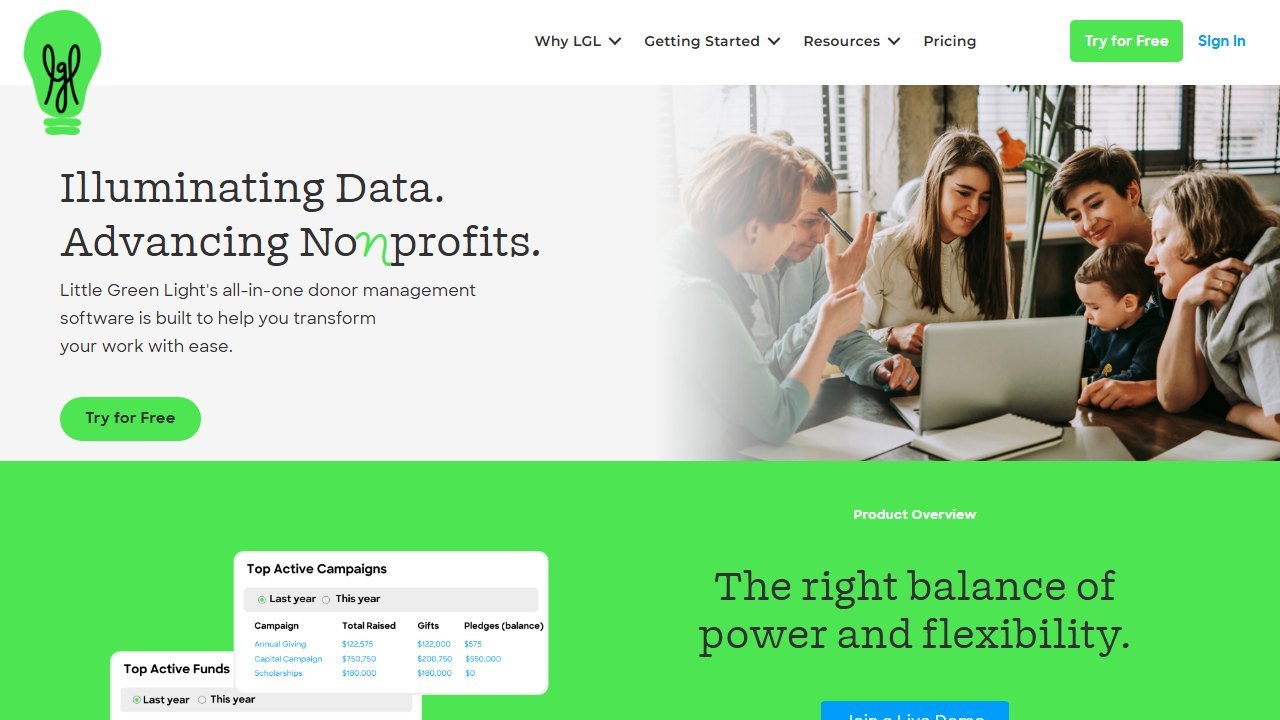
Little Green Light has no named native AI feature we could verify, and we respect that it does not pretend otherwise. It is a straightforward, affordable donor database with solid reporting, and thousands of small nonprofits run happily on it.
We include it because a roundup about AI features should tell you what the no-AI baseline costs, and because for some orgs, no AI is the right answer: less data-handling surface, fewer moving parts, lower price.
Pricing: among the lowest on this list, scaling with record count on published tiers.
Who it is for: small shops that want a reliable donor database and would rather export to a spreadsheet than pay for predictions.
One honest limitation: it is the limitation. If AI-assisted segmentation or drafting is anywhere on your roadmap, you would be buying a migration later.
Which nonprofit CRMs actually do AI donor segmentation
Segmentation is where CRM AI earns its keep, and it is the question behind half the searches that land on pages like this one. Here is which platforms auto-segment natively, and how.
Keela runs Donor Score through Keela Intelligence, ranking each donor’s predicted likelihood to give so you can pull a “high score, no ask in 6 months” segment in two clicks, with Smart Ask attaching a personalized amount to each name. Bloomerang maintains a live engagement score on every record and layers the 90-day lapse prediction on top, so segments like “engaged but cooling” build themselves. Virtuous watches giving velocity, engagement, and wealth signals and feeds them to Momentum, which turns segments directly into prioritized action lists rather than static reports.
One adjacent tool worth knowing: Fundraise Up is a donation platform rather than a CRM, but its ML-personalized ask amounts do segmentation work at the checkout layer, tailoring the ask per donor in real time. If your CRM lacks native ask optimization, pairing it with Fundraise Up covers that gap; our Fundraise Up review has the details.
If none of your CRM shortlist segments natively, the overlay route (a dedicated intelligence layer on top of your existing CRM) is often cheaper than migrating, and that is exactly the lane covered in our donor intelligence tools guide and our broader AI fundraising tools roundup.
The privacy question to ask every vendor
We flagged Neon CRM’s per-account AI opt-out above, and it deserves its own moment as a buying criterion. Every AI feature in this roundup runs on your donors’ data. Before you sign anything, ask each vendor three questions in writing: Is our account data used to train or improve your AI models? Can we opt our account out of AI processing entirely, and where is that setting? What happens to AI-processed data if we leave?
Neon CRM is the only vendor on this list where we verified a documented, admin-controlled, account-wide opt-out. That does not mean the others misuse data; it means you are relying on policy documents instead of a switch. For orgs with sensitive donor populations, the switch wins.
Which nonprofit vendors publish a price, and which will not
This is the most useful single fact about the market and it is rarely stated plainly. Roughly half the category publishes a rate card you can read without speaking to anyone; the other half runs a quote form. That split, not the software, decides how your evaluation has to be run.
| Vendor | Publishes a figure | Entry price, verified 4 Sep 2026 | What it meters on |
|---|---|---|---|
| Little Green Light | Yes, every band | $45/mo | Constituents |
| Salesforce Nonprofit Cloud | Yes | $70/user/mo (4 Oct 2026), 10 free | Users |
| Neon CRM | Model yes, full list no | $99/mo | Fundraising revenue |
| Bloomerang | Yes, by product | $125/mo | Product mix |
| Keela | Yes, every band | $164/mo | Contacts |
| Dataro | Yes, but unlinked page | $15,000/yr + $0.10/donor | Active donors |
| Blackbaud | No | Quote form only | Not disclosed |
| Virtuous | No | Quote form only | Bands at $5m revenue |
| GoFundMe Pro | Model only | Subscription + transaction fee | Donations |
Why the split matters more than the prices
If three of your shortlist publish and three do not, you cannot run a like-for-like comparison, and the quote-only vendors know that. The practical move is to price a published alternative precisely at your own seat count and list size, then make that the number every quote has to justify itself against. It is the only figure in the room that both sides can verify.
Nine different meters, which is the real problem
Constituents, users, fundraising revenue, product mix, contacts, active donors, donation volume. Seven distinct meters across nine vendors means the cheapest platform is a property of your organisation, not of the market. Whichever of your numbers, people or records or revenue, is growing fastest should decide which pricing model you buy into, and that question is almost never asked before a shortlist is drawn.
What you are actually signing, beyond the monthly figure
A published rate card tells you the list price. The contract decides what you pay, and four terms do most of the work.
Term length and the annual-billing discount
Nearly every figure quoted in this market, these CRMs included, assumes annual billing. Monthly billing is routinely 20 to 30% higher, so the headline you compare against a rival may be a different commitment entirely. Check which basis each number is on before putting two of them in the same sentence, because vendors do not always label it.
Mid-term expansion, priced now or priced later
The band you cross, the seat you add, the module you switch on: agree what each costs before you sign, and specifically whether the discount you negotiated applies to anything added mid-term. It very often does not. Discovering that at the moment you need to grow is how a good first-year deal becomes an expensive second year.
The renewal cap is the term worth most and asked for least
At renewal the vendor knows your usage, your dependency and your switching cost, and in a market where most rivals publish nothing you have no rate card to anchor against. Blackbaud publishes no figures at all, and Virtuous publishes none while banding its tiers at $5 million in fundraising revenue. Against that, a capped uplift stated as a percentage is worth more than a larger first-year discount, and it is only negotiable while you still have a choice.
What happens to your data at the end
Ask what a full export contains, in what format, how long after termination you can request one, and whether live recurring gift schedules and their payment tokens transfer. Tokens are the ones that usually do not, and if they cannot move, every monthly donor has to re-enter card details and a share will not. Get the answer in writing during procurement, not during the exit.
Published does not mean fixed
Keela raised every band between late August and early September 2026, entry moving from $134 to $164, a rise of roughly 15 to 22% across the range in under two weeks. Neon retired an entire tier structure. A published price is a snapshot with a date on it, and if the figure you are comparing does not carry one, you do not know what you are looking at.
Verdict: which AI CRM should you actually buy
For most small and mid-size nonprofits, Bloomerang is the pick: shipped AI with a name (Penny), lapse prediction your team will actually use, and a retention focus that matches how small shops win. If you have a dedicated fundraiser who wants AI to hand them a daily work list, Virtuous Momentum is the strongest agentic AI in the category. Privacy-sensitive orgs should shortlist Neon CRM for the opt-out alone. On a zero budget, Zeffy gives you a real AI assistant for free, and Little Green Light remains the honest choice if you want no AI at all.
And whatever you buy: credit only the features that are generally available today. Blackbaud Copilot may become excellent, but in July 2026 it is a preview, and previews do not raise money.

Written by
FazFaz is the founder of AIToolsBakery. Some tools here are tested hands on. Others are assessed from vendor documentation and pricing verified on the live page, and every review says which one it is. Sponsors can buy a position in a guide. They cannot buy the score, the criticism, or silence about a better option.
How we test and how we make money →