Generative engine optimization (GEO), also called answer engine optimization (AEO), is now its own software category, and two names dominate every shortlist: Profound and Peec AI. Both tell you how your brand shows up when people ask ChatGPT, Perplexity, Gemini, and Google AI Overviews a question. Both track mentions, citations, sentiment, and competitors. From a feature bullet list they look like cousins.
They are not priced, built, or aimed at the same buyer. Profound is the enterprise category leader: premium, largely sales-led, with the deepest dataset and a methodology built on capturing real answer-engine responses. Peec AI is the value pick: affordable, self-serve, fast-growing, and by a wide margin the most-named Profound alternative in the market. The gap between them is less about who has more checkboxes and more about price, access, and how each one actually collects its data.
This comparison cuts through that. We line both tools up on the axes a real buyer cares about: price and access, data depth and methodology, engines covered, competitor benchmarking, action and optimization guidance, and fit by company size. We use a 0 to 5 scale where scoring helps, and we end with a segmented verdict instead of crowning one universal winner, because the honest answer depends entirely on who you are.
Why trust this comparison? AIToolsBakery is independent. We sell neither tool, we are not affiliated with Profound or Peec AI, and we earn nothing if you sign up for either. When a post is sponsored we label it clearly, and a sponsorship never changes a verdict or a score. This article is not sponsored by anyone. The reason that matters here: search the term “Profound vs Peec AI” and most of the front page is vendor-authored, including tools quietly ranking themselves first. We have no horse in this race, so the scoring rubric is the same for both.
Quick answer: Profound wins for enterprises that need the deepest data, compliance, and end-to-end GEO optimization and can justify a premium contract. Peec AI wins for smaller teams and agencies that want accurate, affordable, self-serve AI-visibility tracking. Pick by budget and depth.
The quick context: what each tool is
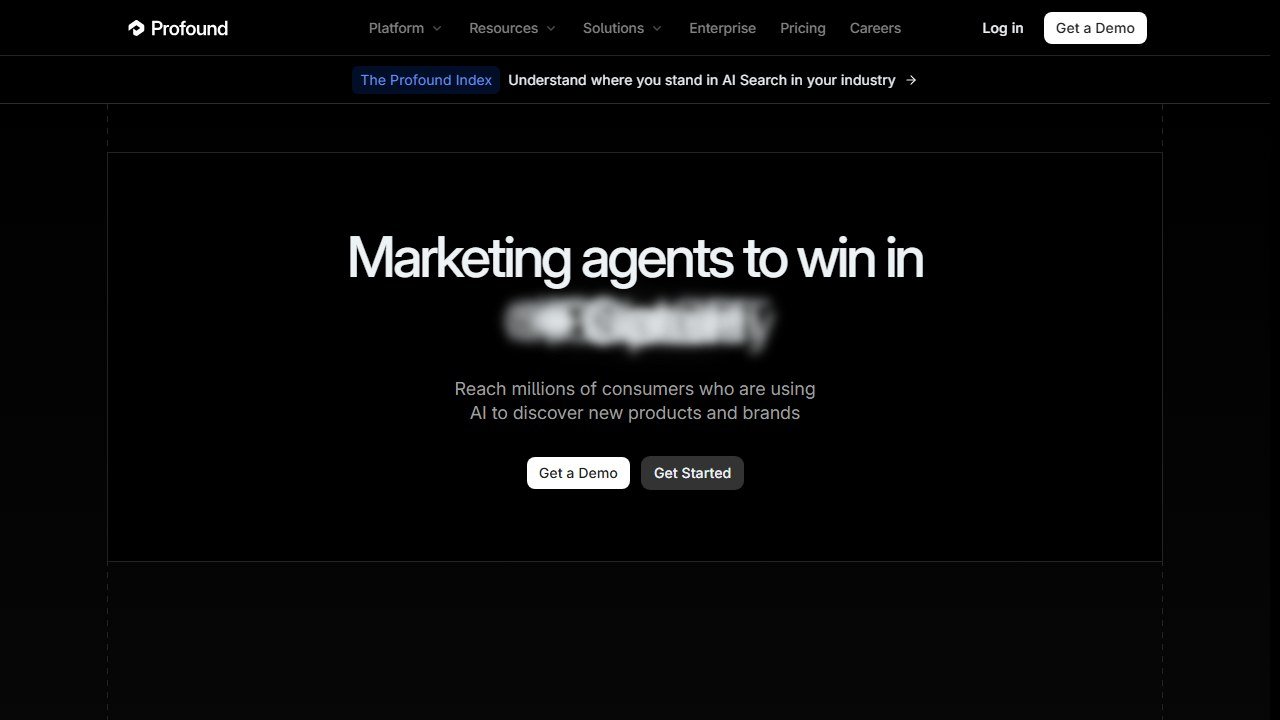
Profound is an end-to-end AI-search visibility platform aimed at marketing and AEO teams at larger organizations. It does four things in sequence: tracks how AI engines answer prompts about you, analyzes the gaps and sentiment behind those answers, helps you build and score content to close them, and reports the whole thing back with audit trails. It also exposes “prompt volumes” (an estimate of what people are actually asking AI) and agent analytics that show how AI crawlers read your site.
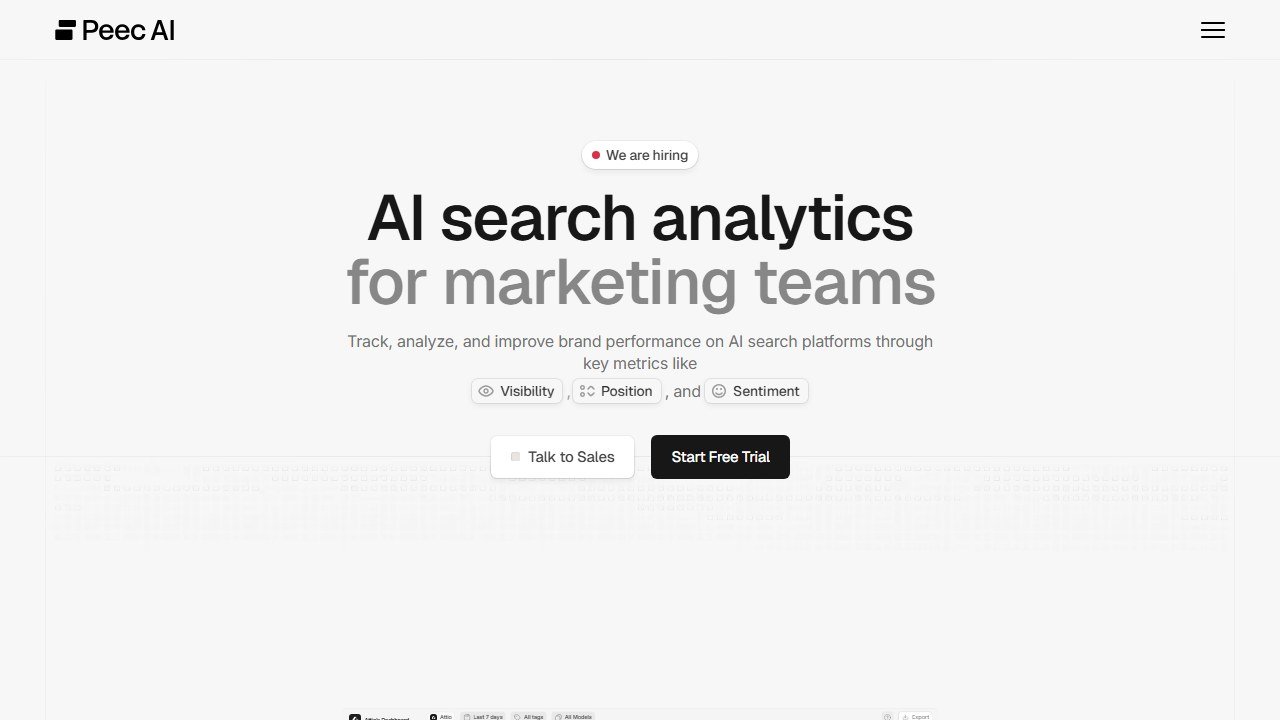
Peec AI is a focused AI-visibility analytics platform aimed at SEO, content, brand, and agency teams. It tracks brand mentions, impressions, share of voice, sentiment, and the exact URLs that AI engines cite, then benchmarks all of it against competitors. Its pitch is precision and accessibility: a clean dashboard, fast setup, broad multi-country and multi-language coverage, and pricing a solo marketer or small agency can actually approve.
Put simply, Profound wants to be the platform you run your whole AEO program inside. Peec AI wants to be the most accurate, most affordable monitor you check every morning. For deeper standalone looks, see our Profound review and our Peec AI review.
Price and access
This is the cleanest dividing line, so we will start here.
Peec AI is self-serve and mid-market priced. Entry plans begin in the low-to-mid double digits to around the high $80s to $95 per month range depending on how you count, scaling up through roughly the mid-$200s and into the $400s to $500s per month for more prompts, countries, and seats. You can sign up, configure prompts, and see data without talking to a salesperson. Pricing scales primarily on prompt volume, number of countries, and projects, and unlimited users is a common selling point across tiers. Treat any exact figure as a moving target and confirm on the Peec AI pricing page, but the model is clear: affordable, transparent, and bought with a credit card.
Profound sits in a higher bracket and leans sales-led. There is a published lower self-serve tier, but the plans that unlock the platform’s real depth (broader engine coverage, larger prompt sets, enterprise security, agency and white-label features) run from several hundred dollars per month into custom enterprise contracts that you negotiate. Expect a demo, a scoping call, and an annual commitment at the top end. Profound does not publish its full pricing as fixed numbers, which is itself a signal of the buyer it is built for.
The takeaway is not “cheaper is better.” It is access fit. A lean team that needs to move this week is a poor match for a sales cycle, and an enterprise that needs procurement, security review, and a contract is a poor match for a self-serve checkout.
| Axis | Peec AI | Profound |
|---|---|---|
| Access model | Self-serve signup | Largely sales-led, demo first |
| Price tier | Affordable, mid-market | Premium, enterprise |
| Pricing transparency | Published, scales by prompts/countries | Lower tier published, upper tiers custom |
| Time to first data | Fast (same day) | Slower (onboarding/scoping) |
Scores: Peec AI 4.5 / 5 on price and access. Profound 3 / 5 (strong for enterprise procurement, weak for fast cheap entry).
Data depth and methodology
Here is the distinction the vendor-written comparisons tend to blur, and it is the most important technical difference between the two.
Profound’s methodology centers on capturing real answer-engine responses, using front-end response capture and synthetic prompting, with frequent refreshes and stored response snapshots for an audit trail. In plain terms, it goes and reads what the engines actually said, repeatedly, and keeps the receipts. That feeds deeper analytics: sentiment on the actual answer text, gap and intent analysis, audience and conversation-level breakdowns, and estimates of real prompt demand. For a buyer who needs to defend numbers to a board or prove a citation existed on a given day, that audit trail matters.
Peec AI also captures AI responses and turns them into clean, reliable metrics: mentions, impressions, share of voice, sentiment, and the specific citing URLs. Its refresh cadence is typically daily rather than hourly, and its analytics are lighter and more focused: position, frequency, sentiment, and competitor share, presented in a dashboard that is genuinely easy to read. The trade is breadth and forensic depth for clarity, speed, and price.
So the real choice on methodology is: do you need the deepest, most defensible, frequently refreshed dataset with stored evidence (Profound), or do you need accurate, clean, daily-refreshed analytics that a busy team will actually use (Peec AI)?
Scores: Profound 5 / 5 on data depth. Peec AI 4 / 5 (accurate and clear, intentionally less forensic).
Engines and coverage
Both cover the engines that matter. Profound monitors a long list including ChatGPT, Perplexity, Gemini, Google AI Overviews, Microsoft Copilot, Claude, Grok, Meta AI, and DeepSeek, and it pushes broad regional and language coverage across many markets. Peec AI covers the core set including ChatGPT, Perplexity, Gemini, Google AI Overviews and AI Mode, and Copilot, with very strong multi-country and multi-language tracking that punches above its price.
For most brands, both cover the engines you care about today. Profound edges ahead on the sheer number of engines and the breadth of regions on upper tiers. Peec AI is the stronger value for teams whose main need is many countries and many languages without an enterprise invoice. If your priority is depth on one or two key markets, Profound leads. If it is wide multi-market monitoring on a budget, Peec AI is the smarter buy.
Scores: Profound 5 / 5 on engine and region breadth. Peec AI 4.5 / 5 (excellent multi-market value, slightly fewer engines).
Competitor benchmarking
Both tools treat competitors as a first-class feature, and both do it well. You add rival brands, then watch share of voice, mention frequency, sentiment, and citation sources side by side over time.
Peec AI’s benchmarking is a core strength and a big part of its appeal: clean competitor share-of-voice views, gap analysis that surfaces sources citing rivals but not you, and gap scores to prioritize which third-party sites to pursue for outreach. For agencies juggling multiple clients against multiple competitor sets, this is fast and legible.
Profound benchmarks competitors too, and layers it into deeper analytics: gap and intent analysis, sentiment on the underlying answers, and the broader dataset behind each comparison. It is more powerful and more complex.
This axis is closer to a tie than any other. Peec AI wins on speed and clarity, Profound wins on depth.
Scores: Peec AI 4.5 / 5. Profound 4.5 / 5.
Action and optimization
Measuring visibility is table stakes now. The harder question is what each tool does to help you improve it.
Profound leans hard into this. Beyond monitoring, it offers content scoring for AEO, workflows, autonomous agents for marketing tasks, a shopping module for e-commerce visibility, and agency or white-label features. It is built to take you from diagnosis to action inside one platform. That is the core of its enterprise pitch: do not just learn you are losing the citation, get guided toward fixing it.
Peec AI is more deliberately a monitoring and analytics tool. It gives you strong, actionable signals (the exact URLs to pursue, the gaps to close, the prompts to target) and source recommendations, but it expects you to execute the content and PR work elsewhere. That is not a weakness for many teams; it is a sharper, cheaper tool that does its one job very well.
Honest caveat that applies to both: no tool in this category has fully solved turning insight into automatic execution. Profound goes further toward action. Peec AI stays a focused, excellent measurement layer.
Scores: Profound 4.5 / 5 on action and optimization. Peec AI 3 / 5 (strong signals, you do the doing).
Who each is for
Profound fits enterprises and large brands: teams that need the deepest, most defensible data, broad engine and region coverage, compliance and security posture, white-label or agency-scale reporting, and a platform that spans monitoring through optimization. If budget is secondary to depth, audit trails, and capability, Profound is the category leader for a reason.
Peec AI fits SMBs, startups, lean in-house marketing teams, and agencies: anyone who wants accurate, clean AI-visibility analytics, strong multi-market and multi-language tracking, fast self-serve onboarding, and a price a small team can approve without a procurement cycle. It is the most-recommended Profound alternative precisely because it nails the value end of the market.
Mid-market buyers sit in the overlap. If you need depth and can fund it, look up to Profound. If you need clarity and speed at a sane price, Peec AI is very likely your answer. For the wider field of options, see our roundup of the best AI search monitoring tools for 2026.
Our verdict
There is no single winner here, and any comparison that crowns one is usually selling something.
Profound wins on data depth, methodology, engine and region breadth, and action-oriented features. It is the enterprise category leader, and for large brands that need defensible numbers, compliance, and a full diagnose-and-act platform, it is worth the premium and the sales cycle. Overall: 4.5 / 5 for its intended buyer.
Peec AI wins on price, access, speed to value, multi-market coverage per dollar, and clean usable analytics. For SMBs, agencies, and lean teams, it delivers most of the visibility insight that matters at a fraction of the cost and complexity, which is exactly why it is the most-named Profound alternative. Overall: 4.5 / 5 for its intended buyer.
So the decision rule is simple. If you are an enterprise where depth, compliance, and end-to-end optimization justify a premium contract, choose Profound. If you are a smaller team or agency that wants accurate, affordable, self-serve AI-visibility analytics with strong multi-market tracking, choose Peec AI. Both are genuinely good. The right pick is the one that matches your budget, your buying motion, and how much of the work you need the tool to do for you.

Written by
FazFaz is the founder of AIToolsBakery. Some tools here are tested hands on. Others are assessed from vendor documentation and pricing verified on the live page, and every review says which one it is. Sponsors can buy a position in a guide. They cannot buy the score, the criticism, or silence about a better option.
How we test and how we make money →Frequently Asked Questions