If your reps spend half their day listening to ringtones and leaving voicemails, an AI dialer is the single highest-leverage tool you can buy. The right one multiplies live conversations per hour without adding headcount. This guide ranks the eight dialers worth your shortlist, and it does something most roundups refuse to do: it tells you the truth about which platforms are genuinely AI parallel dialers and which are power dialers wearing the label.
We are an independent review site. We do not sell a dialer, and none of the vendors below paid for placement or position. That matters in this category, because many of the “best AI dialer” lists you will find are published by dialer companies that happen to rank themselves first. Our top pick is Orum, the parallel-dialing category leader, but the best choice for you depends heavily on team size, call volume, and whether you actually need parallel lines or just a smarter single-line workflow.
Quick answer: Orum is the top AI parallel dialer for cold, high-volume outbound, with Nooks the strongest alternative when coaching matters as much as throughput. For warmer lists and smaller teams, CloudTalk and Kixie deliver solid power-dialing for less.
What an AI dialer actually does
A sales dialer automates the mechanical parts of outbound calling: pulling the next contact, dialing the number, detecting whether a human or a machine answered, and logging the result back to your CRM. The AI layer on top handles the slow, error-prone steps. It filters out voicemails and dead numbers in real time, drops pre-recorded voicemails with one click, transcribes and summarizes calls, and increasingly coaches reps live during the conversation. The payoff is measured in three numbers: dials per rep per day, connect rate, and time spent talking to actual prospects rather than waiting on rings.
The confusion in this market comes from the word “dialer” covering two very different machines. Buy the wrong type and you either overpay for lines you cannot keep busy, or you cap your team’s connect volume far below what the headcount could deliver. So before the rankings, here is the distinction every other listicle blurs.
Parallel dialer vs power dialer: the explainer most posts skip
A power dialer calls one number at a time, automatically. When a call ends or hits voicemail, it immediately dials the next contact on the list. There is no manual dialing and no waiting between calls, but a rep is still tied to a single live line. Power dialers are the right tool for warmer lists, higher-value conversations, and smaller teams where connect rates are decent and every call deserves full attention.
A parallel dialer calls several numbers simultaneously, often four to ten at once. The system detects which call a human actually picks up, connects that one to the rep, and drops the rest. This crushes idle time on cold lists with low pick-up rates, because the rep only ever hears a live human. The tradeoff is real: parallel dialing can produce an awkward half-second of dead air on connect, it consumes more phone numbers (which raises spam-flag risk if not managed), and it only pays off when your list is large and cold enough to keep the extra lines busy. For a small team working warm inbound leads, a parallel dialer is overkill. For an SDR team grinding a cold list of thousands, it can triple live conversations per day.
Quick rule of thumb: warm list or under five reps, lean power dialer. Cold list at volume with five or more reps, lean parallel. Keep that distinction in mind as you read the rankings, because the “best” label flips depending on which side you are on.
How we chose
We evaluated each platform on five weighted factors: realistic dials per rep per day, connect rate after spam and voicemail filtering, the depth and usefulness of AI features (voicemail detection, live coaching, call summaries), CRM and sales-engagement integration, and value for the money at the team sizes each tool targets. We pulled pricing from public pages and vendor sales conversations, cross-checked feature claims against hands-on demos and verified user reviews, and discounted any benchmark a vendor could not substantiate. Scores are on a 0 to 5 scale. We did not let brand size decide rank: a cheaper tool that nails its niche can outscore an enterprise platform that is wrong for your team.
1. Orum
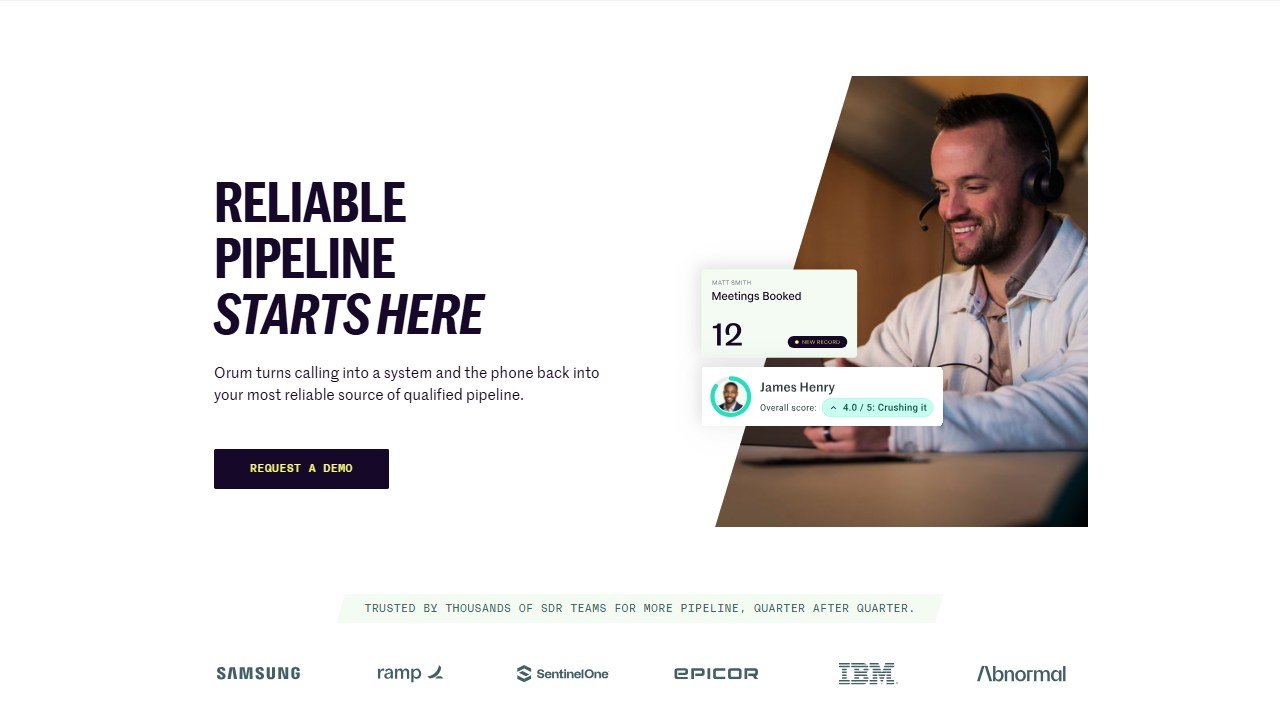
Orum is the parallel dialer the rest of the category is measured against. It dials up to roughly ten lines at once, uses AI to filter out voicemails, dead numbers, and phone trees, and connects the rep only when a real person picks up. The result is the highest live-conversation throughput on this list for cold, high-volume outbound. The “Salesfloor” feature lets managers and reps work as a virtual team, and the voicemail drop plus answering-machine detection are best in class.
- Standout strength: Highest dials-per-rep throughput on cold lists, with the most reliable AI human detection.
- Pricing model: Per-seat subscription, quote-based, premium tier.
- Best for: Mid-market and enterprise SDR teams running large cold lists.
- Verdict: If parallel dialing at volume is the goal, Orum is the benchmark. Score: 4.8.
2. Nooks
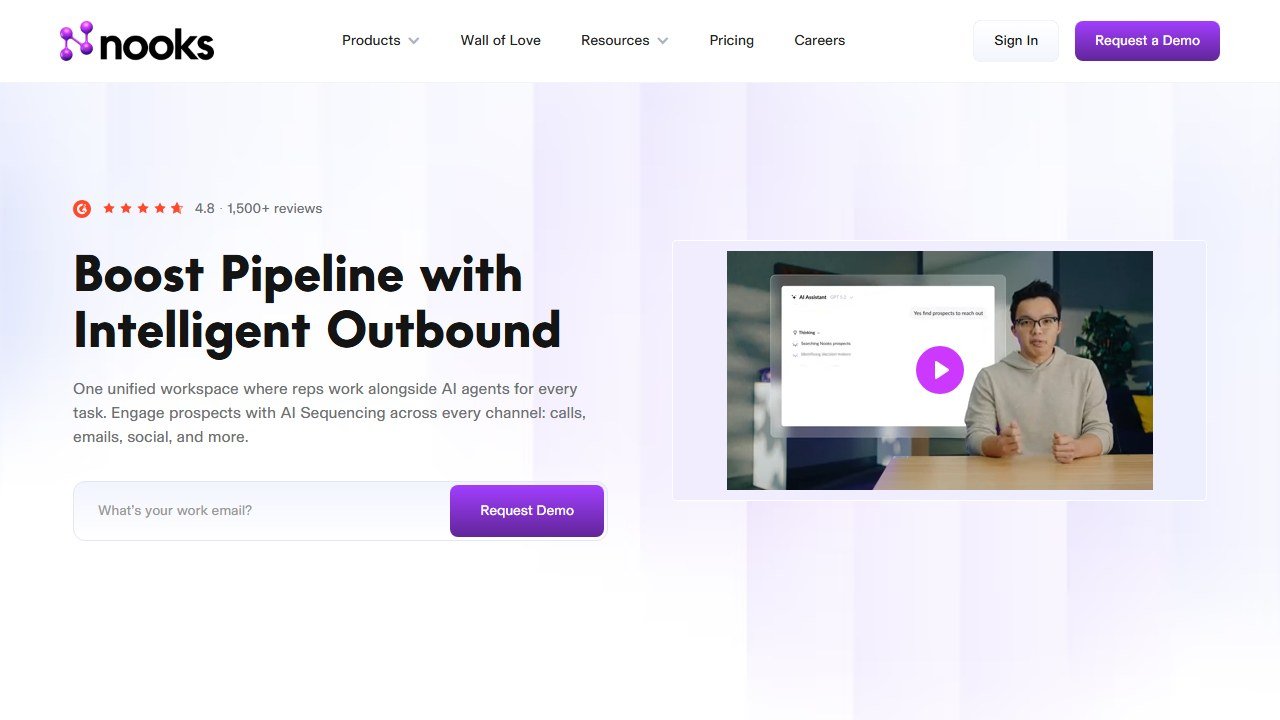
Nooks pairs a strong parallel dialer with the best real-time coaching and analytics in the category. Beyond connecting live humans, it transcribes calls, surfaces battle cards and objection prompts mid-conversation, and gives managers granular analytics on what is working across the team. It positions itself as an “AI sales assistant” rather than just a dialer, and for teams that want to coach reps up while raising dial volume, that combination is hard to beat.
- Standout strength: Live AI coaching and analytics layered on top of parallel dialing.
- Pricing model: Per-seat subscription, quote-based.
- Best for: Teams that want to improve rep skill, not just call more.
- Verdict: The closest rival to Orum, and the better pick if coaching matters as much as volume. Score: 4.7.
3. CloudTalk
CloudTalk is our best-overall pick for teams that want a full cloud calling platform rather than a pure outbound cannon. It offers a smart power dialer, deep two-way CRM sync with HubSpot, Salesforce, and Pipedrive, international numbers in 160-plus countries, and AI features including call transcription, sentiment analysis, and topic detection. It serves support and sales side by side, which makes it the most versatile platform here.
- Standout strength: Deep CRM sync and a complete calling platform, not just a dialer.
- Pricing model: Tiered per-seat subscription, transparent published pricing.
- Best for: Teams wanting one platform for outbound sales and inbound support.
- Verdict: The most well-rounded choice if you value integrations and breadth over raw parallel volume. Score: 4.6.
4. Salesfinity
Salesfinity brings AI parallel dialing to teams that cannot stomach enterprise pricing. It dials multiple lines, filters connects with AI, and adds smart caller-ID rotation to protect deliverability, all at a price point built for SMBs and growing teams. The onboarding is fast and the interface is friendly, which lowers the barrier for teams adopting parallel dialing for the first time.
- Standout strength: Genuine AI parallel dialing at an SMB-friendly price.
- Pricing model: Per-seat subscription, mid-tier pricing.
- Best for: Small and growing teams that want parallel dialing without an enterprise contract.
- Verdict: The value pick in parallel dialing. Less raw power than Orum, far easier on the budget. Score: 4.4.
5. Kixie
Kixie is a power dialer (not parallel) that wins on connect quality. Its local-presence dialing spans 65-plus countries, automatically matching your outbound caller ID to the prospect’s area to lift pick-up rates, and it integrates tightly with HubSpot, Salesforce, and Pipedrive. Add automated SMS, AI call summaries, and voicemail drop, and you get a polished single-line workflow that keeps reps moving without the dead-air tradeoff of parallel.
- Standout strength: Local-presence dialing across 65-plus countries to lift answer rates.
- Pricing model: Tiered per-seat subscription, published pricing.
- Best for: Teams on warmer lists where call quality beats raw volume.
- Verdict: The best power dialer here for CRM-tight teams that want clean connects over parallel scale. Score: 4.4.
6. PowerDialer.ai
PowerDialer.ai is a dedicated dialing platform that, despite the name, offers both power and parallel modes. It focuses squarely on outbound throughput with AI answering-machine detection, voicemail drop, and CRM logging, and it lets teams switch dialing mode by campaign. For teams that want a purpose-built dialer without the bundled support-center features of a CloudTalk, it is a focused, no-frills option.
- Standout strength: Both power and parallel modes in one purpose-built dialer.
- Pricing model: Per-seat subscription, mid-tier pricing.
- Best for: Outbound teams that want mode flexibility without platform bloat.
- Verdict: A flexible, focused dialer. Less polished ecosystem than the leaders, but it does the core job well. Score: 4.1.
7. Aloware
Aloware is built for high-volume contact centers and outbound teams that live in the phone all day. It offers power and predictive dialing, bulk SMS, an AI agent for call handling, and strong HubSpot and Pipedrive integration, all designed to keep large rep teams dialing at scale. Compliance controls and call recording make it a fit for regulated, high-throughput operations.
- Standout strength: High-volume, contact-center-grade dialing with bulk SMS.
- Pricing model: Tiered per-seat subscription, published pricing.
- Best for: Large, high-volume outbound and contact-center teams.
- Verdict: A workhorse for volume operations. Overkill for a small AE team, ideal for a call floor. Score: 4.0.
8. Klenty
Klenty earns its spot by combining a parallel dialer with full multichannel sales sequencing. It is really a sales-engagement platform with dialing built in, so calls, emails, LinkedIn, and SMS all live in one cadence. For teams that want the dialer and the sequencer to be the same tool, rather than stitching two products together, Klenty is the most integrated answer on this list.
- Standout strength: Parallel dialing inside a full multichannel sequencing platform.
- Pricing model: Tiered per-seat subscription, published pricing.
- Best for: Teams that want dialing and sequencing unified in one workflow.
- Verdict: The best pick if your real need is a sales-engagement platform that also dials well. Score: 4.0.
Master comparison
| Tool | Best for | Dialer type | Pricing model | Standout |
|---|---|---|---|---|
| Orum | Cold high-volume SDR teams | Parallel, up to ~10 lines | Quote-based per seat | Category-leading throughput and AI human detection |
| Nooks | Coaching plus volume | Parallel | Quote-based per seat | Real-time AI coaching and analytics |
| CloudTalk | All-in-one calling platform | Power, smart dialer | Published tiered per seat | Deep CRM sync, 160-plus country numbers |
| Salesfinity | Budget-conscious SMBs | Parallel | Mid-tier per seat | Affordable AI parallel dialing |
| Kixie | Warmer lists, clean connects | Power | Published tiered per seat | Local presence in 65-plus countries |
| PowerDialer.ai | Mode flexibility | Power and parallel | Mid-tier per seat | Switch dialing mode by campaign |
| Aloware | High-volume contact centers | Power and predictive | Published tiered per seat | Contact-center scale plus bulk SMS |
| Klenty | Dialer plus sequencing | Parallel | Published tiered per seat | Multichannel sequencing with dialing built in |
How to choose
Start with your list temperature and team size, not the feature list.
One to five reps on warm or inbound leads. You almost certainly want a power dialer. Kixie and CloudTalk give you clean single-line connects, strong CRM sync, and AI call summaries without the dead-air tradeoff or extra number costs of parallel. You will not keep ten lines busy on a warm list anyway, so paying for them is waste.
Five to twenty reps on cold lists at volume. This is parallel dialer territory. Salesfinity is the value entry point, Nooks adds coaching that pays for itself as the team grows, and Orum is the throughput ceiling once you are running real cold-calling operations. If your reps need skill development, lean Nooks; if pure dials-per-day is the metric your board watches, lean Orum.
Twenty-plus reps or a contact-center model. Aloware and Orum scale to the floor. Aloware suits high-volume, compliance-heavy operations with bulk SMS; Orum suits dedicated SDR pods chasing live-conversation counts.
You want one tool for the whole cadence. If calling is one channel inside a broader email-and-LinkedIn motion, Klenty unifies it so you are not paying for and syncing two platforms. Pair any of these with a strong data source, because even a perfect dialer fails on bad numbers. See our roundup of the best AI lead enrichment tools to keep your dialing list clean.
A dialer is one piece of the modern outbound stack. For the bigger picture on where dialing fits alongside enrichment, sequencing, and conversation intelligence, read our guide to the best AI sales tools. If you are building out an automated SDR function, our roundup of the best AI SDR tools covers the autonomous-agent layer that increasingly sits above the dialer. And once your reps are talking to more humans, capturing and coaching those calls is the next investment: our Gong review and Apollo.io review cover the conversation-intelligence and prospecting layers that pair naturally with a dialer.
The compliance questions outbound teams skip until they cannot
Outbound touches data protection law directly, and the answers differ enough by region that a single policy usually will not do.
Where your prospects are decides which rules apply
Contacting people in the EU or UK brings GDPR into scope regardless of where your company sits, and business contact data is still personal data. The usual lawful basis for B2B outbound is legitimate interests, which requires you to have actually done and documented the balancing test rather than to have heard that it applies. Ask your data vendor how it sourced the record and what notice the individual received.
Ask the vendor where the data came from
A reputable provider will tell you its sourcing and its notification approach. A vague answer is itself an answer, and it becomes your problem rather than theirs the moment somebody objects. Ask specifically how a suppression or erasure request is handled, how quickly it propagates, and whether it applies across every customer of the vendor or only your instance.
Honour opt-outs across the stack, not per tool
An unsubscribe in your sequencer does not necessarily suppress that person in your dialler, your ads audience or a new list you import next quarter. Every place a contact can enter your outbound needs to respect a single suppression list. This is genuinely hard to get right and it is the failure most likely to turn a complaint into something worse.
Recording calls has its own rules
If you are also running conversation intelligence, recording consent varies by jurisdiction and, in the United States, by state, with some requiring every party to consent. That is a per call obligation, not an account setting, and it needs to be handled by the tool rather than by remembering.
How this goes wrong, and the warning signs
Four patterns account for most of what we hear from teams a year after purchase, and all four are visible early.
Seat creep, the standard overrun
The deal is signed for eight seats and the team is fourteen by month nine, at list price because the negotiated discount applied only to the original order. Agree in writing what an additional seat costs and whether your discount applies to seats added mid term. Discovering that it does not is how a good first year becomes an expensive second one.
The tool one person runs
One enthusiast builds the sequences, owns the data hygiene and produces every report. They leave, and it stops the same week. The warning sign is that nobody else has ever built a campaign end to end. Have a second person do it once a quarter from written steps, or you rented a habit rather than bought a system.
Data that decays faster than anyone budgeted
Contact data goes stale at a rate people consistently underestimate, and a list bought once is a depreciating asset. If your model assumed a one off enrichment, revisit it: the recurring cost of keeping the same accounts current is usually the larger number, and it is the line most often missing from a business case.
Adoption theatre
Logins are healthy, dashboards are open, and the actual work happens in a spreadsheet exactly as before. This is usually a sequencing failure: the tool was chosen before anyone agreed which decision it would change. The test before purchase is blunt. Name the meeting where the output gets used and the person holding it. If you cannot, the output has no destination.
undefined
The bottom line
For cold, high-volume outbound, Orum remains the parallel-dialing leader and our top overall pick, with Nooks the strongest alternative when coaching matters as much as throughput. For warmer lists and smaller teams, CloudTalk and Kixie deliver cleaner single-line connects and deeper CRM integration without paying for parallel capacity you cannot use. Salesfinity is the value bridge into parallel dialing, and Klenty is the answer when you want dialing and sequencing in one tool. Decide list temperature and team size first, confirm the dialer type matches, and the right pick narrows itself.

Written by
FazFaz is the founder of AIToolsBakery. Some tools here are tested hands on. Others are assessed from vendor documentation and pricing verified on the live page, and every review says which one it is. Sponsors can buy a position in a guide. They cannot buy the score, the criticism, or silence about a better option.
How we test and how we make money →