Resume screening is where most hiring funnels leak. A single posting can pull hundreds of applications, and the old answer (keyword filters bolted onto an applicant tracking system) throws out good people for using the wrong synonyms. AI screening tools promise something better: semantic matching that reads a resume the way a recruiter would, ranks candidates against the actual job description, and tells you why. In practice the quality gap between vendors is enormous, and so is the legal exposure if you let one of these tools make decisions on its own.
This guide ranks the resume screening tools we think are worth your shortlist in 2026, scored honestly on accuracy, explainability, compliance posture, pricing, and how well they fit real recruiting workflows. We are an independent review site. We do not sell any of these products, we are not a reseller, and no vendor paid for placement or a higher score. Where a tool has a real weakness (a lawsuit, opaque pricing, a thin feature) we say so plainly.
One framing note before the list. The best resume screening tool is the one that shortens your time to a qualified shortlist without quietly introducing bias you cannot defend. That second clause matters more every year, so we weight explainability and audit readiness heavily.
Quick answer: Workable is the best overall AI resume screening tool for most teams, with Eightfold AI the pick for deep skills inference at enterprise scale and Skima AI a strong value option. Let AI rank and surface, keep a human on the final call, and audit the outcomes.
What AI resume screening actually does
At its core, AI resume screening parses each applicant’s resume into structured data (skills, titles, tenure, education, certifications) and scores or ranks that profile against a job description. The better systems use semantic matching, so a candidate who wrote “managed cloud infrastructure” can match a JD asking for “AWS administration” even without the exact phrase. Weaker systems still lean on keyword overlap and inherit all of its blind spots.
Modern tools layer extra signals on top: knockout questions for must-have requirements, skills assessments that test ability rather than claims, and explainable scores that show which factors moved a candidate up or down. The explainability piece is not a nice-to-have. It is what lets a recruiter sanity check the machine, and it is what you produce when a regulator or a rejected candidate asks how the decision was made.
A short compliance note, because this is our differentiator. If you screen candidates in New York City, Local Law 144 requires an independent annual bias audit of any automated employment decision tool and public posting of the results. The EEOC applies the four-fifths (adverse impact) rule to AI screening just as it does to any selection procedure, so a tool that passes one demographic group at far lower rates than another is a problem regardless of intent. And under GDPR Article 22, EU candidates have the right not to be subject to a solely automated decision with significant effects, which means a human has to stay in the loop on the final call. Use these tools to rank and surface, not to auto-reject without review.
How we chose
We weighted five factors:
- Matching accuracy (30%): does the semantic engine surface genuinely qualified candidates, not just keyword twins?
- Explainability and audit readiness (25%): can you see why a candidate scored as they did, and can the vendor support a bias audit?
- Workflow fit (20%): does it live inside or alongside your ATS without doubling your work?
- Pricing transparency and value (15%): published pricing and fair value beat quote-only black boxes.
- Honesty about limits (10%): vendors that document the human-in-the-loop requirement instead of overselling automation.
The ranked list
1. Workable
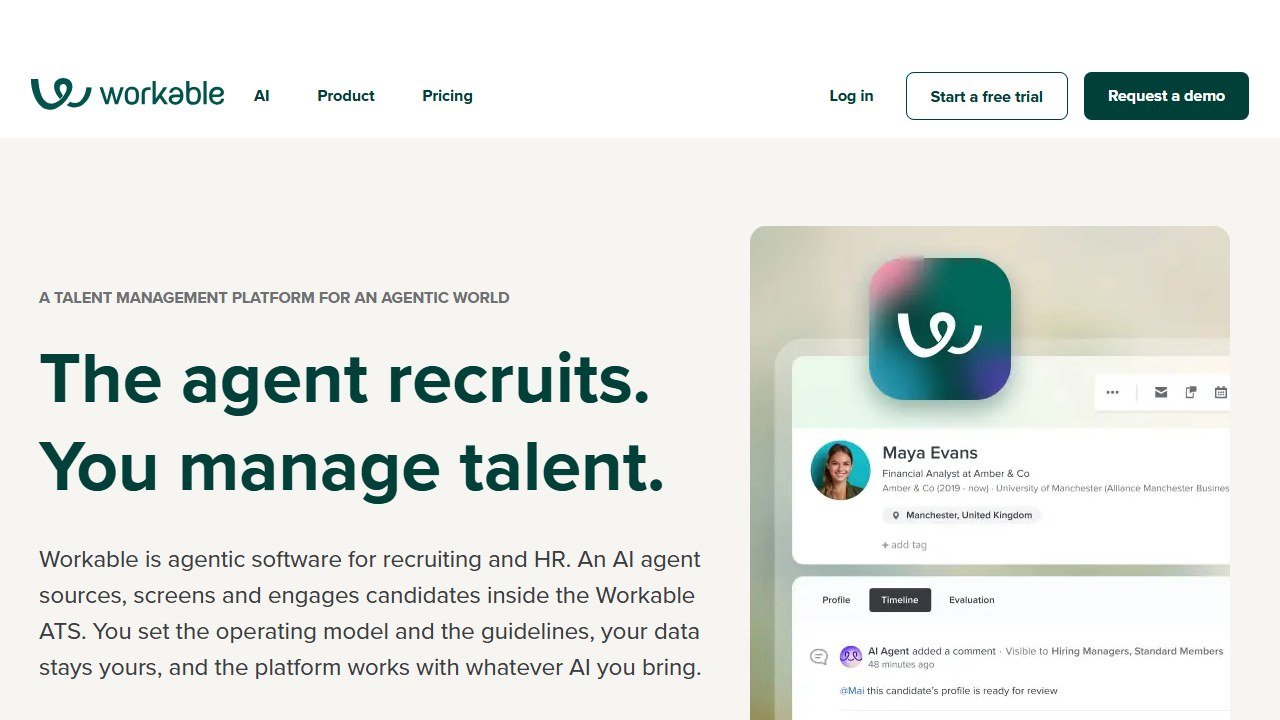
Workable is a full applicant tracking system with AI screening and candidate ranking built in, and that integration is exactly why it tops a screening-specific list. The AI reads incoming applications, ranks them against the role, and surfaces the strongest matches without forcing you to bolt on a separate tool or export data between systems. For most small and midsize teams, the screening you actually adopt is the screening that already lives where you work.
It is not the most sophisticated semantic engine on this list, and the ranking can feel conservative on nonlinear career paths. But the transparency, published pricing, and breadth of the surrounding hiring workflow make it the safest default for teams that want AI screening without an enterprise procurement cycle.
- Standout strength: AI screening built natively into a complete, widely adopted ATS.
- Pricing: published, from roughly $299 per month (estimate, tiers scale with hiring volume).
- Best for: small to midsize teams that want screening inside their ATS.
- Verdict: the pragmatic default. Score 4.5.
2. Eightfold AI
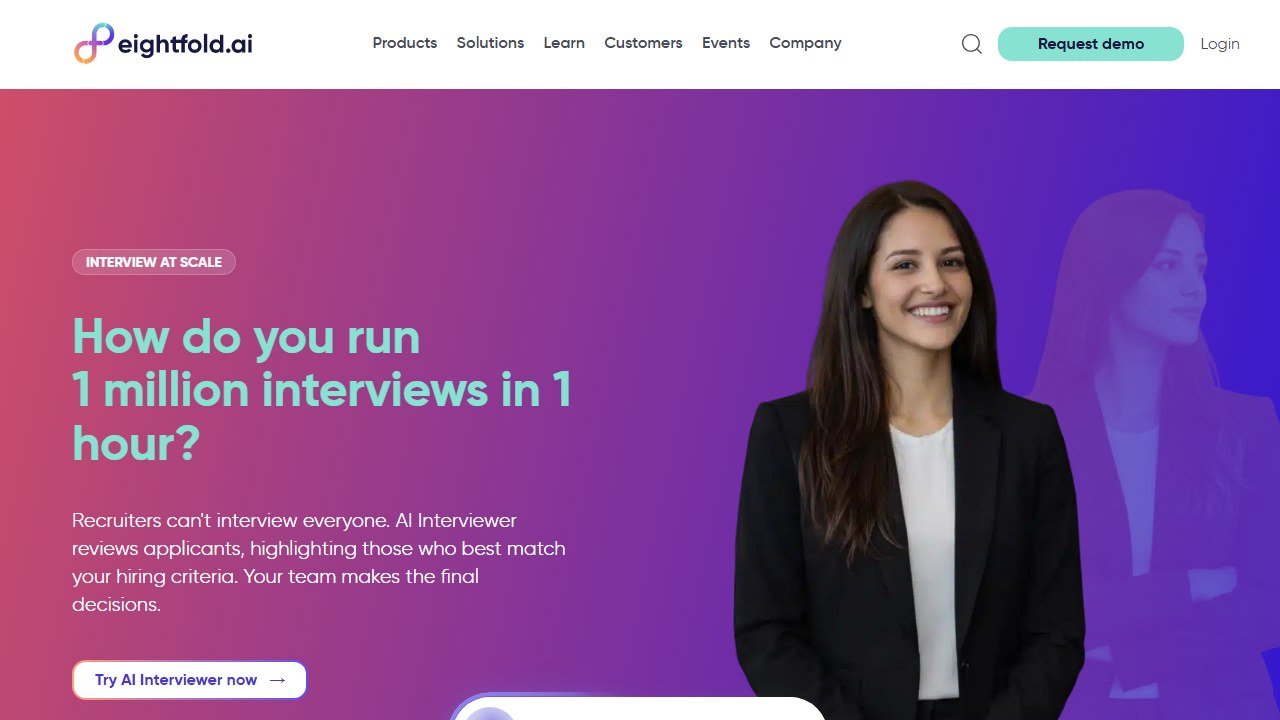
Eightfold AI is the enterprise heavyweight, built on a deep talent intelligence model that matches candidates on skills and adjacencies rather than titles, with explainable scoring that surfaces why someone fits. For large organizations screening at scale across many roles, the depth of its matching is genuinely ahead of most competitors, and the explainability layer is more mature than the budget tier offers.
We have to flag a serious caveat. A live FCRA lawsuit was filed against Eightfold on January 20, 2026, raising exactly the kind of automated-decision and consumer-reporting questions buyers in this category should be tracking. It does not erase the product’s strengths, but it belongs front and center in any evaluation, and it is why the score sits below where the technology alone would put it.
- Standout strength: deepest skills-based matching and explainable scoring at enterprise scale.
- Pricing: quote-only, estimated around $7 to $10 per employee per month.
- Best for: large enterprises that can resource a careful, audited rollout.
- Verdict: technically excellent, legally watch closely. Score 4.2.
3. Skima AI
Skima AI does one thing and does it cleanly: semantic resume-to-JD matching. You feed it resumes and a job description, and it returns a ranked match with the reasoning visible. For recruiters who already have an ATS and just want a sharper matching brain on top, the focus is refreshing and the published entry price is reasonable.
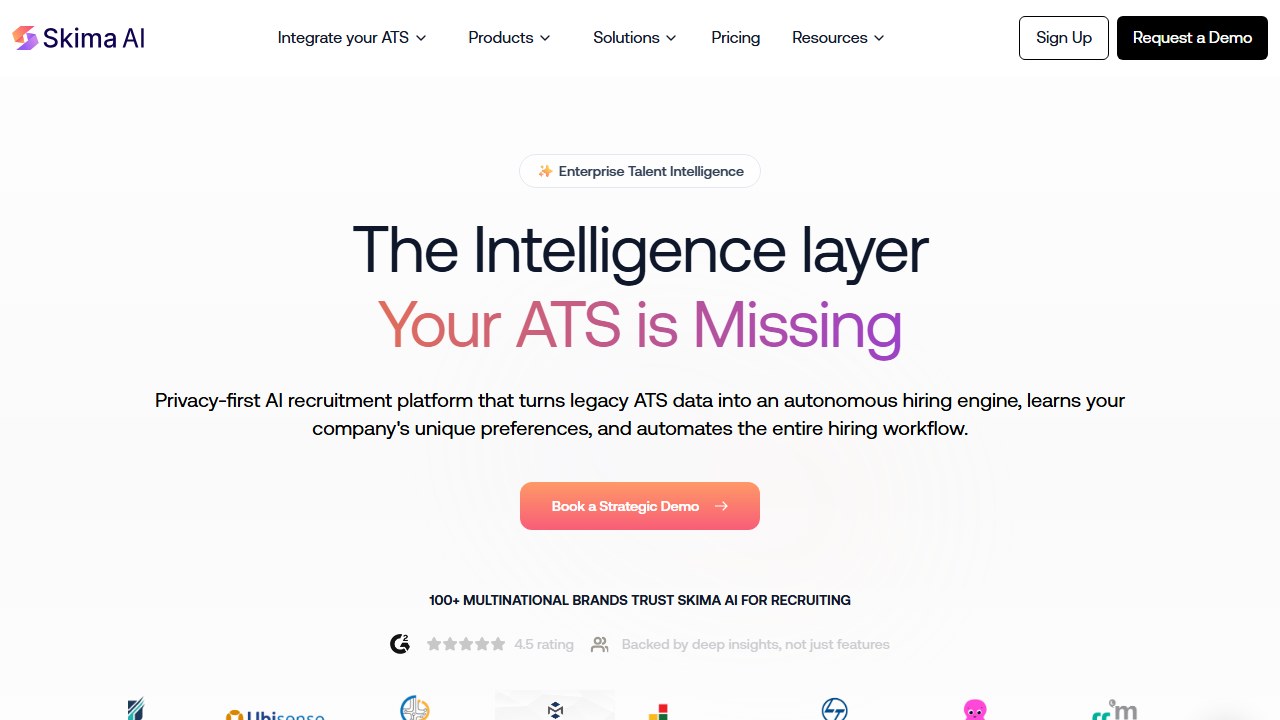
The trade-off is scope. It is not a full hiring platform, so high-volume teams will still need knockout questions and assessments elsewhere. But as a pure matching layer, it punches above its price.
- Standout strength: focused, explainable semantic matching at an accessible price.
- Pricing: published, from roughly $49 per month (estimate).
- Best for: teams wanting a sharp matching layer on an existing ATS.
- Verdict: strong value for focused matching. Score 4.1.
4. TestGorilla
TestGorilla flips the usual order: instead of screening resumes first, it screens skills first. Candidates take validated assessments, and you rank on demonstrated ability rather than how well someone wrote their CV. For roles where resume polish correlates poorly with competence, this is one of the more defensible ways to reduce bias, since you are testing the thing you actually care about.
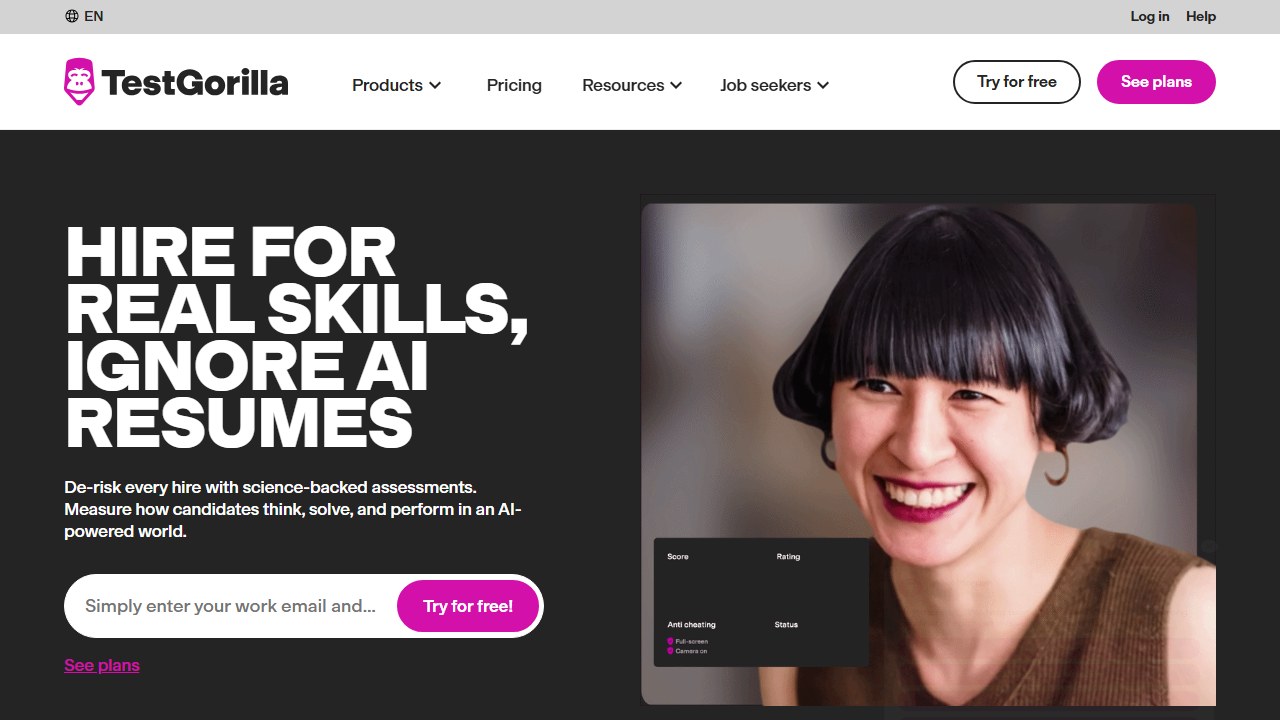
It is less of a resume parser and more of an assessment-led screen, so if your goal is pure CV ranking it is the wrong shape. But for skills-first hiring it is excellent, and a free tier lets you trial it properly.
- Standout strength: skills-test-first screening that reduces reliance on resume signals.
- Pricing: free tier available, paid from roughly $75 per month (estimate).
- Best for: teams hiring for demonstrable skills over credentials.
- Verdict: the bias-resistant choice for skills-led roles. Score 4.1.
5. CVViZ
CVViZ is an ATS with NLP-driven resume parsing and ranking at its center. It reads resumes, scores them against the role, and organizes the pipeline, all at a price point that undercuts most enterprise platforms. For agencies and in-house teams that want competent AI ranking without a big spend, it is a sensible middle option.
The matching is solid rather than spectacular, and the product polish trails the top tier. But the value for money is real, and the parsing handles messy real-world resumes better than its price suggests.
- Standout strength: capable NLP parsing and ranking inside an affordable ATS.
- Pricing: published, from roughly $99 per month (estimate).
- Best for: budget-conscious teams wanting ranking plus a light ATS.
- Verdict: dependable mid-market value. Score 3.9.
6. HackerEarth
HackerEarth is a technical-screening specialist. For engineering roles, it pairs coding assessments and skills tests with screening so you rank candidates on demonstrated technical ability, not keyword-matched resumes. If you hire developers at any volume, this kind of assessment-led screen is far more predictive than parsing a CV.
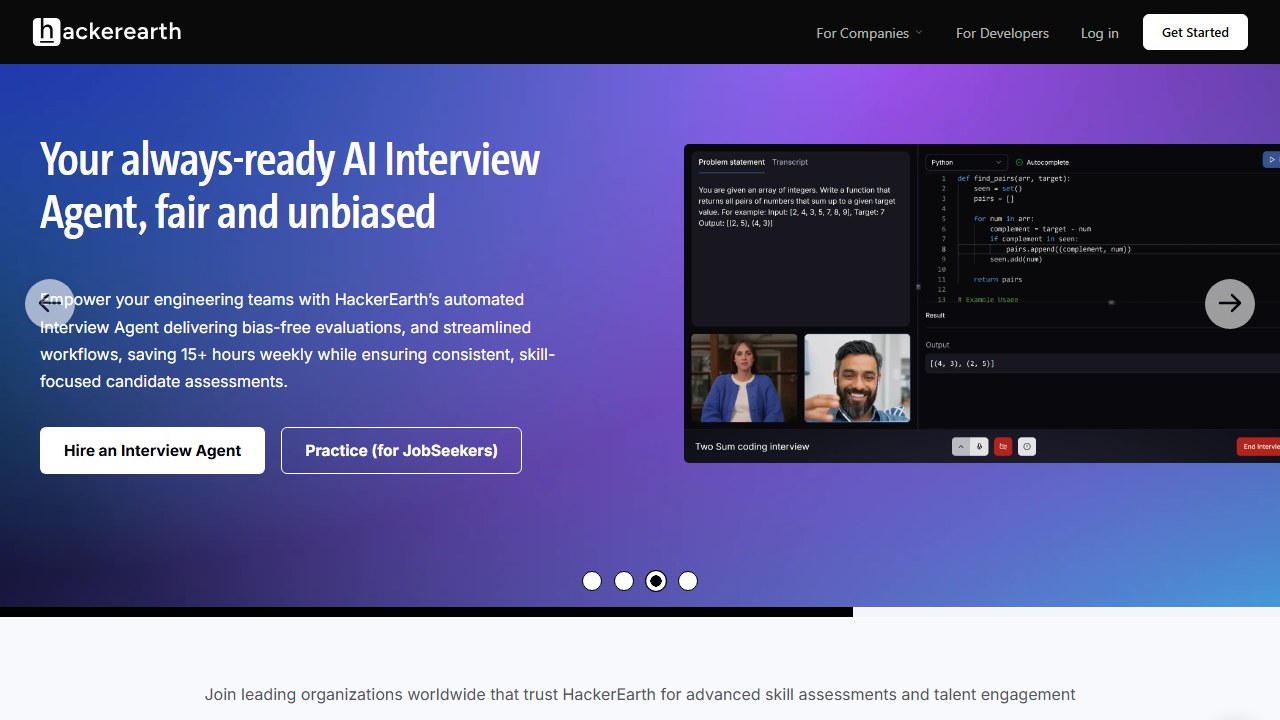
It is narrow by design. Outside technical hiring it has little to offer, and pricing is custom, so you will go through sales. But within its lane it is one of the strongest options here.
- Standout strength: rigorous technical assessment and screening for engineering roles.
- Pricing: quote-only (custom).
- Best for: teams screening developers and technical talent at scale.
- Verdict: the specialist for technical screening. Score 3.9.
7. GoPerfect
GoPerfect combines inbound screening with outbound sourcing and applies a clean 1-to-5 explainable scoring model to candidates. The explainability is the highlight: each score comes with reasoning a recruiter can read and challenge, which is exactly what you want when you have to defend a shortlist. The combined inbound-plus-outbound angle also suits teams that screen and source from one place.
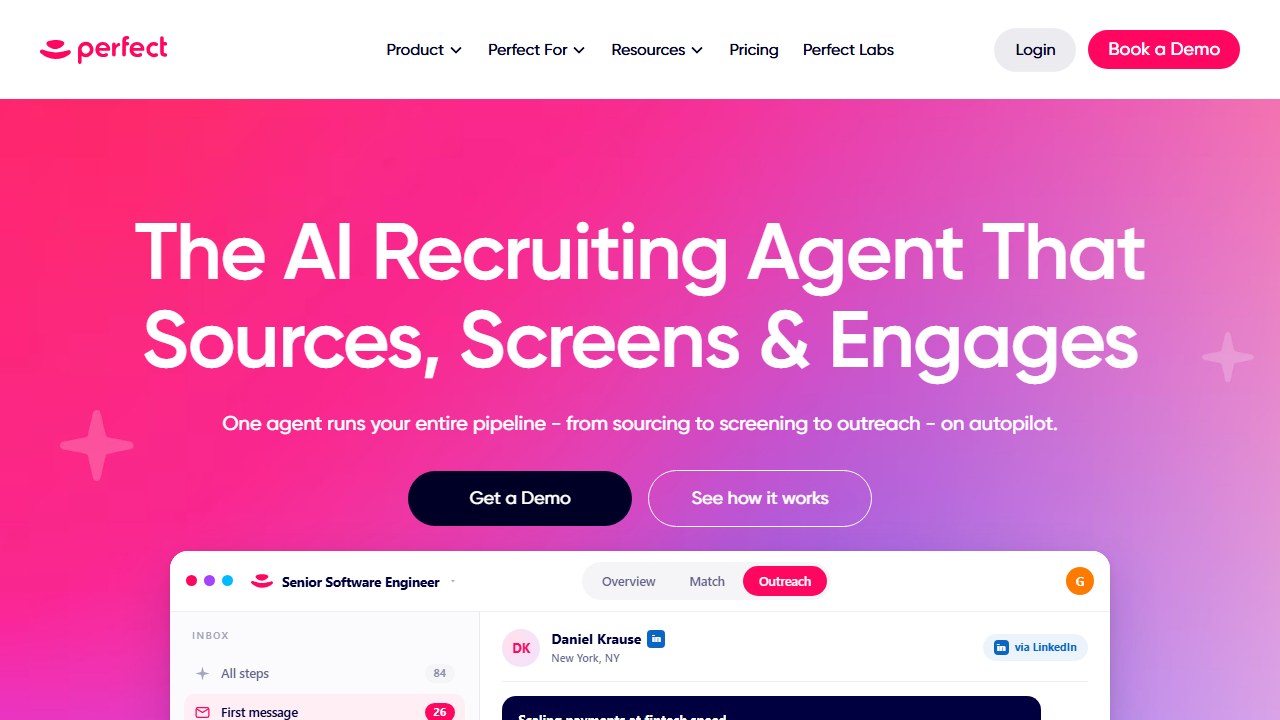
It is newer and less proven than the enterprise names, and pricing is custom. But the explainable scoring is a genuine strength and the dual workflow is a smart fit for lean recruiting teams.
- Standout strength: transparent 1-to-5 explainable scoring across inbound and outbound.
- Pricing: quote-only (custom).
- Best for: lean teams that screen inbound and source outbound together.
- Verdict: promising and unusually transparent. Score 3.8.
8. Manatal
Manatal is the budget pick. It is an AI-enabled ATS with candidate scoring at a per-user price that is hard to beat, which makes it a natural starting point for small businesses and agencies watching every dollar. You get recommendations and scoring without a contract negotiation.
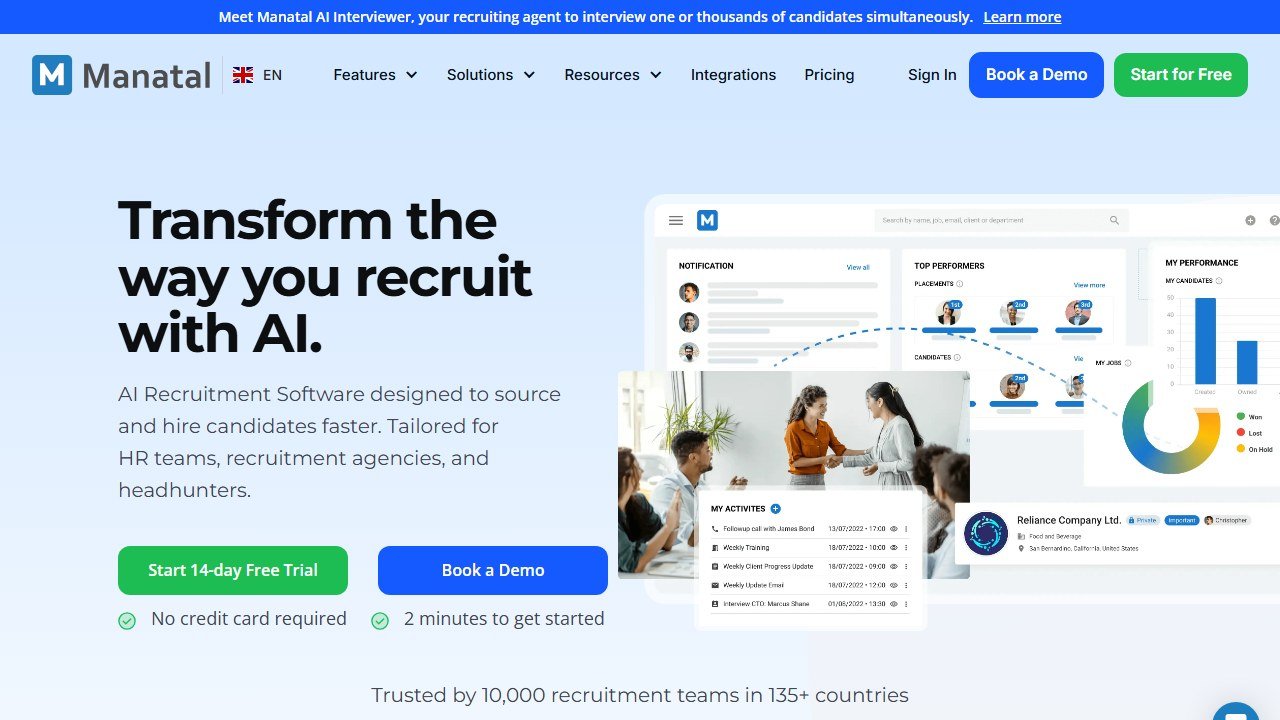
The AI scoring is lighter than the leaders, and you should not expect deep semantic reasoning at this price. But for teams that mostly need an affordable ATS with a helpful nudge on ranking, it delivers.
- Standout strength: AI candidate scoring at the lowest entry price here.
- Pricing: published, from roughly $15 per user per month (estimate).
- Best for: small teams and agencies on tight budgets.
- Verdict: best value for cost-sensitive teams. Score 3.7.
9. Paradox
Paradox, now a Workday company, screens at very high volume through conversational AI. Candidates answer knockout questions in a chat interface, and the system filters and schedules without a recruiter touching each one. For hourly and high-volume hiring (retail, hospitality, warehouses) where the bottleneck is sheer throughput, it is purpose-built and very good at it.
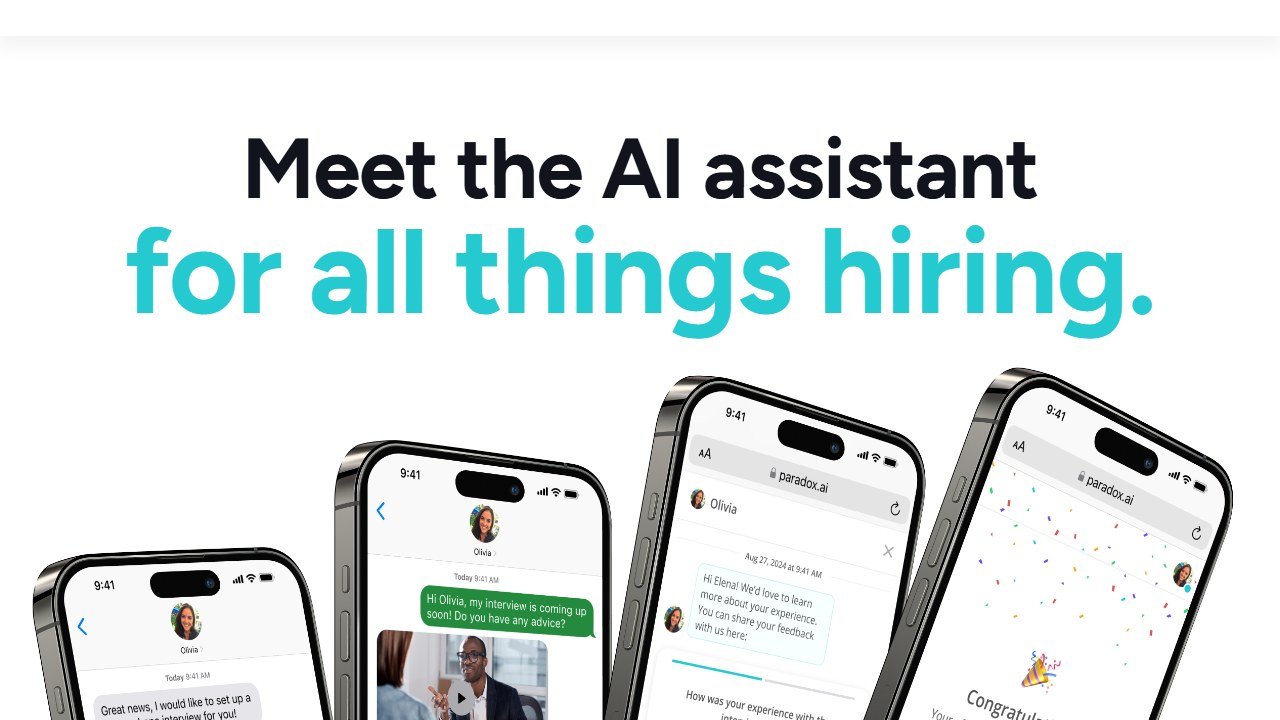
It is not a nuanced semantic-ranking tool for complex professional roles, and pricing is quote-only. But for what it targets, conversational screening at scale, nothing on this list matches its throughput.
- Standout strength: conversational knockout screening at extreme volume.
- Pricing: quote-only.
- Best for: high-volume and hourly hiring programs.
- Verdict: the volume specialist. Score 3.7.
Master comparison
| Tool | Type | Pricing (estimate) | Best for | Score |
|---|---|---|---|---|
| Workable | ATS with AI screening | From ~$299/mo | SMB teams wanting screening in their ATS | 4.5 |
| Eightfold AI | Enterprise skills match | Quote-only, ~$7 to $10 PEPM | Large enterprises (note FCRA suit) | 4.2 |
| Skima AI | Semantic matching | From ~$49/mo | Sharp matching on existing ATS | 4.1 |
| TestGorilla | Skills-test screening | Free tier, from ~$75/mo | Skills-led hiring | 4.1 |
| CVViZ | NLP ATS ranking | From ~$99/mo | Budget ranking plus light ATS | 3.9 |
| HackerEarth | Technical screening | Quote-only | Engineering roles | 3.9 |
| GoPerfect | Inbound plus outbound | Quote-only | Lean dual-workflow teams | 3.8 |
| Manatal | Budget AI ATS | From ~$15/user/mo | Cost-sensitive small teams | 3.7 |
| Paradox | Conversational volume screen | Quote-only | High-volume and hourly hiring | 3.7 |
How to choose by buyer segment
Small and midsize teams should start with Workable for screening inside a real ATS, or Manatal if budget is the hard constraint. Skima AI is the move if you already have an ATS and only want a sharper matching layer.
Skills-first and technical hiring points to TestGorilla for general skills assessment and HackerEarth for engineering depth. Both rank on what candidates can do, which is the most bias-resistant signal available.
High-volume and hourly hiring is Paradox territory. Conversational knockout screening at scale is its entire reason for existing.
Large enterprises will look hardest at Eightfold AI for matching depth, with the explicit caveat that the January 2026 FCRA lawsuit needs to be part of the evaluation and the legal review. Resource the rollout with a bias audit from day one.
For the wider picture, see our pillar guide to the best AI recruiting software, our companion lists of best AI sourcing tools and best AI interview tools, and our walkthrough on how to screen resumes with AI. The Eightfold AI review and Paradox AI review go deeper on those two. Teams just getting started should also check our best AI tools for HR and free AI recruiting tools roundups.
Screening is one stage of the stack. See the full best applicant tracking systems guide for the systems that run the whole pipeline.
The bottom line
The screening market has matured to the point where matching accuracy is table stakes and the real differentiators are explainability and compliance posture. Workable wins our top spot because it puts competent AI screening inside an ATS teams actually use, with transparent pricing. Eightfold AI is the most powerful engine here but carries a live legal cloud that buyers must weigh. The skills-first tools (TestGorilla, HackerEarth) offer the most defensible path to fairer hiring.
Whatever you pick, remember the rule that survives every regulatory shift: let the AI rank and surface, keep a human on the final decision, and audit the outcomes. Get that right and these tools save real time. Get it wrong and the time you save is nothing against the liability you create.

Written by
FazFaz is the founder of AIToolsBakery. Some tools here are tested hands on. Others are assessed from vendor documentation and pricing verified on the live page, and every review says which one it is. Sponsors can buy a position in a guide. They cannot buy the score, the criticism, or silence about a better option.
How we test and how we make money →