Search for an AI chemistry solver or an AI physics solver and every result on the first page is a company selling one. There is no independent comparison, and the app stores make the choice harder, not easier. Type “chemistry ai” into the US App Store and eight of the first eleven results are single-subject chemistry solver apps from eight different sellers. Only one of them has more than 200 ratings. Two of them have almost the same name.
This guide sorts out what each tool actually does, based on what its maker says on its own pages: whether it shows working steps or only answers, whether it handles units and chemical equations, whether it reads diagrams, what the free version includes, and what you pay. It covers chemistry and physics together, because most of the strongest tools handle both and most students need both in the same year.
How we researched this. We have not used these apps ourselves; this is a research-based comparison. Every price, rating and feature below comes from the vendor’s own website or its US App Store and Google Play listing, read on 16 October 2026, and each one is linked. App Store prices are US in-app purchase prices. Where a vendor’s website showed prices without a currency code, we say “as shown” and do not convert anything. Nothing here is a test result, no vendor paid to be included, and we are not affiliated with any of these companies.
What an AI chemistry or physics solver actually does
Chemistry and physics problems break general homework apps in specific ways. A chemistry answer can be numerically right and still wrong because the equation was not balanced, a unit was dropped or significant figures were ignored. A physics answer depends on reading a diagram correctly, choosing the right formula and carrying units through every line. A tool that writes fluent text without checking those things will produce confident mistakes.
The tools in this guide fall into three groups, and knowing which one you are using matters more than any star rating.
Computational engines
These calculate the answer from built-in data and algorithms. Wolfram|Alpha is the clear example: its chemistry pages describe balancing equations, stoichiometry and molarity from a curated knowledge base, and its physics pages list formulas and physical constants. When an engine like this gives a number, it was computed, not written.
Language-model homework helpers
Most apps here, including Gauth, Solvely and the single-subject solvers, read your photo or typed question and pass it to a large language model that writes the solution. These are flexible and handle word problems well, but the answer is generated text. Solvely says it runs several models and cross-checks them; most others do not say which model they use at all.
Tutors that hold back the answer
ChatGPT study mode, Gemini Guided Learning and Khanmigo are built to ask you questions and walk you toward the answer rather than hand it over. They are slower when you just want to check a result, and better when you need to understand a topic before an exam.
The look-alike app problem
Before the rankings, a warning about the app stores, because this is where most students start. The largest single-subject AI chemistry solver in the US App Store search results is Chem AI by Zipo Apps, with a 4.4 average from 820 ratings. Its listing promises help with “multiple choice, word, diagram, math, or any chemistry problem” and topics “from high school to doctoral research.” The largest physics-only AI solver is Physics AI by Renaissance Apps, with a 4.5 average from 289 ratings, last updated in November 2025. Its listing promises help with “multiple choice, word-based, diagrams, math-centric” questions for students “from high school through to doctoral research.”
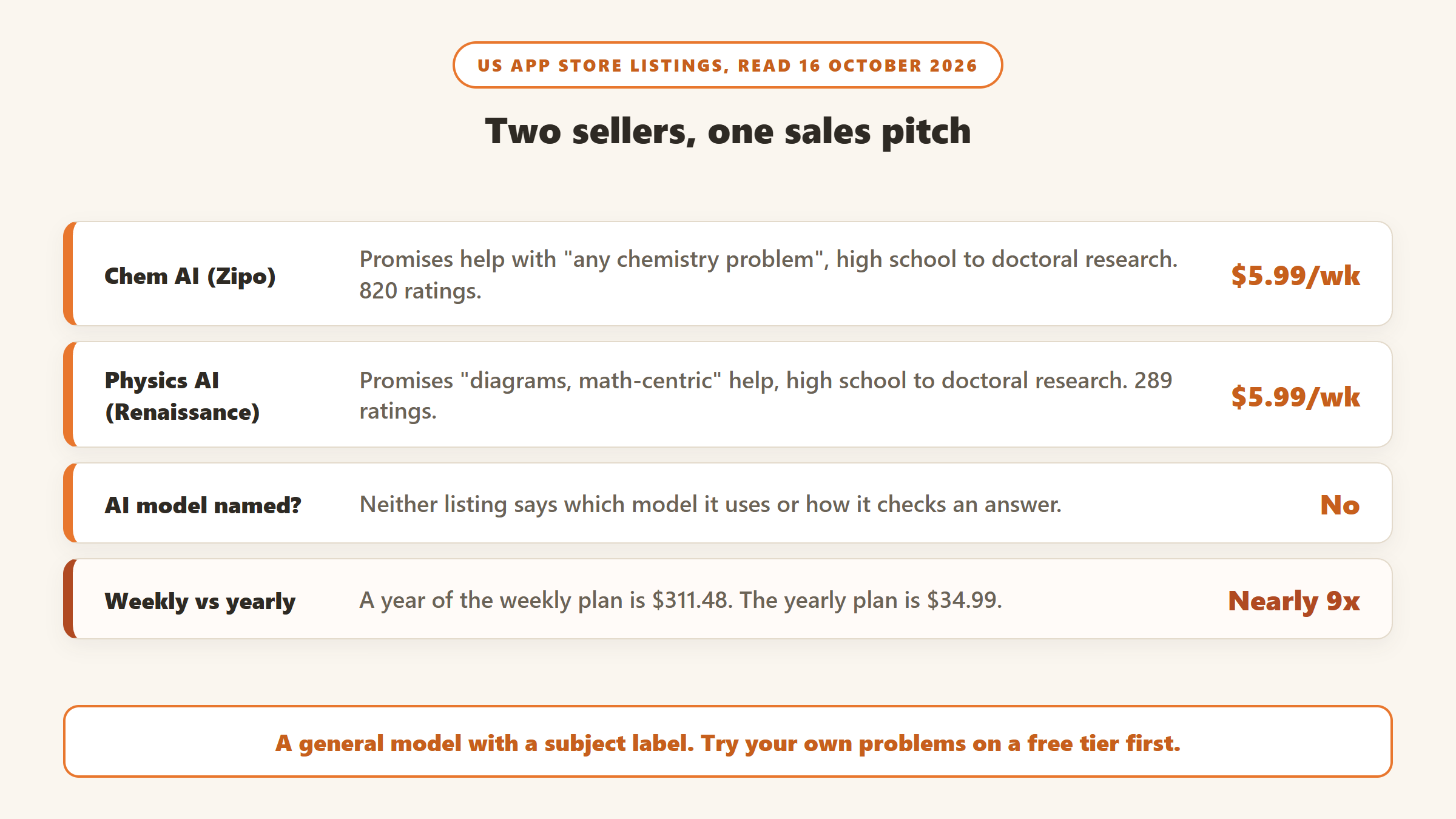
The two listings come from different companies but follow the same promise structure and charge the same prices: $5.99 a week or $34.99 a year in the US App Store on 16 October 2026. Neither listing says which AI model it uses or how it checks an answer. Zipo’s other apps include a ghost detector and a talking dog; Renaissance’s include a face rating app and a death countdown. None of that proves the apps give bad answers. It does mean you are buying a general model with a chemistry or physics label on it, and paying weekly for it. At $5.99 a week, a year of the weekly plan costs $311.48, nearly nine times the yearly price.
Physics has the same pattern with smaller numbers. In a US App Store search for “physics ai solver”, no physics-only app had more than 300 ratings, and several had none. Also watch for name collisions: the web tool at physicsai.io and the Renaissance iPhone app are both called Physics AI and are run by different companies.
AI chemistry and physics solvers compared
| Tool | Type | Chemistry | Physics | Free steps? | US price (16 October 2026) | US App Store rating |
|---|---|---|---|---|---|---|
| Wolfram|Alpha | Computational engine | Balancing, stoichiometry, compounds | Formulas, constants, units | No, steps need Pro | Pro for Students $5.00/mo billed $60/yr on the web (as shown, no currency code); app $9.99/mo or $59.99/yr | 2.8 (133) |
| Gauth | AI helper plus human experts | Yes | Yes (STEM) | Limited free use | Plus $11.99/mo, $31.99/quarter, $99.99/yr | 4.8 (1,524,708) |
| Pearson+ Study Prep | Course videos plus AI tutor | General, organic, analytical | Algebra and calculus based | Paid plan | $14.99/mo, or $7.99/mo billed $95.88/yr | 4.8 (62,751) |
| ChatGPT study mode | Guided tutor | General model | General model | Yes, on the Free plan | Free; Go $8.00, Plus $19.99 in the app | 4.8 (11M+) |
| Gemini Guided Learning | Guided tutor with diagrams | General model | General model | No plan limit stated | Free; Google AI Plus $4.99, Pro $19.99 in the app | 4.7 (2,343,258) |
| Chemistry by diniska | Reference app, reaction search, AI tutor | Yes | No | Tables and calculators free | Chemistry Pro from $1.99; ChemAI Tutor $2.99 | 4.9 (2,733) |
| Solvely | Multi-model AI helper | Yes | Yes | Limited free use | $12.99/mo or $46.99/yr | 4.8 (41,563) |
| Brainly | AI plus human tutors, K-12 | Science | Science | Limited free features | Plus from $1.99/mo; Tutor $29.99/mo or $95.99/yr | 4.7 (284,232) |
| Chemistry AI / Physics AI (web) | Single-subject AI solvers | chemistryai.chat | physicsai.io | 5 and 20 free credits | Chemistry from $5.90/mo yearly; Physics $6/mo | Web only |
Prices and ratings read on 16 October 2026. Apple’s in-app purchase lists often show several prices for the same plan, including promotional ones, so check the store in your own country before you subscribe.
How we chose and ordered these
Every tool had to accept a chemistry or physics question and return a worked solution or a guided explanation, not just host lessons. We then ordered them by how clearly the vendor explains what the tool does and how it reaches an answer, how much public evidence there is that it works at scale (ratings volume, installs and how recently it was updated), what the free version includes, and price. We dropped apps that have not been updated in more than a year, apps with only a handful of ratings, and general tools whose own pages make no chemistry or physics claim.
1. Wolfram|Alpha: computed answers for both subjects
Wolfram|Alpha is the one computational engine in this guide: it calculates rather than writes. Its chemistry examples page describes data on compounds, reactions, solubility, unit conversion, molarity and stoichiometry, and says it can “balance chemical equations, determine reaction stoichiometry and predict products.” Its physics examples page covers mechanics, thermodynamics, optics, quantum and particle physics, and says it “knows a variety of physical formulas and constants.” For a student who needs a balanced equation or a unit conversion they can trust, that is the strongest offer here.
Steps are behind Pro
The free answer is only the answer. On Wolfram’s student pricing page, the free Basic account is described as not including step-by-step solutions. Pro for Students, which unlocks steps for chemistry, calculus, algebra and more according to its step-by-step page, was shown at $5.00 a month billed $60.00 a year, with Pro Premium at $8.25 a month billed $99.00 a year. Pro also adds photo input in the iPhone and Android apps. In the US App Store the app’s Pro plan was $9.99 a month or $59.99 a year.
The app rating is low
The Wolfram|Alpha iPhone app had only a 2.8 average from 133 US ratings, last updated in March 2026. On Android the older WolframAlpha Classic app holds 4.3 from more than 41,000 ratings. The website is where most people use it. Expect to type questions in a structured way; Wolfram is not a chat tutor, and it will not read a messy worksheet the way a photo helper tries to.
Choose it if you need correct balanced equations, unit conversions and constants, and can pay $60 a year for steps. Skip it if you want to photograph a worksheet and get a friendly explanation.
2. Gauth: the photo homework helper for both subjects
Gauth has the most US App Store ratings of the dedicated homework helpers here that cover chemistry and physics. Its website lists chemistry alongside math, calculus and biology, and pitches Gauth AI to “conquer STEM questions” with step-by-step solutions and “how” and “why” tips. The iPhone app, sold as Gauth: AI Study Companion by Gauthtech Pte. Ltd., had a 4.8 average from 1,524,708 US ratings and was updated in late September 2026. The Android app has more than 100 million installs.
Two features matter for science. A DeepThinking mode is described as digging into the “why” behind an answer, and Gauth offers access to human subject experts, stating on its homepage that “thousands of real tutors are available 24/7.” For a physics problem where the AI misreads a diagram, a human fallback is useful. In the US App Store, Gauth Plus was $11.99 a month, $31.99 a quarter or $99.99 a year, with promotional prices as low as $49.99 a year shown on the same list.
One caution from our Photomath vs Gauth comparison: homework apps with similar names come and go in the stores, so check that the seller is Gauthtech Pte. Ltd. before you subscribe.
Choose it if you want one app for chemistry, physics and math homework with a human backup. Skip it if you want to know exactly which model writes the answer, because Gauth does not say.
3. Pearson+ Study Prep: built around college courses
Pearson+ Study Prep, whose web address still reads pearson.com/channels, is the strongest choice for college general chemistry, organic chemistry and physics courses. Its course pages list General Chemistry with more than 4,100 videos and 44,400 questions, Physics with Calculus with more than 3,000 videos and 20,500 questions, and Organic Chemistry with more than 2,000 videos and 26,500 questions. Its AI tutor page promises “step-by-step guidance” and says the AI provides “detailed video solutions and similar examples” for a question, across 41 courses with chemistry and physics filters.
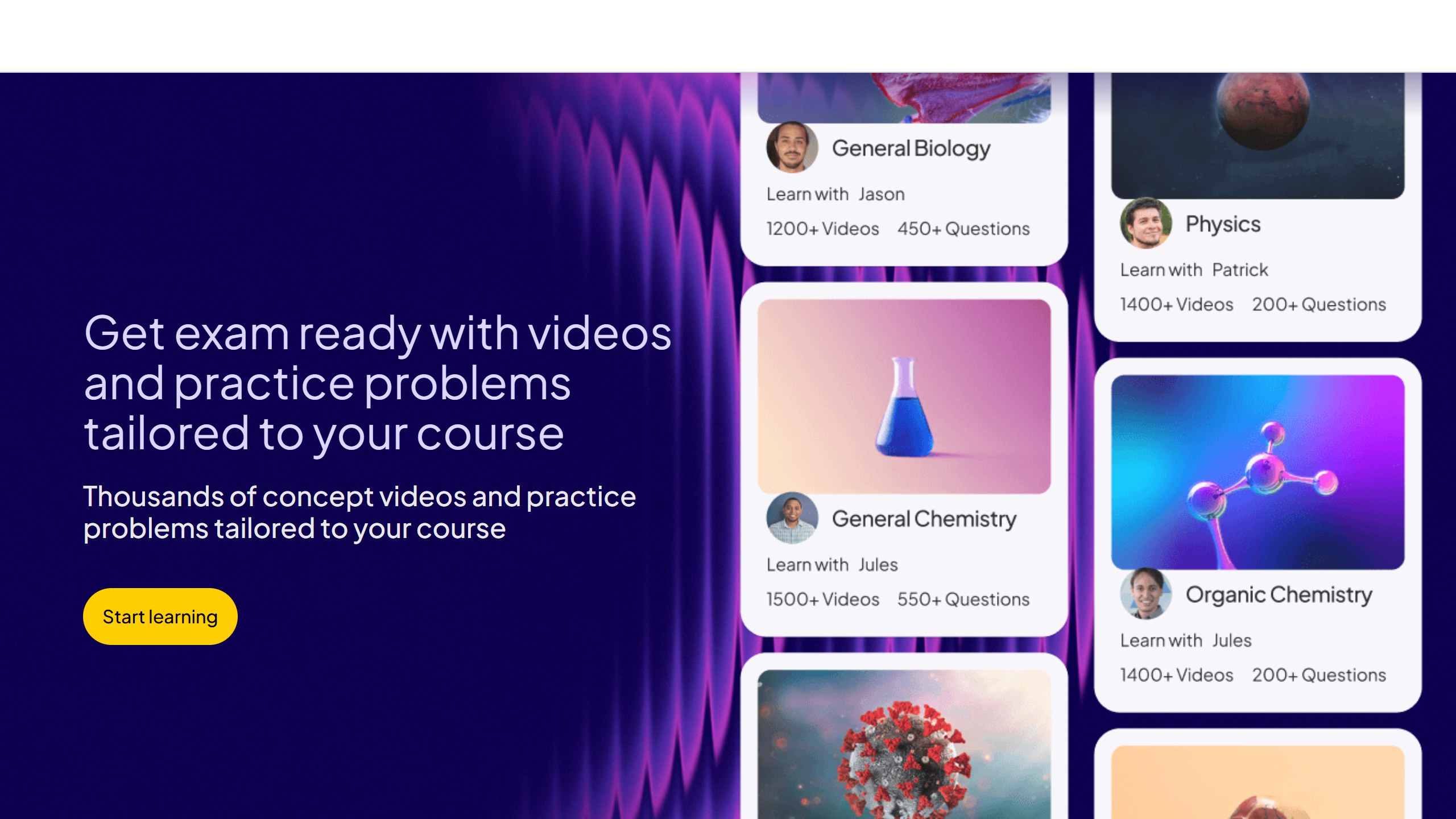
The difference from a photo solver is the library behind the AI. Pearson says the AI answers with video solutions and similar examples drawn from that course library, and you can upload your syllabus for a personal study plan matched to it. On its pricing page, Study Prep was $14.99 a month, $9.99 a month billed $29.97 a quarter, or $7.99 a month billed $95.88 a year, in US dollars. The Pearson+ iPhone app had a 4.8 average from 62,751 US ratings.
Choose it if you are in a college general chemistry, organic chemistry or physics course and want videos and practice alongside AI help. Skip it if you are in high school or only need the occasional answer checked.
4. ChatGPT study mode: the free guided option
OpenAI launched study mode in July 2025 to help students “work through problems step by step instead of just getting an answer.” It uses Socratic questions, hints and quick knowledge checks, and you can switch it on and off in a conversation. OpenAI said it was available to logged-in users on Free, Plus, Pro and Team, which makes it the most capable free option for working through a chemistry or physics concept.
OpenAI is also unusually direct about the limits. It said study mode runs on custom system instructions, “even if it results in some inconsistent behavior and mistakes across conversations.” That is the right expectation for any general model on a numerical problem: it is good at explaining why a reaction goes the way it does, and less reliable on the arithmetic. The ChatGPT iPhone app had more than 11 million US ratings, averaging 4.8; paid plans in the app started at $8.00 for Go and $19.99 for Plus. Our Khanmigo vs ChatGPT comparison covers the tutoring differences in more depth.
Choose it if you want to understand a topic, not just finish a worksheet, and do not want to pay. Skip it if you need a checked numerical answer; run it through Wolfram|Alpha instead.
5. Gemini Guided Learning: free help with diagrams
Google introduced Guided Learning in Gemini in August 2025. Google says it “breaks down problems step-by-step and adapts explanations to your needs” and uses “images, diagrams, videos and interactive quizzes.” For physics in particular, diagrams in the explanation are a real advantage over a wall of text. It is built on LearnLM, Google’s models tuned for learning, and teachers can share a direct link to it in Google Classroom.
Google’s announcement did not tie Guided Learning to a paid plan. The Gemini iPhone app had a 4.7 average from more than 2.3 million US ratings, with Google AI Plus at $4.99 and Google AI Pro at $19.99 in the app. Google also offers step-by-step homework help in Google Lens for “math, history, chemistry, biology, physics, and more,” which replaced the old Socratic app.
Choose it if you learn better from diagrams and want a free guided tutor. Skip it if you want a dedicated chemistry tool with reaction data.
6. Chemistry by diniska: the chemistry specialist with a long record
Chemistry, listed on the App Store as Chemistry. Periodic table. AI, is the one chemistry-only app with both a long history and a real user base. It was first released in January 2012, was updated in October 2026, and had a 4.9 average from 2,733 US ratings on iPhone. On Android it had more than 10 million installs.
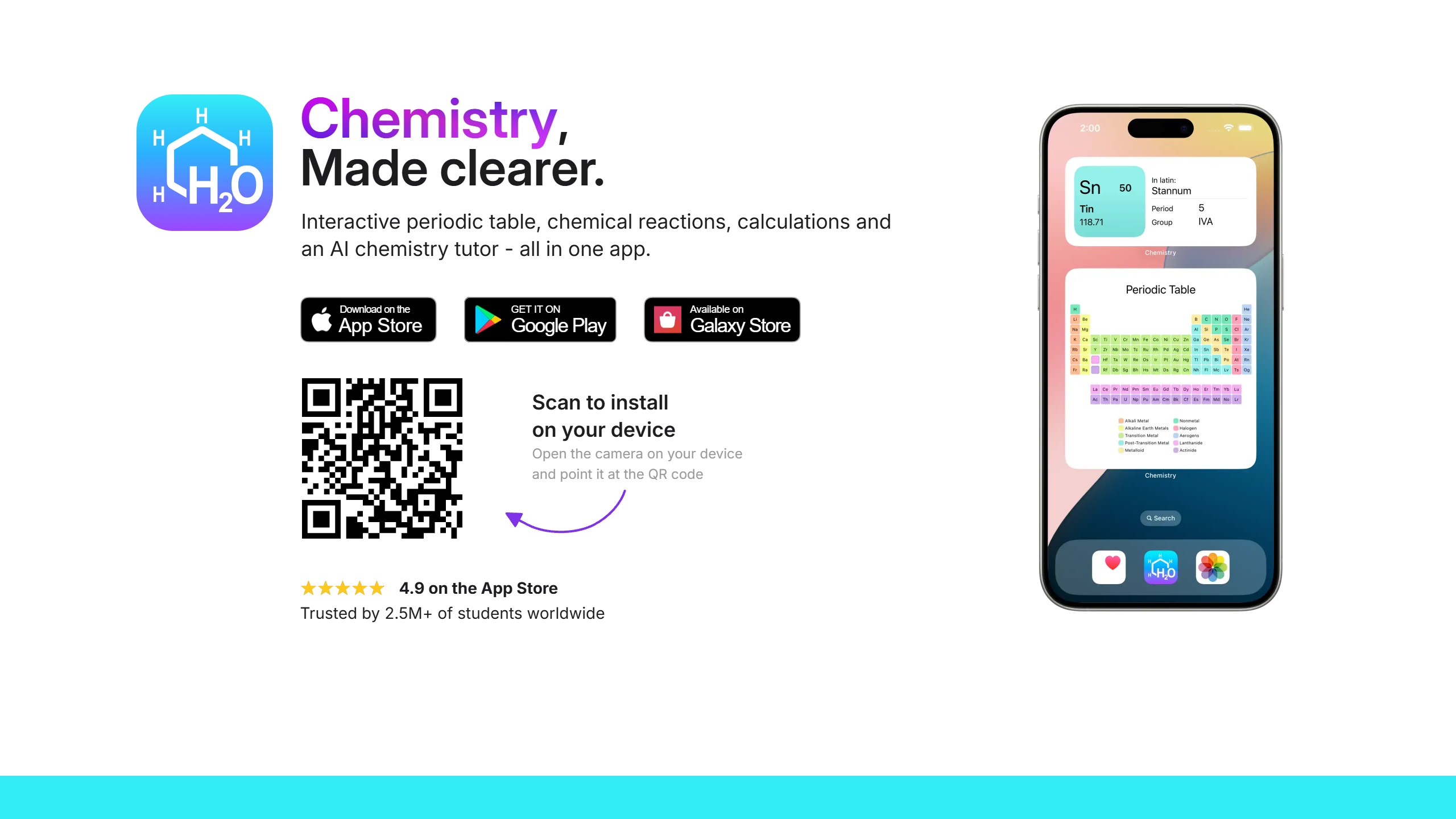
Its core is reference and lookup rather than generated text. The vendor describes a reaction solver that finds equations “even when one or more variables are unknown,” for organic and inorganic chemistry, in standard and ionic forms, with organic reactions drawn as images. Around that are a solubility table, molar mass calculator, electronegativity, reactivity series, electrode potentials and polyatomic ions. A separate ChemAI Tutor adds AI explanations. The listing says the tables and calculators are free; Chemistry Pro in-app purchases ranged from $1.99 to $34.99, and the ChemAI Tutor was $2.99.
Choose it if you study chemistry and want reaction lookup and reference tables on your phone. Skip it if you need physics, because it does not cover it.
7. Solvely: answers cross-checked by several models
Solvely lists chemistry, physics, biology and statistics among its subjects, and its App Store listing makes one claim that sets it apart from most solver apps: “Multiple AI models work together to cross-check each answer.” That is a sensible design for science homework, because two models disagreeing on a stoichiometry answer is a useful warning. Its website claims “97% overall accuracy” but shows no method behind the figure, so treat it as marketing.
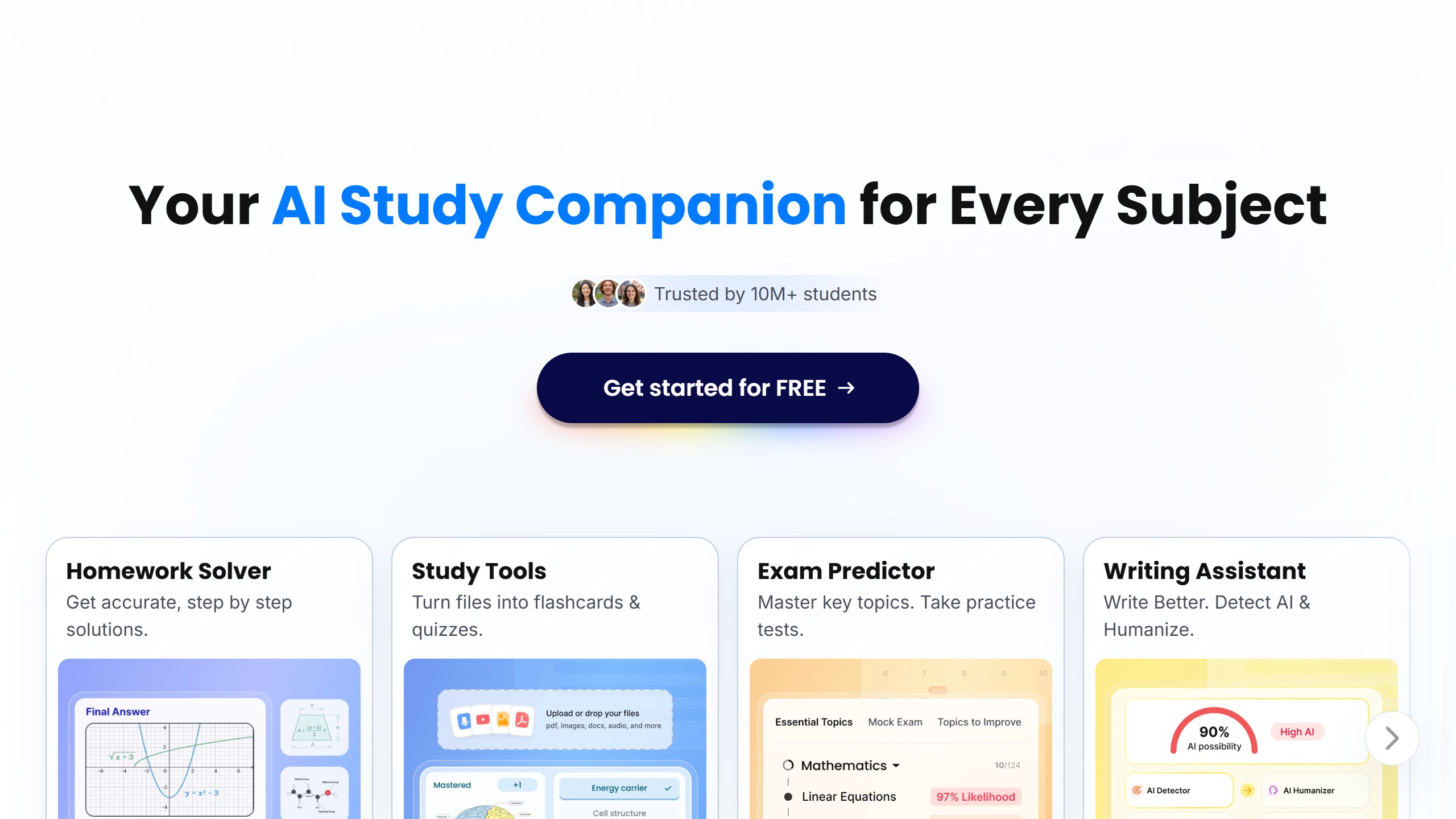
The iPhone app had a 4.8 average from 41,563 US ratings and was updated in October 2026. US in-app prices included $12.99 a month, $6.99 a week, $38.99 for six months and $46.99 for a year. It also runs on the web, Android and as a Chrome extension.
Choose it if you want a cross-checked photo solver at a lower yearly price than Gauth. Skip it if you need human expert help.
8. Brainly: human tutors for younger students
Brainly has repositioned itself for parents. Its App Store listing now describes “one-on-one tutoring support in math, reading, science, and more,” with “real human tutors” backed by AI, a promise of grade improvement in four weeks and a 30-day refund. The free version has limited features. It had a 4.7 average from 284,232 US ratings on iPhone and more than 100 million installs on Android.
Prices depend on whether you want the AI or a person. In the US App Store, Brainly Plus rows started at $1.99 a month, while Brainly Tutor, which includes live human tutors, was $29.99 a month or $95.99 a year. For middle and high school science, that human option is the main reason to pick it over a pure AI tool.
Choose it if you are a parent who wants a human in the loop for K-12 science. Skip it if you are a college student, where Pearson+ fits better.
9. Chemistry AI and Physics AI: single-subject web solvers
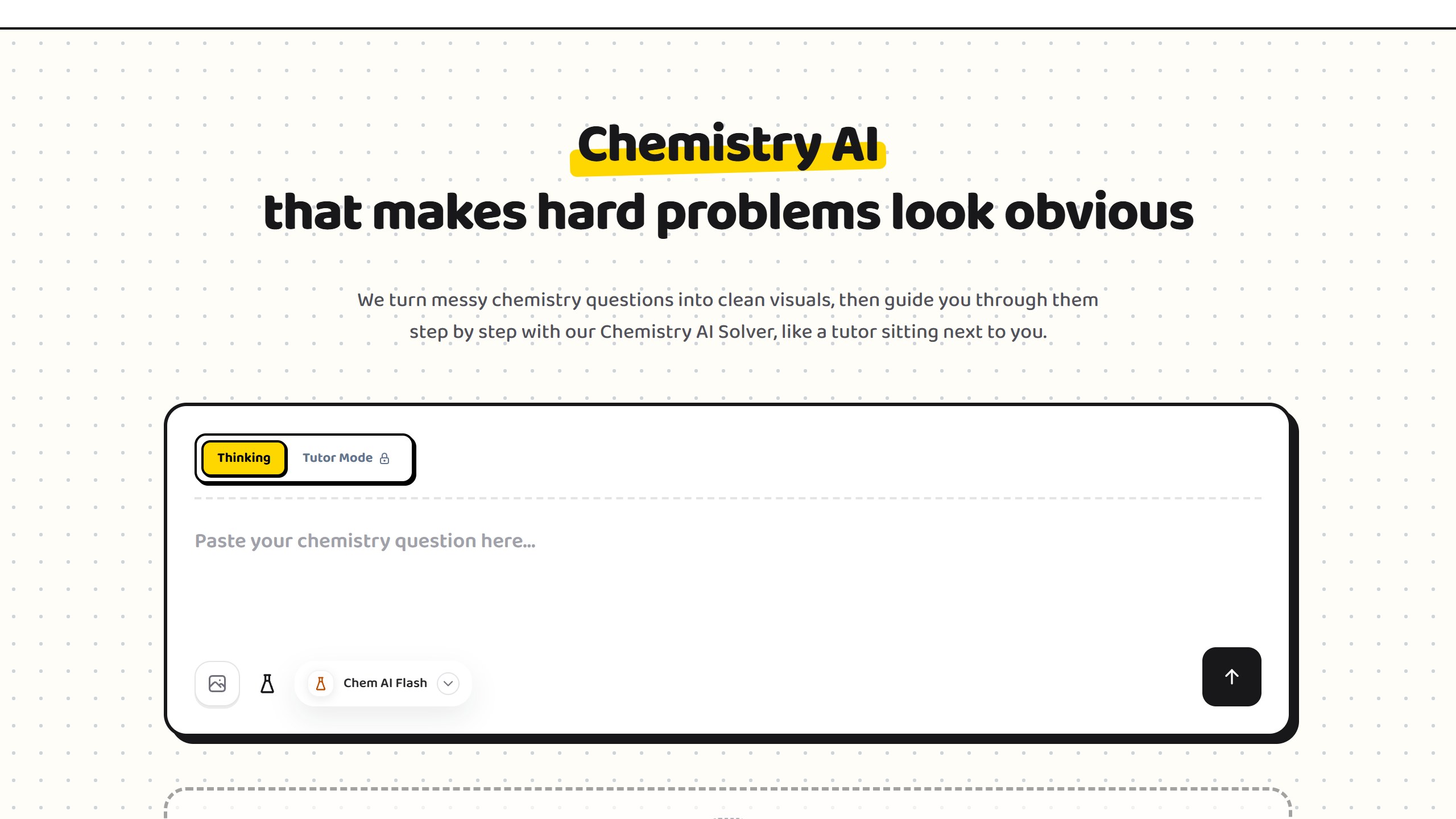
Two of the vendor sites ranking on Google for these searches are single-subject web tools, and they are more transparent than the app store wrappers. Chemistry AI at chemistryai.chat promises a structured solution that runs from setup to units, steps and final result, plus “unit-safe math” for moles, molarity and yields, and its examples include balancing redox reactions “with clear steps and a stoichiometry check” and organic mechanisms with “curved-arrow reasoning.” On its pricing page, the free plan was 5 permanent credits; Standard was $9.90 a month, or $5.90 a month on a yearly plan, for 500 credits; Pro was $19.90 a month, or $11.90 on a yearly plan, for 1,500 credits. A one-time pack of 500 credits that never expire was $14.90. Prices were shown with a dollar sign and no currency code.
Physics AI at physicsai.io is run by Fastica Software Limited in Hong Kong and says it is “powered by underlying third-party AI models.” It promises explanations that include “formulas, units, assumptions, and intermediate steps.” New users get 20 free credits; the monthly plan was $6 for 400 requests and the yearly plan $4.50 a month for 4,800 requests a year, shown with a dollar sign and no currency code. The 4.9 rating on its homepage is collected on its own site, not in an app store.
Choose them if you only need one subject and like paying for credits rather than a subscription. Skip them if you want an established company behind the answers.
Also worth knowing
Khanmigo
Khanmigo, from Khan Academy, is a tutor rather than a solver. Its learner page says it guides you “by never giving you the answer,” across subjects including math and science. It costs $4 a month or $44 a year, but the learner plan requires you to be 18 or over and live in the US; parents can add children. Our Khanmigo review covers it in full.
Photomath
Photomath, now sold by Google, describes itself only in terms of math, from arithmetic to calculus. Its listing makes no chemistry or physics claim, so do not expect it to balance an equation. It remains one of the best tools in our guide to AI math solver apps.
What we left out, and why
The Julius AI iPhone app appears in Google results for physics, but its listing describes a data analysis tool with a calculus solver, makes no chemistry or physics claim, and had not been updated since May 2025. NoteGPT also ranks, but its homepage is now an AI agent for slides, transcripts and documents, with no chemistry solver in its main navigation. Zipo’s Chem AI and Renaissance’s Physics AI are covered above as examples of the look-alike pattern rather than ranked. More than a dozen smaller chemistry and physics solver apps had fewer than 200 ratings, or had not been updated since 2024.
Avoid modified “premium unlocked” APK files of any of these apps from third-party download sites. They skip the app store’s checks, can carry malware and break the vendor’s terms. Every tool here offers some free use, such as a free tier, free lessons or free credits, through its official store listing or website.
How to choose an AI chemistry or physics solver
Decide whether you need an answer or an understanding
If you are checking a finished problem, use a computational tool or a solver that shows steps. If you are stuck on the concept, a guided tutor such as ChatGPT study mode, Gemini Guided Learning or Khanmigo will do more for your exam than a correct answer will.
Check how it handles units and equations
For chemistry, look for balancing, stoichiometry and molar mass by name, as Wolfram|Alpha, Chemistry by diniska and chemistryai.chat all describe. For physics, look for units and assumptions shown at each step. A tool that never mentions units on its own pages is unlikely to treat them carefully.
Match it to your level
High school students and parents are best served by Gauth, Brainly or a free guided tutor. College students in a named course get the most from Pearson+ Study Prep, with Wolfram|Alpha for computation. Teachers can find classroom-side tools in our guide to AI tools for high school science teachers.
Read the subscription terms before the trial ends
Weekly plans are the most expensive way to pay for any of these. Compare the yearly price, check whether steps are included in the free version, and set a reminder before a free trial converts. Several apps here show promotional and standard prices side by side in the App Store, so the price on the paywall may differ from the one you see first.
Academic integrity: where these apps fit
School rules on AI vary by country, school, course and even assignment, so check your syllabus or ask your teacher before you use a solver on anything that is graded. Some vendors say this themselves: Physics AI’s own page tells users not to “submit AI-generated content as their own work where this violates school, university, coursework, exam, or assessment rules.” If you are preparing for an AP science exam, read our guide on whether AI is allowed on AP exams first.
The honest way to use a solver is after you have tried the problem yourself: compare your working with its steps and find the line where you went wrong. That is also how you catch the solver’s own mistakes, such as a value misread from a diagram, a flipped sign or the wrong number of significant figures.
Which AI chemistry and physics solver should you pick?
If you want answers you can trust
Wolfram|Alpha, and pay for Pro if you need the steps.
If you want one app for all your homework
Gauth, or Solvely if you prefer a lower yearly price and cross-checked answers.
If you are in a college science course
Pearson+ Study Prep, alongside Wolfram|Alpha for calculation.
If you want to pay nothing
ChatGPT study mode or Gemini Guided Learning for the method, and the free Wolfram|Alpha website to check the final answer.
Looking for broader study help? Our guides to AI tutoring apps and AI AP exam prep apps cover tools that go beyond single problems.
Sources
- Wolfram|Alpha: chemistry examples, physics examples, step-by-step solutions page, Pro for Students pricing, US App Store listing and Google Play listing (Classic).
- Gauth: website, US App Store listing and Google Play listing.
- Pearson+: Study Prep course catalog, AI tutor page, Study Prep pricing and US App Store listing.
- OpenAI: Introducing study mode, 29 July 2025 and ChatGPT US App Store listing. Google: Guided Learning in Gemini, 6 August 2025, Gemini US App Store listing and Google Lens homework help.
- Chemistry by diniska: website, US App Store listing and Google Play listing. Solvely: website and US App Store listing. Brainly: US App Store listing and Google Play listing.
- Chemistry AI: website and pricing page. Physics AI: website.
- App store examples: Chem AI by Zipo Apps, Physics AI by Renaissance Apps, Julius AI and Photomath. Khanmigo: pricing and learner page.
- All read 16 October 2026.

Written by
FazFaz is the founder of AIToolsBakery. Some tools here are tested hands on. Others are assessed from vendor documentation and pricing verified on the live page, and every review says which one it is. Sponsors can buy a position in a guide. They cannot buy the score, the criticism, or silence about a better option.
How we test and how we make money →