Most gym-goers plateau not because they train too little, but because their programming never adapts. Generic spreadsheet templates ignore your recovery, your weak points, and the compound fatigue that builds up over weeks. AI bodybuilding apps change that equation by tracking every set, every rep, and every readiness signal, then adjusting your plan before you even notice you are slowing down. The question is which app actually delivers on that promise, and which ones are just expensive rep counters wrapped in a shiny interface.
Best AI bodybuilding apps in 2026: Fitbod is the top pick for most lifters: smart auto-regulation built around muscle recovery and a library of more than 1,000 exercises. Dr. Muscle wins for pure hypertrophy science with weekly periodization. JuggernautAI is the serious powerlifter’s choice for peak-week programming.
How we evaluated these apps
Based on publicly available information including app store reviews, published pricing pages, official feature documentation, and community discussions on forums like Reddit’s r/weightroom and r/bodybuilding, we assessed each app on five criteria: the quality of AI adaptation (does the algorithm actually respond to your performance?), exercise customization, platform availability, pricing transparency, and the learning curve for new users. We did not accept sponsored placements to determine this ranking order. Prices and platforms were rechecked on 27 October 2026 against the US App Store and each vendor’s own site.
The 7 best AI bodybuilding apps in 2026
1. Fitbod: Best overall AI workout app for bodybuilders
| Quick facts | Details |
|---|---|
| Starting price | $15.99/month (or $95.99/year) on the US App Store |
| Platforms | iOS, Android |
| Best for | Intermediate lifters wanting smart auto-regulation |
| Free plan | Limited free workouts |
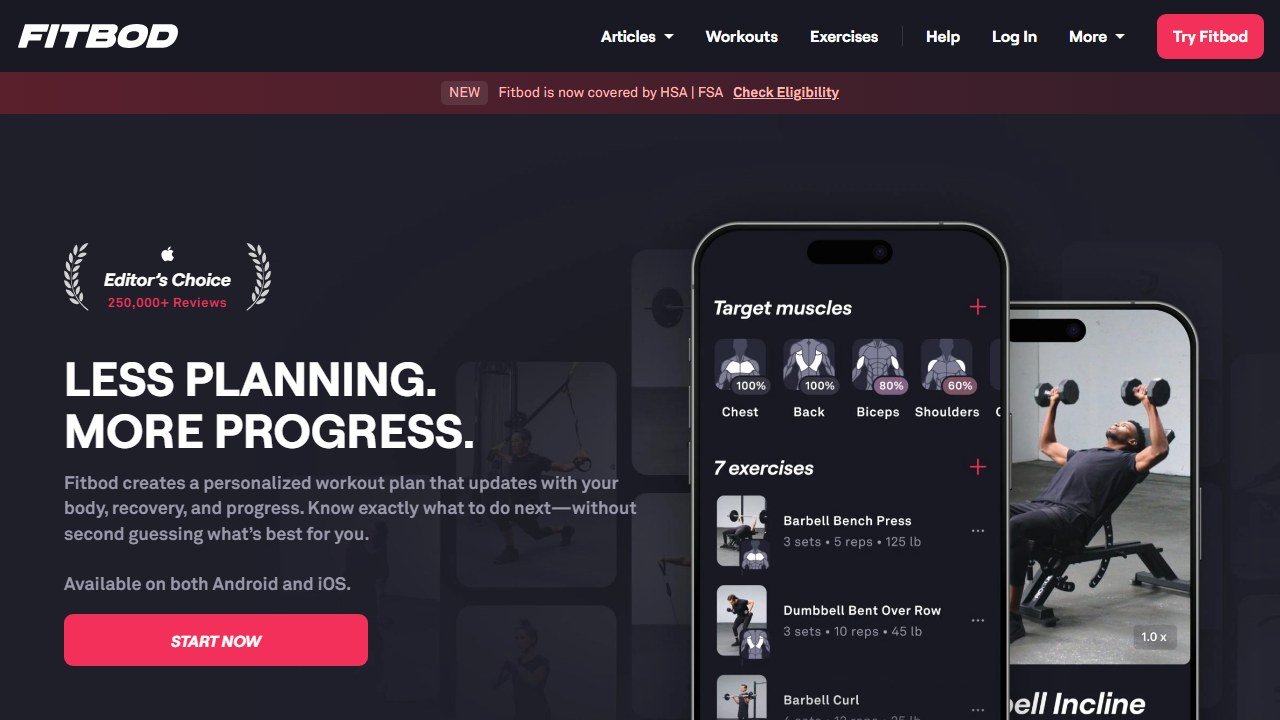
Fitbod has earned its top-ranked position through consistent delivery on the core promise of AI programming: workouts that actually change based on what you did last session. The app tracks muscle group fatigue across your full training history and uses that data to prioritize recovered muscles while protecting ones that are still under stress. In practice, this means you rarely hit a chest day when your pecs are still wrecked from Tuesday, a problem that plagues anyone following a static split.
On the US App Store, Fitbod averages 4.8 stars from more than 288,000 ratings (checked 27 October 2026), and users consistently praise the exercise swap feature, which lets you replace any movement with equipment-appropriate alternatives without breaking the underlying logic. The app supports barbell, dumbbell, cable, machine, and bodyweight exercises across a library its App Store listing puts at more than 1,000 exercises, each with multi-angle video, so it scales whether you train at a commercial gym or a home setup with a single adjustable dumbbell.
The main limitation is that Fitbod’s AI optimizes primarily for volume and muscle balance rather than periodized strength peaks. If your goal is a powerlifting meet or a specific one-rep max date, you may feel the programming lacks structure around a competition timeline. It syncs with Apple Health, Apple Watch, Fitbit and Strava, but its listing does not describe using heart rate variability or sleep data to adjust sessions, which more advanced athletes sometimes want for autoregulation.
- Pro: Excellent muscle recovery tracking that genuinely adapts session to session
- Pro: 1,000+ exercises with multi-angle videos and equipment filters
- Pro: Clean, fast interface with minimal friction between opening the app and starting your set
- Pro: Reasonable annual pricing compared to hiring a coach
- Con: No periodization for peaking, not ideal for competitive powerlifters
- Con: No HRV or sleep-based autoregulation described
2. Dr. Muscle: Best AI app for hypertrophy science
| Quick facts | Details |
|---|---|
| Starting price | $49.99/month (or $399.99/year) on the US App Store |
| Platforms | iOS, Android, Web |
| Best for | Bodybuilders who want overload and deloads handled for them |
| Free plan | Free trial (all features, no payment info) |
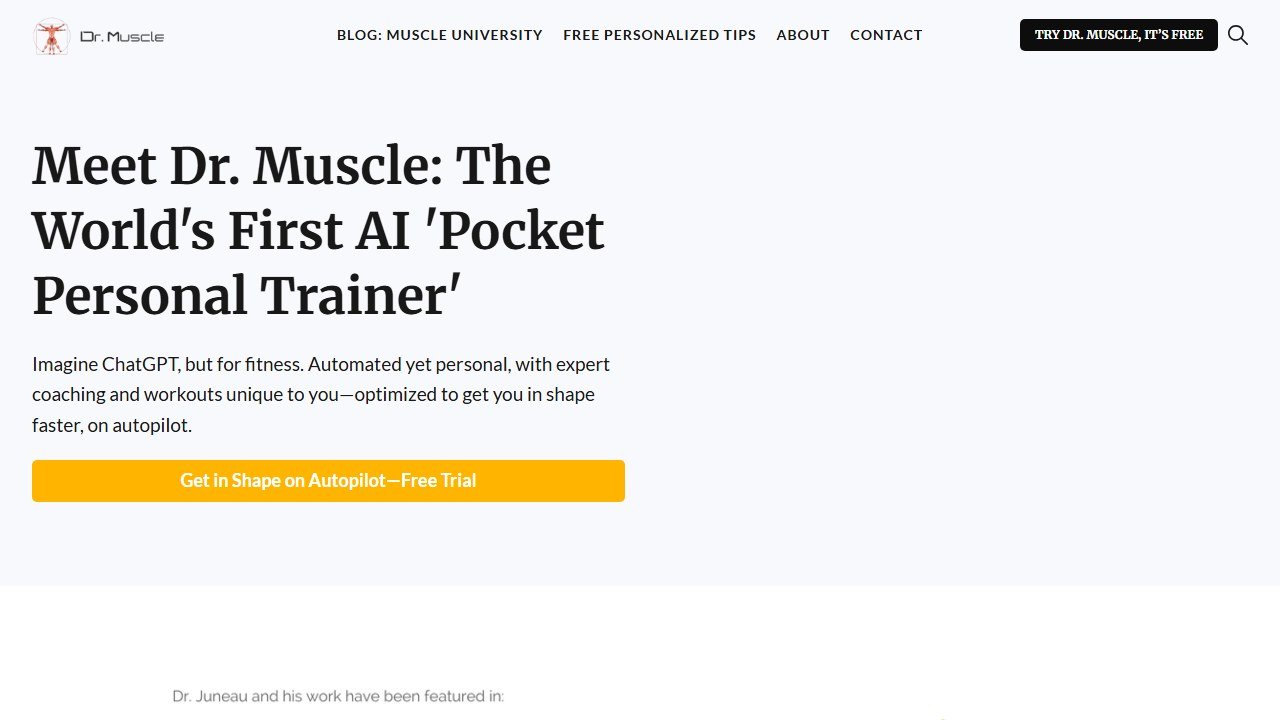
Dr. Muscle is built around one job: automating progressive overload for muscle growth. Its App Store listing says it customizes your workouts from your profile and your own progress, with more than 500 exercises, 34+ workouts, gym and home options, and charts for every exercise. You can add your own exercises and workouts if the built-in programs do not fit.
Deloads are where it stands out. Dr. Muscle’s own deload guide says the app cuts sets by 50% and weights by 10% as soon as you hit a plateau, measured as your estimated 1RM going down, and that it does this automatically. That is a meaningful safety valve against grinding through accumulated fatigue. Alpha Progression, by contrast, says its deloads follow the plan’s schedule. Dr. Muscle also has a web app, which is handy if you prefer to plan on a desktop or tablet.
The price point is the obvious sticking point. At $49.99 a month, or $399.99 a year, on the US App Store, Dr. Muscle costs about three times as much as Fitbod, which makes it the most expensive app on this list. The free trial includes every feature and needs no payment details, so you can judge it before paying. For a dedicated natural bodybuilder who wants overload and deloads handled for them, it is one of the most hands-off options in app form.
- Pro: Automatic progressive overload across 500+ exercises
- Pro: Automatic deloads when your estimated 1RM drops
- Pro: Web app available for non-phone logging
- Con: The most expensive app on this list
- Con: Free trial length is not published
- Con: Exercise library is smaller than Fitbod or Jefit
3. Alpha Progression: Best AI app for progressive overload tracking
| Quick facts | Details |
|---|---|
| Starting price | Free; Pro $12.99/month (or $79.99/year) |
| Platforms | iOS, Android |
| Best for | Lifters who want a generated plan with set-by-set progression targets |
| Free plan | Yes (unlimited logging, 795 exercise videos, no ads) |
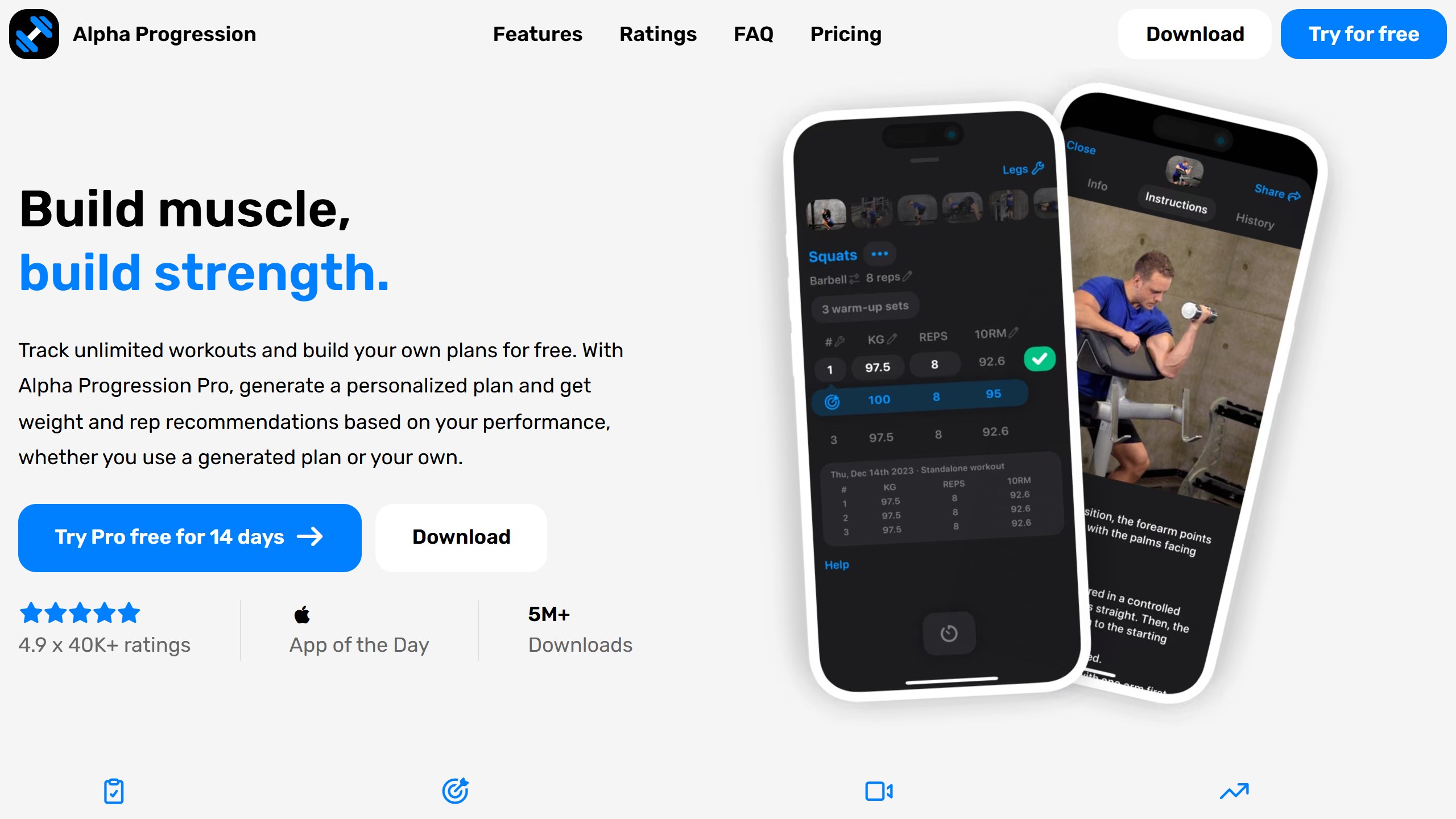
Alpha Progression is built around progressive overload, and its Pro version tells you what to lift on every set. Before each set it shows the weight and reps to aim for, based on your previous workouts and the sets you have already done that day, and the target shifts from set to set to allow for fatigue. According to its App Store listing, if you keep hitting the targets they keep climbing. Alpha Progression says recommendations start from your second workout, once there is a session to work from.
It also designs the program for you. The plan generator asks for your goal, experience, training days, session length, the muscles you want to prioritise and the equipment in your gym, then builds a complete plan: split, exercises, sets and rep ranges, with optional periodization and scheduled deload weeks. Beginners and advanced lifters get different plans, so it works from your first program onward. Deloads follow the plan’s schedule; Alpha Progression says they are not triggered automatically when a lift stalls. If you would rather run your own program, you can build it from scratch and still get the set-by-set targets.
The free version covers a lot: unlimited workout logging, all 795 exercise videos, your own plans, measurements and CSV export, with no ads and no account needed. Pro, which adds the plan generator, progression recommendations, charts, periodization and multiple gyms, costs $12.99 a month or $79.99 a year in the US, with a 14-day trial on the yearly plan. That puts it mid-range rather than at the budget end of this list. There is no web app; it runs on iPhone and Android.
I spent a week training on its generated plan for our full Alpha Progression review, which covers the progression targets, dropsets and supersets, single-day deloads, home gym plans and data export in detail.
- Pro: Set-by-set weight and rep targets that adjust to how each set went
- Pro: Plan generator for beginners and experienced lifters, with periodization and deloads
- Pro: Free version with 795 exercise videos and no ads
- Con: No web app, and no watch app yet (Alpha Progression is aiming for the end of 2026)
- Con: Pro is not the cheapest option on this list
4. Arvo: Best free AI coach for getting started
| Quick facts | Details |
|---|---|
| Starting price | Free; Pro $3.99/month (or $29.99/year) on the US App Store |
| Platforms | iOS, Android, Web, plus an Arvo app in ChatGPT |
| Best for | Lifters who want set-by-set AI coaching without paying |
| Free plan | Yes (AI coaching, tracking and set-by-set progression) |
Arvo is the newest app on this list: an AI personal trainer for gym lifters, built by Aetha, that pitches itself at bodybuilding and powerbuilding. Its site promises a five-minute onboarding and an AI-generated workout straight after. The free tier is the most generous here. According to Arvo’s pricing page it covers AI coaching and tracking, set-by-set progression, a Simple Mode and the Ask Arvo assistant, and it needs no credit card.
Arvo does not stop at beginner level. Its pricing page and FAQ list named training methods such as Mentzer-style HIT, FST-7 and the Kuba Method, weekly volume tracking against MEV, MAV and MRV landmarks, and audio coaching as Pro features. Pro is 4 euros a month on Arvo’s site and $3.99 a month or $29.99 a year on the US App Store, which makes it the cheapest paid tier on this list. It runs on iPhone, Android and the web, and there is also an Arvo app inside ChatGPT.
The catch is track record. When we checked on 27 October 2026, the US App Store listing had only 10 ratings, averaging 2.7, so there is far less user feedback to go on than for Fitbod or Jefit. Arvo’s pages also say little about its exercise video library. Start on the free tier and make sure the programming suits you before you pay.
- Pro: The most complete free tier on this list, set-by-set progression included
- Pro: The cheapest paid tier on this list
- Pro: Advanced methods and volume landmarks on Pro, so it does not cap out at beginner level
- Con: Very new, with only a handful of App Store ratings
- Con: Its pricing page is not consistent about which methods are free and which are Pro
5. JuggernautAI: Best AI app for powerlifters and strength athletes
| Quick facts | Details |
|---|---|
| Starting price | $34.99/month (or $349.99/year) |
| Platforms | iOS, Android |
| Best for | Competitive powerlifters, strength athletes, and serious powerbuilders |
| Free plan | No (2-week free trial) |
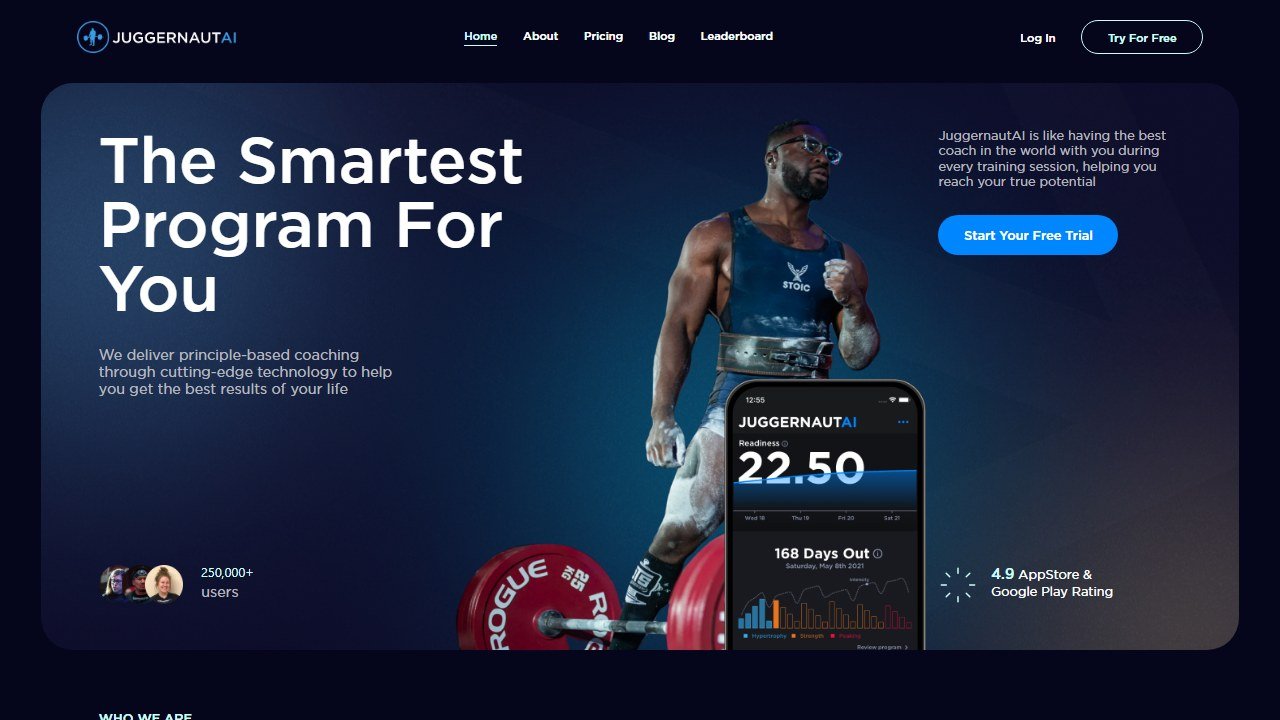
JuggernautAI comes from Juggernaut, the strength coaching brand whose head coach is Chad Wesley Smith, and that powerlifting pedigree shows in every programming decision. The AI generates periodized blocks with wave loading, intensity cycles, and competition-day peaking that mirrors what elite strength coaches write for their athletes. Based on publicly available information from JuggernautAI’s website and the well-documented methodology behind the platform, the algorithm uses your history of competition totals, recent training maxes, and RPE feedback to build a program that peaks you for a specific competition date, a capability no other app on this list matches at the same depth.
The RPE (rate of perceived exertion) autoregulation system is particularly sophisticated. Rather than prescribing fixed weights, JuggernautAI prescribes a target RPE for each set, then uses your logged RPE versus actual performance to recalibrate the next session’s loads. If you come in stronger than expected, it moves faster. If life stress or poor sleep knocked your output down, the loads back off automatically. This is the same autoregulation framework that serious powerlifting coaches use manually, only executed by an algorithm that can process your training history in seconds.
JuggernautAI is not for casual gymgoers. The interface assumes you understand RPE, percentage-based programming, and powerlifting periodization concepts. At $34.99 a month, or $349.99 a year, it is the second most expensive app here after Dr. Muscle, though a two-week free trial lets you try it first. But for a competitive powerlifter or an advanced strength athlete who wants AI-assisted programming at a level that rivals a human coach, the value is real, especially when compared to the $200 to $400/month cost of an actual online coach.
- Pro: Best-in-class peaking protocols for competitive powerlifters
- Pro: Sophisticated RPE autoregulation that adapts day-by-day
- Pro: Built by actual competitive powerlifters with a documented methodology
- Pro: Competition date targeting that genuinely peaks you for meet day
- Con: Expensive at $34.99 a month or $349.99 a year
- Con: Steep learning curve, requires fluency in RPE and powerlifting programming concepts
- Con: No free plan, only a two-week trial
6. FitnessAI: Best AI app for data-driven weight progression
| Quick facts | Details |
|---|---|
| Starting price | From $9.99/month on the US App Store (several prices listed) |
| Platforms | iOS, Android |
| Best for | Data-oriented lifters who want statistically-informed weight suggestions |
| Free plan | Free start offered; trial terms not published |
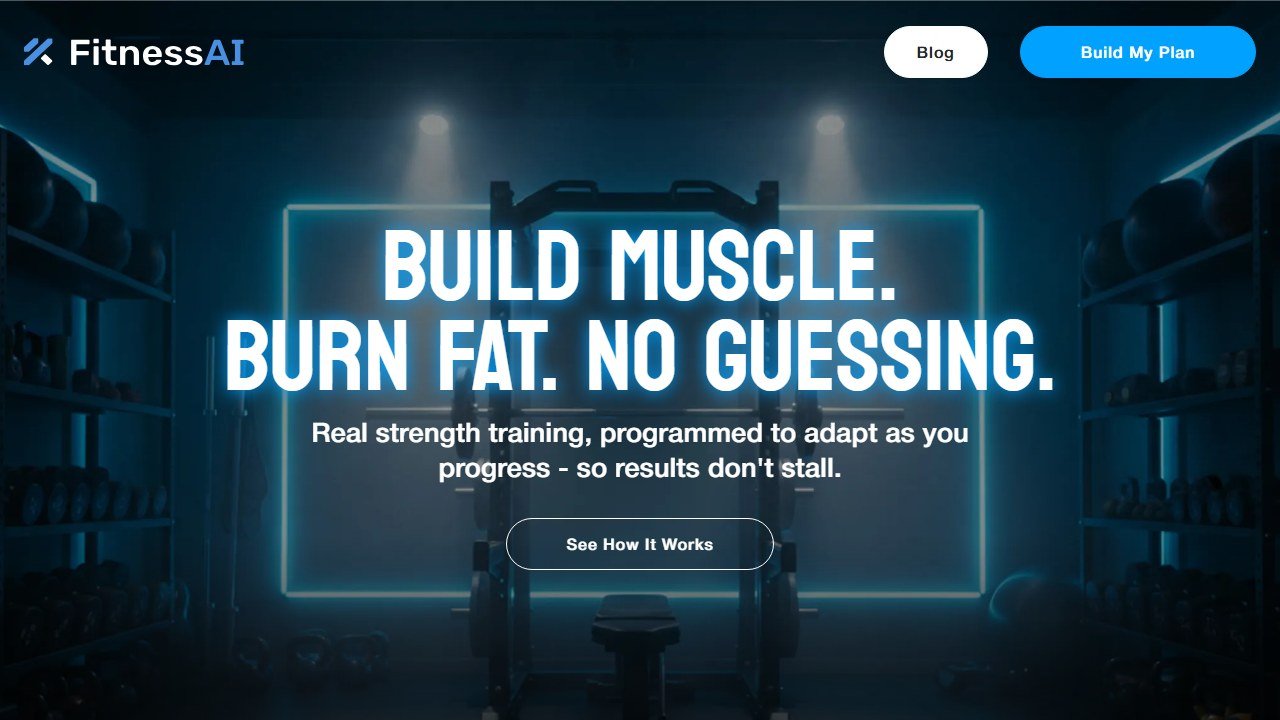
FitnessAI built its weight recommendation engine on data from real lifters. Its App Store listing cites 5.9 million workouts, while its website now says it is built on more than 100 million training sessions. It uses that aggregate performance data to generate weight suggestions calibrated not just to your personal history but to what lifters at your level typically achieve on each movement. The result is weight recommendations that feel grounded in statistical reality rather than generic percentage jumps. The idea is that a suggested jump, say from 185 lbs to 190 lbs on the bench press, reflects how lifters at your level actually progressed, not a fixed percentage.
The interface is clean and built for quick logging, which contributes to a fast, low-friction logging experience. Each workout is generated fresh based on your recent performance, and the app provides clear explanations for why it is suggesting specific exercises or load changes. For lifters who want a data-forward approach without the complexity of JuggernautAI or the premium price of Dr. Muscle, FitnessAI hits a comfortable middle ground.
FitnessAI used to be iPhone only, but it is now on Google Play as well. Pricing is harder to pin down: its US App Store listing shows several monthly prices at once, from $9.99 to $19.99, and yearly plans from $59.99 to $89.99, so what you pay may depend on the offer you see. The program design is also more structured than flexible, since the AI selects exercises for you rather than offering the deep customization that Fitbod or Alpha Progression provide. Lifters who have strong preferences about exercise selection or who train with unusual equipment setups may run into friction.
- Pro: Weight suggestions backed by a large aggregate dataset
- Pro: Clean, fast interface with low logging friction
- Pro: Now on both iPhone and Android
- Con: Several prices on offer, so what you pay can vary
- Con: Limited exercise customization compared to Fitbod
- Con: Less periodization depth than Dr. Muscle or JuggernautAI
7. Jefit: Best AI app for lifters who want a large exercise database and community
| Quick facts | Details |
|---|---|
| Starting price | $12.99/month (or $69.99/year) for Elite |
| Platforms | iOS, Android, plus a watch app |
| Best for | Lifters who want a large exercise library, community plans, and flexible logging |
| Free plan | Yes (generous free tier) |
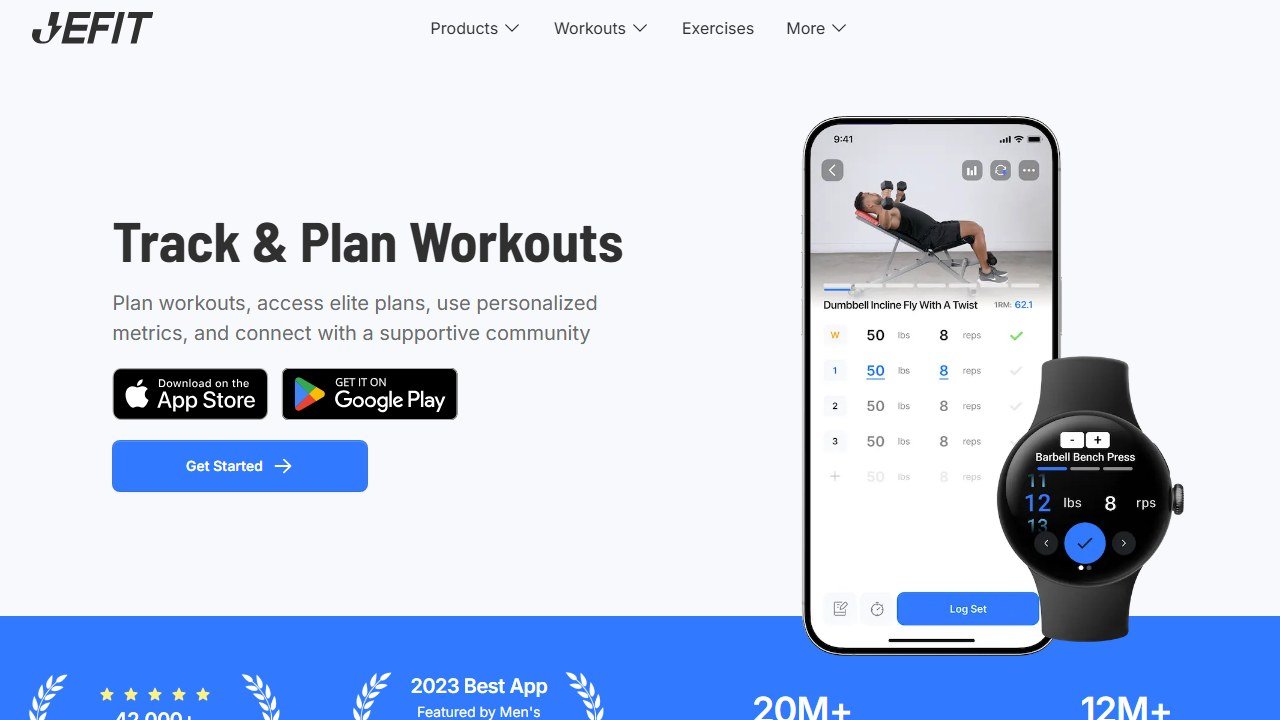
Jefit is one of the longest-running apps in this category, with more than 12 million users according to its App Store listing, and its longevity reflects a product that consistently delivers on the basics. It carries one of the largest exercise databases here, more than 1,400 exercises with HD video instructions, with community-contributed workouts that cover every training style from classic bodybuilding splits to athletic conditioning. The AI features are more recent additions that sit on top of this established foundation, providing workout recommendations and progression suggestions based on your logged history.
The community dimension is Jefit’s genuine differentiator. Users can share custom workout routines, and follow programs built by other community members. For lifters who are motivated by social accountability, seeing that other people are logging their workouts at the same time or tracking similar goals, Jefit provides a layer of engagement that solo-use apps do not replicate. The free tier is also meaningfully functional, which makes Jefit, alongside Alpha Progression and Arvo, a good place to start without spending anything.
The tradeoff is that Jefit’s AI recommendation layer is less sophisticated than Fitbod, Dr. Muscle, or JuggernautAI. The algorithm’s suggestions are more rule-based than genuinely adaptive, and the periodization options are limited compared to dedicated hypertrophy or strength apps. Think of Jefit as a very well-organized training journal with smart suggestions rather than a true AI coach. For early-stage lifters or those who want community features alongside their tracking, that trade is worth it. For serious hypertrophy or strength athletes, the ceiling will feel low within a few months.
- Pro: Largest exercise database on this list (1,400+ movements)
- Pro: Strong community features with shareable programs
- Pro: A free tier you can train on long term
- Con: AI adaptation is less sophisticated than Fitbod or Dr. Muscle
- Con: Periodization depth is limited for serious athletes
- Con: Elite now costs $12.99 a month, no longer a budget option
Master comparison: all 7 AI bodybuilding apps
| App | Starting price | Free plan | Platforms | Best for | AI depth |
|---|---|---|---|---|---|
| Fitbod | $15.99/mo | Limited free workouts | iOS, Android | Overall best, intermediate lifters | High |
| Dr. Muscle | $49.99/mo | Free trial | iOS, Android, Web | Hypertrophy science and periodization | Very high |
| Alpha Progression | $12.99/mo | Yes (generous) | iOS, Android | Generated plans and set-by-set progression | Medium-high |
| Arvo | Free; Pro $3.99/mo | Yes (generous) | iOS, Android, Web | Free set-by-set coaching | Medium |
| JuggernautAI | $34.99/mo | 2-week trial | iOS, Android | Competitive powerlifters | Very high |
| FitnessAI | From $9.99/mo | Free start | iOS, Android | Data-driven weight progression | High |
| Jefit | $12.99/mo | Yes (generous) | iOS, Android | Large exercise library and community | Medium |
How to choose the right AI bodybuilding app for you
The honest answer is that your current training experience and your primary goal narrow the field quickly. Here is how to think through it without overthinking.
If you are new to structured training, start with Arvo or Jefit. Both have free tiers you can train on without paying while you figure out whether you will actually use an app consistently. Jefit’s huge exercise library with video instructions helps you learn the movements, and Arvo’s free plan already includes set-by-set progression and a Simple Mode.
If you have one to three years of training and your main goal is building muscle, Fitbod is the safest bet for most people. The muscle recovery tracking, exercise library, and straightforward interface get out of the way and let you train. If you want to go deeper into the science of hypertrophy and are willing to invest more money and more mental engagement, Dr. Muscle is the step up.
If you already know your programming and just want a smarter tracking layer, Alpha Progression handles it well: build your own plan and it gives you a weight and rep target for every set. If you would rather have the program designed for you, its plan generator does that too.
If you are training for a powerlifting meet, JuggernautAI is the only app built around competition peaking in a way that can meaningfully replace a human coach. The price is real, but so is the programming quality. Every other app on this list will leave gaps in your meet prep.
If you want data-driven weight suggestions, FitnessAI provides solid AI-assisted progression with a dataset-backed approach, and it now runs on Android as well as iPhone. If budget matters most, Arvo Pro is the cheapest paid tier here, and Arvo, Alpha Progression and Jefit all have free tiers.
One practical suggestion regardless of which app you choose: give it at least six weeks before forming a judgment. AI-driven programming improves as it accumulates your data, and most apps need several weeks of logged sessions before their suggestions become genuinely personalized. The first two weeks of any adaptive app will feel generic. By week six, the gap between an AI-programmed plan and a static spreadsheet becomes much more obvious in your favor.
If you mix cardio with your lifting, see our picks for the best AI running coach apps to round out your training plan.
For nutrition tracking and tool decisions, see our guides to AI macro trackers, AI meal-plan generators, the best AI personal-trainer apps for beginners, Trainerize pricing, TrueCoach pricing, Fitbod vs Strong, and Wodify alternatives.

Written by
FazFaz is the founder of AIToolsBakery. Some tools here are tested hands on. Others are assessed from vendor documentation and pricing verified on the live page, and every review says which one it is. Sponsors can buy a position in a guide. They cannot buy the score, the criticism, or silence about a better option.
How we test and how we make money →