Every acquisition strategy in your plan is competing against a much cheaper source of income that almost nobody works: the money people already agreed to give you and then stopped giving, usually without meaning to.
There are three leaks. They are treated as three separate problems by three separate parts of the sector, and they have the same underlying cause, which is that nobody is watching.
Failed recurring gifts. A card expires, a payment declines, and the monthly gift silently stops. Estimates put the loss at 10 to 15% of monthly recurring revenue for organisations that do not actively recover. Our comparison of donor stewardship software covers which tools flag these gifts before they are lost.
Expired pledges and unfulfilled commitments. Someone promised, the reminder never went out, and the pledge quietly aged past the point where anyone would raise it.
Lapsed donors. They gave, they stopped, and nothing happened. Reactivated donors tend to give more than newly acquired ones and are cheaper to reach.
Nobody adds these up, which is the reason this article exists.
Quick answer: Most nonprofits lose 10 to 15% of monthly recurring revenue to unrecovered failed payments. Fix the mechanics with your donation platform: retries, card updaters, self-service portals. Fix the detection with an intelligence layer that flags failures, expired pledges and still-engaged lapsed donors before they go cold.
Leak one: failed recurring payments
This is the biggest and the most fixable, and it is invisible by design. Nobody cancels. The payment simply stops.
Why it happens. Expired cards, insufficient funds, fraud-prevention declines, reissued cards after a bank breach, and outdated billing details. None of these are decisions. A donor whose card expires has not withdrawn support, they have failed to notice an administrative event, exactly as they would with any other subscription.
Why nobody moves to recover failed recurring donations. A monthly gift that stops produces no alert in most setups. It simply becomes absent, and absence is hard to see in a report full of presence. By the time anyone notices, three or four months have passed and the conversation is much harder. To build the programme itself, see our guide to starting a monthly giving program, including what each platform does when a card fails.
The mechanics fix
This part belongs to your donation platform, not to an intelligence layer, and it is worth being clear about that.
- Automatic retries. Most failures resolve on a second or third attempt a few days later. Retry logic with sensible delays recovers a meaningful share before a human is ever involved.
- Card updater services. These refresh reissued card details automatically with the networks. This is the single highest-return setting most organisations have never switched on.
- Pre-expiry alerts. Notify the donor before the card expires rather than after it fails.
- A donor self-service portal. Let people update their own card, change their amount and download receipts without emailing you. This reduces both churn and admin.
Fundraise Up, Givebutter and Donorbox all offer versions of these. Check which are enabled in your account, because several are off by default.
The human fix
Retries recover the accidental failures. The rest need a person, and the message matters. A donor whose card failed has not rejected you and should not receive a win-back appeal. They should receive a short, slightly apologetic note saying the payment did not go through and here is the link. Treating an administrative failure as a lapse is how you turn a fixable problem into a real one.
Leak two: expired pledges and stalled commitments
Less discussed, and in major gifts it is the more expensive of the two.
A pledge is a stated intention with a schedule attached. Schedules slip. A payment is missed, a reminder is not sent, the fundraiser who took the commitment has left, and the pledge ages out. In many organisations nobody owns pledge reminders at all, because it sits between finance, who see the missed payment, and development, who own the relationship.
What to put in place. A named owner for pledge follow-up. A reminder before the due date, not after. A monthly review of pledges with a payment more than thirty days overdue. And an escalation path when a pledge has been silent for two cycles, because at that point it is a relationship conversation rather than an invoice one.
Letters of intent deserve the same treatment. An LOI with a deadline nobody is tracking is a commitment that expires by neglect.
Leak three: lapsed donors, and which ones are worth chasing
A lapsed donor is someone who gave and has not given within a defined window, usually a year. They are prime candidates precisely because they already decided once that you were worth supporting, and reactivation is cheaper than acquisition.
But the sector’s standard advice, mail everyone who lapsed, is expensive and mostly wasted. The useful question is which lapsed donors are actually reachable.
Recency dominates. Win-back benchmarks run around 8 to 15% for donors lapsed 0 to 90 days and 3 to 7% for donors lapsed 90 to 365 days. The drop is steep and it is the strongest argument for detecting lapse early rather than running an annual reactivation campaign.
Engagement without giving is the strongest signal you have. A donor who has not given in fourteen months but opened your last four emails has not left. They are the highest-yield segment in your file and they are invisible in any report built on gift data alone, because by every gift-based measure they look identical to someone who has forgotten you exist.
Tenure matters more than size. Someone who gave modestly for nine consecutive years and stopped is a better reactivation prospect, and a better planned giving prospect, than someone who made one large gift and vanished.
Where the tools split, honestly
This is the part where most articles pick a side. There are genuinely two jobs here and different products own each.
Donation platforms own recovery. Retry logic, card updaters, self-service portals, dunning sequences. If your recurring programme is leaking, the first fix is in the platform and no intelligence layer substitutes for it. Fundraise Up is the strongest of the ones we have covered on this specific dimension, with Givebutter the better answer for small organisations wanting a free complete stack.
Intelligence layers own detection. Noticing that a gift stopped, that a pledge aged, that a nine-year donor is still opening email. Crucially, noticing it across all three leaks at once and putting it in front of a human on the morning it matters.
Gratefully is our pick for the detection half. Its monitored signal categories map directly onto this article: pledge fulfilment status and recurring gift failures, expired pledges that could be renewed, lapsed donors still opening your emails, and letter of intent deadlines. It surfaces them in a ranked morning list with the reason attached rather than in a report somebody has to remember to run.
We are not going to claim it recovers the payment. It does not process anything and does not try to. It tells you the payment failed, who it was, how long they have given, and drafts the note. The recovery mechanics stay with your platform. Our Gratefully review has the full picture, and best AI donor intelligence tools covers the alternatives.
Worth naming a genuine comparable: DonorDock has an AI assistant that flags lapsed givers and recommends follow-ups, and for small organisations already on it that may be sufficient.
A ninety-day plan to close all three
Weeks one and two: measure the leak. How many recurring gifts failed in the last twelve months and were never recovered? What is the total value? How many pledges are more than thirty days overdue? How many donors lapsed in the last ninety days? Most organisations have never produced these four numbers and are startled by them.
Weeks three and four: fix the mechanics. Enable retries, card updater and pre-expiry alerts. Turn on the self-service portal. This is configuration, not a project.
Weeks five to eight: work the recent failures. Everyone whose recurring gift failed in the last ninety days, personally, with an apologetic tone and a direct link. This is the highest-yield outreach on the list.
Weeks nine to twelve: the reachable lapsed. Not everyone. Donors lapsed under ninety days, plus longer-lapsed donors who are still engaging. Then set up detection so you never again find out a year late.
The bottom line
Before you spend on acquisition, count what is leaving through the back door. Failed recurring gifts, expired pledges and quietly lapsed donors are three symptoms of the same failure, which is that nothing in your stack is watching.
Fix the mechanics in your donation platform first, because that recovers money with configuration rather than effort. Then fix detection, so the next failure surfaces in days rather than quarters.
It is not the most exciting work in fundraising. It is the cheapest revenue available to you, and it is money from people who already said yes.
How to tell whether it worked
The hardest part of lapsed donor recovery is not doing it, it is knowing afterwards whether it helped. Three measurement mistakes account for most of the confusion.
Measure against a holdout, not against last year
Comparing this year to last year measures the year, not the intervention. Anything that moved in your sector, your economy or your programme moves that number too. Hold back a random ten percent of the eligible group, treat them normally, and compare. It feels wasteful and it is the only way to know.
Pick the metric before you start, and write it down
For this work the honest metric is reactivation rate among the contacted group, against an untouched holdout. Choosing it afterwards from whatever moved is how organisations convince themselves that things worked. Write the number and the target down before the first send, with a date to check it.
Give it long enough, and no longer
Fundraising interventions take a full giving cycle to read properly, because donor behaviour is seasonal and lumpy. A single month tells you almost nothing. Equally, an intervention that has produced nothing after a full cycle is not going to start working in the second one, and continuing is a sunk cost decision rather than a strategic one.
Count the staff time honestly
The cost of any of this is mostly hours, not licences. If a workflow saves an hour a week and takes three hours a week to maintain, it is a loss even when the fundraising metric improves. Track the time for the first two months, because that is the number nobody records and everyone underestimates.
Where this goes wrong
Automating a message that should be personal
The failure mode specific to AI in fundraising is scaling something whose value came from not being scaled. A major donor who receives an obviously templated note referencing their giving history has learned something about how you see them. Set an explicit line for which segments never receive automated communication, and put a person’s name against enforcing it.
Confusing a prediction with a decision
A propensity score is a ranking, not an instruction. Treated as an instruction it becomes self-fulfilling: donors the model ranks low get no contact, therefore do not give, therefore confirm the model. Keep a proportion of outreach deliberately outside the model’s recommendation so you can see what it is missing.
Letting the tool set the strategy
Software encodes assumptions about how fundraising works, and those assumptions become your process by default. If the platform is built around monthly appeals and your programme is relationship-led major gifts, you will drift toward the appeals because that is the path of least resistance. Decide the motion first and buy something that fits it.
Not telling donors what you are doing
If you use donor data to predict behaviour, your privacy notice should say so in language a supporter would understand. That is both a compliance position and a trust one, and the organisations that handle it well treat it as a statement of values rather than a legal formality. Our vendor questions on donor data covers what to ask before data goes in.
What the tooling for this actually costs
Advice about recovering lapsed donors is worth little without the price of doing it. Every figure here was read from the vendor’s own pricing page on 4 September 2026.
| Platform | Entry price | Metered on |
|---|---|---|
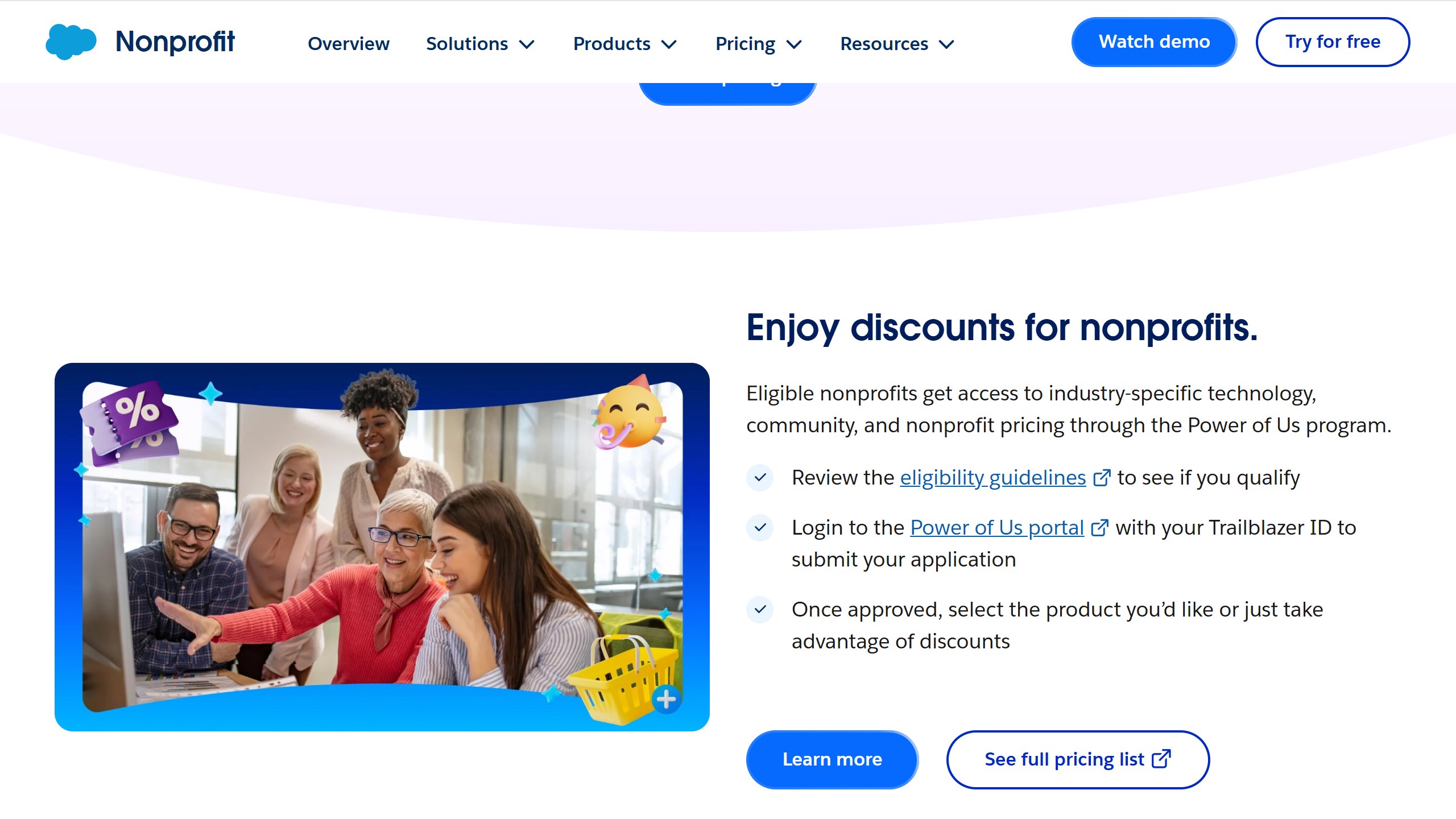
| Salesforce Nonprofit Cloud | $0 for 10 licences, then $60/user/mo | Seats |
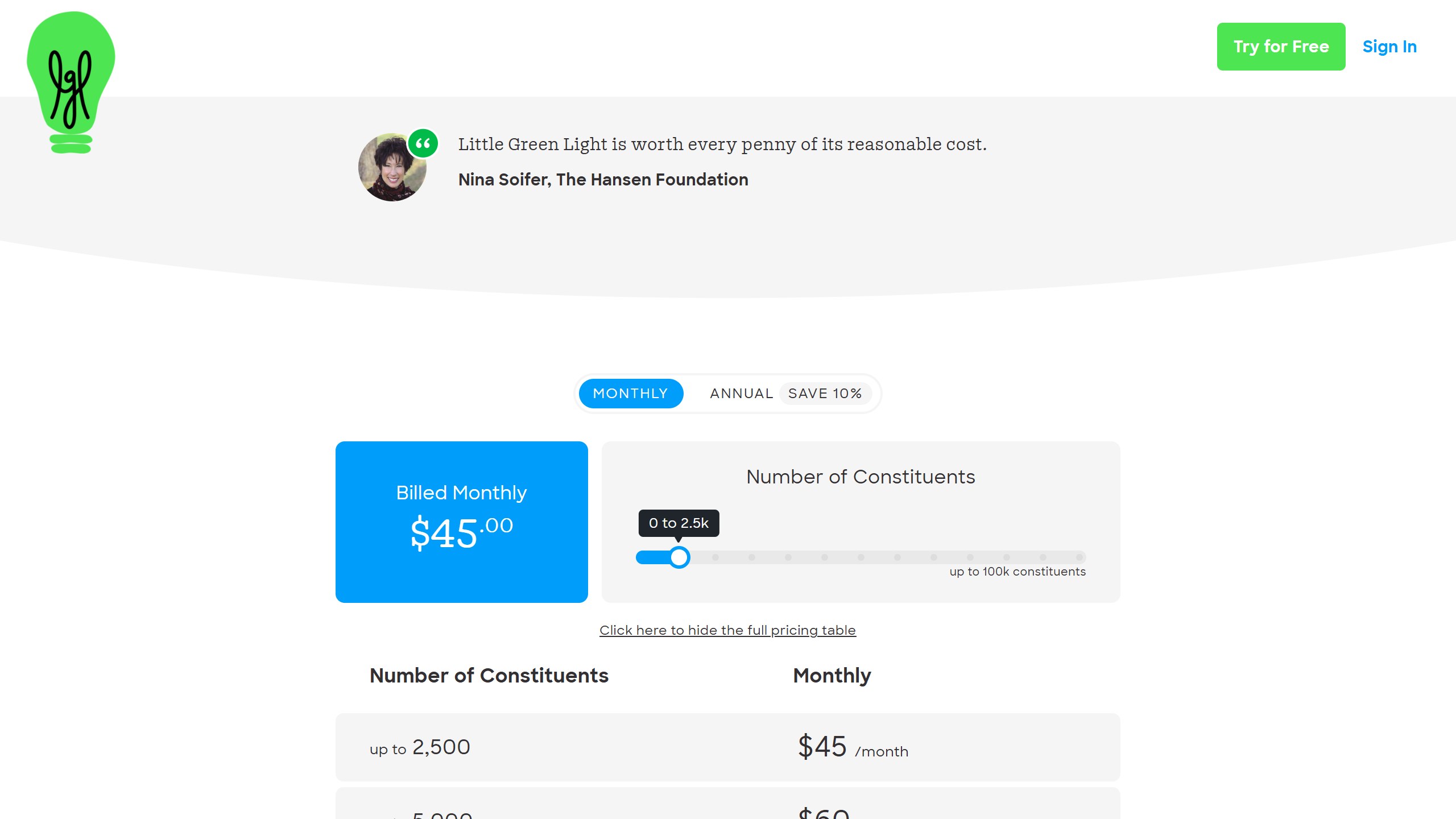
| Little Green Light | $45/mo | Constituents |
| Neon CRM | $99/mo | Annual revenue |
| Bloomerang | $125/mo | Product |
| Keela | $164/mo | Contacts |
| Dataro | $15,000/yr + $0.10/donor | Platform + donors |
You can do most of this on what you already own
The important thing that table shows is the floor. A nonprofit with ten or fewer CRM users pays nothing for Salesforce licences under the Power of Us programme, and Little Green Light starts at $45 a month. Almost none of the work described on this page requires the $15,000 tier. Predictive scoring is a genuine capability, but it is an accelerant for organisations already doing the basics well, not a substitute for doing them.
Spend the budget on the data before the model
Every AI capability in this category degrades to guesswork on poor data. If your addresses are stale, your soft credits missing and your household links broken, a model trained on that will confidently rank the wrong people. Cleaning the file is unglamorous, cheap and the highest-return work available. Our donor data readiness checklist sets out what to fix first.
The exit costs nobody quotes you
Switching cost is the reason organisations stay on platforms they have outgrown, and it is almost never discussed during procurement. Three things determine how trapped you are.
Recurring gifts and payment tokens
Donor records and giving history export cleanly from almost any platform. Live recurring schedules and the payment tokens behind them frequently do not. If tokens cannot transfer, every monthly donor has to re-enter card details and a meaningful share will not, so the real cost of leaving is a slice of your most reliable income. Ask about token portability during procurement, in writing, when you still have leverage.
Custom fields and history
Ask what a full export actually contains. Standard fields usually come out fine; custom fields, soft credits, relationship links between households and the audit trail of who changed what often do not. Losing the relationship structure means rebuilding institutional knowledge that took years to accumulate.
Integrations you will have to rebuild
Every connected system, email platform, giving forms, accounting, event tools, is work to reconnect elsewhere. Count them before signing rather than after, because the number is usually higher than anyone remembers and it is the part that turns a two-week migration into a six-month one.

Written by
FazFaz is the founder of AIToolsBakery. Some tools here are tested hands on. Others are assessed from vendor documentation and pricing verified on the live page, and every review says which one it is. Sponsors can buy a position in a guide. They cannot buy the score, the criticism, or silence about a better option.
How we test and how we make money →